
Cummins Generator Set Vendor: How to Choose the Right Partner for Reliable Power
2026-10-10
When the grid fails, your Cummins generator set doesn’t care about your vendor’s marketing. It cares about who installed it, who maintains it, and who answers the phone at 3 a.m. Choosing the right partner is less about brand names and more about boring, unglamorous reliability habits. Hichai Power breaks down the five things that separate a true support partner from a box seller.
Stop Asking for Their Brochure—Ask These Questions Instead
A glossy brochure tells you what a company wants you to believe. It rarely mentions the missed deadlines, the support tickets that lingered for weeks, or the features that exist only on paper. If you're relying on that document to make a decision, you're essentially buying the marketing department's best-case scenario.
The questions that actually reveal operational reality tend to be uncomfortable. Ask for a walk-through of a recent project that went sideways. Ask which clients churned in the last twelve months and what the exit interviews said. Ask how often their product updates break existing workflows, and who owns the cleanup when that happens.
You'll learn more from a ten-minute call with a customer who almost left than from any ten-page PDF. If the vendor hesitates, deflects, or insists every project runs smoothly, that's a data point too. Specific, numbers-based answers—like "our median resolution time is 14 hours"—tell you far more than a tagline ever will.
A Generator Is Only as Good as the Team That Shows Up at 3 a.m.
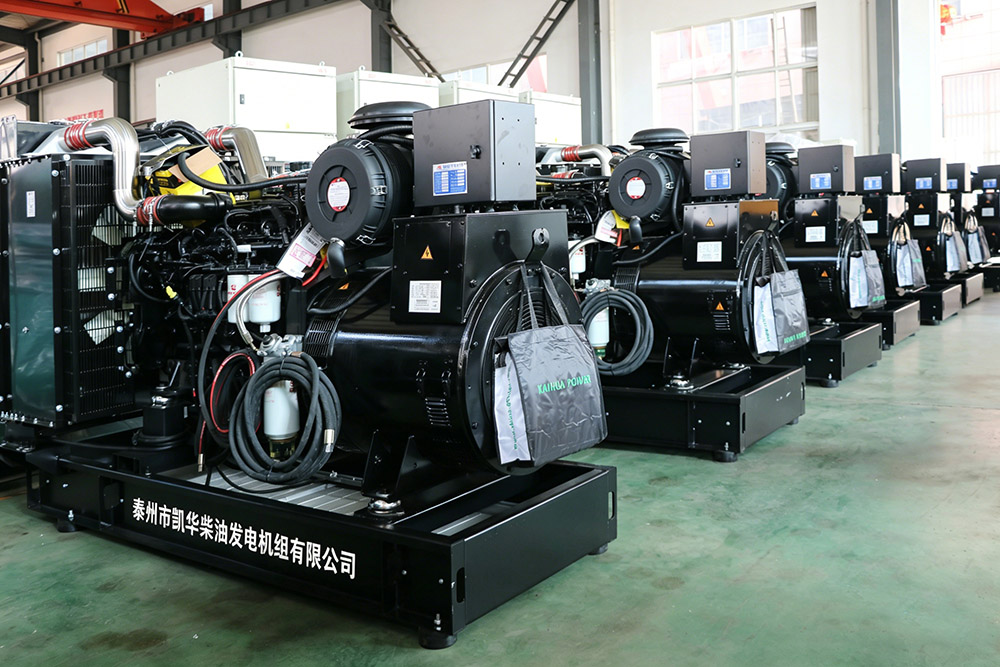
The generator sits in a concrete enclosure behind the hospital, humming through a routine weekly test. At 3 a.m. on a Tuesday, a transformer outside blows, and the grid goes dark. Inside, ventilators and monitors switch to battery, then the generator kicks in—but not for long. A coolant leak that was noted on a work order three weeks ago finally gives out. In that moment, the hardware doesn't matter nearly as much as whether someone picks up the phone, grabs a flashlight, and actually knows which valve to turn first.
Most generator failures are not mysterious engineering breakdowns. They are deferred maintenance and missed signals. A good service provider will change filters and test transfer switches on schedule, but the real value shows up during the unplanned event. It's the technician who keeps a spare belt in the truck, the dispatcher who can walk a night security guard through a manual bypass, and the account manager who calls you before you even see the alarm on your phone.
That level of reliability can't be bought with a contract alone. It comes from teams that train for worst-case scenarios, document every quirk of your specific installation, and keep enough local inventory to swap a failed controller at 4 a.m. When you evaluate generator service, ask not just about response time promises, but about the last time they had to make a middle-of-the-night repair and how it actually went.
Why Some 'Authorized' Vendors Can't Handle Your Actual Load Profile
An authorization badge often comes from passing a narrow set of lab tests that have little in common with the messy reality of a working electrical system. The vendor's equipment may be certified for steady-state operation at a fixed current, but real load profiles involve rapid swings, nonlinear draws, and startup surges that the test bench never simulated. When those conditions hit, the hardware behaves differently than the datasheet suggests, and the vendor's support team may not have the tools to adapt.
Many authorized vendors lock their configuration software to generic load templates. If your operation includes frequent motor starts, heavy harmonic content, or a poor power factor, the default settings are simply not built for that. Attempts to adjust parameters often run into hidden limits or warnings that the warranty will be voided. The result is a system that is technically authorized but practically incapable of tracking the actual demand curve.
There is also a tendency among these vendors to rely on conservative derating assumptions rather than field measurements. They assume a smooth load with a predictable peak-to-average ratio, which rarely matches a production line or data center. When the real load spikes beyond what the vendor's model predicted, the equipment either trips offline or accumulates thermal stress that shortens its life. In short, the authorization covers a theoretical profile, not the one you actually run.
The Difference Between a Parts Seller and a Power Reliability Partner
A parts seller completes a transaction and moves on. A power reliability partner starts with the assumption that your equipment downtime is not acceptable, so they dig into the conditions your components actually face—ambient temperatures, harmonic distortion, load cycling, even the dust in your facility. The part might look identical on the outside, but the partner asks what it has to survive, then guides you toward a solution that will keep running long after the invoice is forgotten.
When a motor bearing fails, a parts seller tells you they have that bearing in stock. A reliability partner asks a more useful question: why did the bearing fail? Was it lubrication breakdown, shaft misalignment, or electrical fluting from a variable frequency drive? Instead of shipping a replacement and hoping for the best, the partner helps you correct the root cause, so the same bearing doesn't come back as another emergency order in six weeks. That shift from replacing parts to preventing failures is the real difference.
Over time, a parts seller measures success by order volume. A power reliability partner measures it by your mean time between failures, your spare parts inventory turns, and whether your maintenance team can sleep through a storm season. They might review your critical spares list, train your technicians on early warning signs, or stage inventory nearby for faster response—not because it boosts their sales, but because your uptime is the only metric that eventually matters to them.
What a Real Emergency Reveals About Your Vendor Relationship
Forget the color-coded heat maps and the quarterly business reviews. When a real emergency hits, the only thing that matters is how fast your vendor can get the right person on site or on the line. Plenty of companies have discovered that their “dedicated support team” was actually a shared call center two time zones away, while a small parts supplier they’d never heard of had a truck rolling before the incident report was finished.
The first hour after a failure is brutally honest. A vendor that responds with a named engineer, a spare unit, or even a crude workaround is telling you something about their operational depth. A vendor that responds with an automated ticket and a promise to “look into it” is also telling you something—just not what their sales deck claimed. The gap between those two responses becomes the real terms of your contract.
After the dust settles, you’ll either have a partner you’d defend in any budget meeting or a vendor you quietly move down the renewal list. Emergencies don’t create character; they expose it. And once you’ve seen how a vendor behaves when your line is down, you can never unsee it.
Cheaper Isn't Smarter: Calculating the True Cost of Downtime
When a budget-friendly hosting plan or a bargain-bin server promises to keep operations running, the sticker price rarely reflects what happens when things go dark. A single hour of unplanned downtime can erase months of those savings. Take a mid-sized e-commerce site that clears $5,000 in sales per hour—if a $20-per-month hosting cut leads to just three extra hours of downtime over a year, the business is already down $15,000 in revenue, not to mention the overtime pay for scrambling IT staff or the ad spend wasted on clicks that hit error pages.
The full bill goes deeper than lost sales. Every minute your checkout or booking form is unreachable pushes customers toward competitors who stay online, and some of them never come back. There's also the hidden cost of recovery: a cheap setup often lacks automated failover or off-site backups, so a simple power glitch can turn into a multi-day rebuild. When you add up revenue lost per hour, employee downtime, customer churn, and emergency repair fees, the "expensive" reliable option usually costs less over a year than the "cheap" one. That's the math most budget calculators skip.
FAQ
A dependable vendor treats the sale as the start of the relationship, not the finish. They insist on a detailed site survey before quoting, ask about your actual load profile and future expansion plans, and walk you through the trade-offs between standby, prime, and continuous ratings. They also stock critical spare parts locally or can guarantee delivery windows, and they don't hesitate to put you in touch with existing customers who run similar operations.
Ask for proof of factory training certificates and recertification dates, not just a logo on a website. A solid vendor will have technicians who have completed Cummins-specific courses on engine controls, alternator synchronization, and emissions aftertreatment. More importantly, they should be able to explain in plain English what a fault code means and how they'd troubleshoot it remotely before rolling a truck. If they dodge questions about PowerCommand or INP (Integrated Network Protection) diagnostics, that's a red flag.
Look for a vendor who commits to a realistic worst-case response time—say, four hours for critical facilities—and includes that in the service agreement with financial penalties for missing it. You also want a clear preventive maintenance schedule tied to your generator's run hours and environmental conditions, not a generic annual checklist. The contract should spell out who provides 24/7 emergency support, how parts are prioritized for contract customers, and what happens if your unit is down for more than 48 hours.
During a prolonged outage, a local vendor can have a technician on-site before a distant supplier even answers the phone. They know the permitting and noise regulations in your municipality, have relationships with local fuel suppliers, and can loan you a mobile generator if your permanent unit fails catastrophically. Those capabilities directly translate into fewer hours of downtime, which almost always outweighs an upfront cost difference of a few thousand dollars.
Request case studies or references from facilities with comparable power requirements—same voltage class, similar load steps, and comparable environmental challenges. Ask pointed questions: Did the vendor discover any issues during commissioning that the original spec missed? How did they handle a failed transfer switch test? A vendor with relevant experience will give you specific, technical answers and may even suggest a site visit to see their work in action. Generic testimonials about 'great service' don't tell you much.
Load bank testing verifies that your Cummins generator can handle a full rated load without overheating, voltage droop, or wet stacking in diesel engines. A meticulous vendor will run the unit at 100% load for a sustained period, document all readings, and want you present to witness it. If a vendor skips this step or treats it as optional, they're gambling with your power reliability. That test also confirms that the transfer switch and controls work together under stress, not just in a no-load start.
Almost always, yes—especially if your facility has variable loads, sensitive equipment, or plans to expand. A vendor that only pushes pre-configured packages may not account for harmonic distortion from your UPS systems, motor starting currents, or space constraints. A better partner will offer a tailored design with proper sizing, sound attenuation, fuel storage calculations, and integration with your building management system. Customization doesn't have to cost more; it just requires an engineer willing to listen before quoting.
You should receive a complete operations and maintenance manual specific to your generator model, not a generic PDF. The vendor should offer hands-on training for your facility staff: how to perform weekly inspections, safely switch between automatic and manual modes, read the control panel alerts, and shut down the unit during an emergency. Some vendors also provide laminated quick-reference cards and offer refresher training annually. If they leave you with just a set of keys and a business card, they're not a partner—they're a vendor.
Conclusion
Most buyers waste their first meeting flipping through glossy brochures and nodding at horsepower specs. Instead, pin the vendor down on the questions that actually matter: What happens when the load profile shifts abruptly because a chiller kicks on while the backup generator is already running at 80%? Ask for a documented sequence of operations under your facility’s specific load steps, not a generic spec sheet. A generator is only as reliable as the crew that answers the phone at 3 a.m. — so request the names and certifications of the technicians who would actually be dispatched, not the sales engineer’s smile. Plenty of “authorized” vendors are nothing more than parts pushers with a fancy logo; they can sell you a Cummins unit but can’t model your motor-starting inrush or harmonics. The real differentiator is whether they walk your site, study your historical load data, and recommend load banking or fuel polishing before you ever sign a purchase order.
You won’t know what your vendor relationship is worth until a storm knocks out utility power and your transfer switch fails to close. A genuine partner has a spare controller on a shelf — not “on order” — and a field service team that already knows your emergency bypass procedure because they drilled it during commissioning. Cheap vendors disappear when the first invoice is paid; reliability partners show up with a load bank trailer, not excuses. When calculating the true cost of downtime, don’t use the sticker price of a generator. Use the cost per hour of lost production, spoiled inventory, or patient safety risk. A low-bid vendor that takes six extra hours to get you back online can erase a decade of “savings” in a single outage. Choose the partner who treats your emergency as a test they’ve already passed, not a problem they’re figuring out on your dime.
Contact Us
Contact Person: Ms. Lu
Email: [email protected]
Tel/WhatsApp: 8618917899306
Website: https://www.hichaipower.com