
Explosion Proof Electric Heater Original Manufacturer for Hazardous Area Heating
2026-09-24
Explosion proof electric heaters can mean the difference between a routine shift and a reportable incident. That's why choosing an original manufacturer with hands-on experience in hazardous area heating isn't just smart—it's non-negotiable. At Shenzhou Chemical Industry, the focus stays on building heaters that respect the environment they operate in, not just the watts they output. If you're tired of generic solutions that treat hazardous areas like an afterthought, the rest of this post will change how you evaluate your next purchase.
What Sets an Original Manufacturer Apart in Explosion-Proof Heating
When you dig into the world of explosion-proof heating, the gap between a genuine original manufacturer and a middleman reseller becomes obvious pretty quickly. True originals don’t just assemble parts; they design and test every heating element, enclosure, and control circuit in-house. That direct control over materials and tolerances means the final unit handles temperature swings, corrosive atmospheres, and pressure spikes without cutting corners. A reseller might offer a similar-looking product, but without that engineering depth, you’re often left guessing whether the heater will actually hold up in a classified area.
Another clear differentiator is traceability and customization. An original manufacturer can walk you through the exact alloy used in the heating cable, the certification path for each junction box, and even tweak watt density or flange dimensions for a weird pipe layout. They’re not locked into a fixed catalog from an overseas supplier. That flexibility becomes critical when you’re retrofitting an old chemical plant or dealing with unusual gas groups. You can ask for specific test reports, material certificates, or even a live video of the thermal imaging run—things a distributor rarely has access to.
Finally, think about long-term support. Original manufacturers keep records of every unit that leaves their floor, so ten years later they can tell you which thermocouple was used and whether a replacement flange is still in stock. They also tend to stand behind their certifications with direct engineering help, not just a call center script. That kind of accountability is hard to fake, and it’s often the reason facilities stick with one original brand even when cheaper lookalikes show up at the gate.
Heating Elements That Survive Corrosive and Volatile Environments
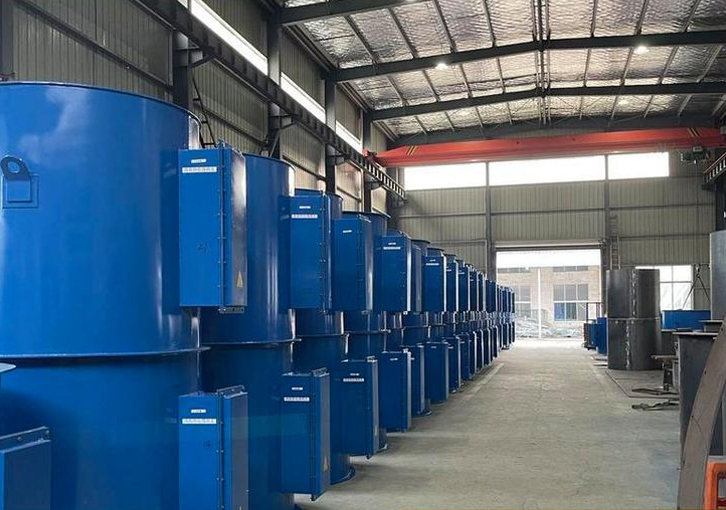
Selecting a heating element for a corrosive or volatile atmosphere is less about finding a single miracle alloy and more about matching the sheath material, surface condition, and watt density to the specific chemistry of the environment. In many chemical processing and surface treatment lines, standard stainless steel sheaths fail within weeks because chlorides or acidic vapors attack grain boundaries. Instead, engineers often turn to nickel-chromium-iron alloys like Incoloy 800 or 825, which develop a tightly adherent oxide layer that slows further attack. Titanium works well in oxidizing acids such as nitric acid but is unsuitable for reducing environments or hot caustic. The key is not just the base metal but the quality of the surface finish—electropolished sheaths resist pit initiation far better than rough, as-welded surfaces because there are fewer crevices where aggressive ions can concentrate.
For more aggressive conditions, a protective sheath or coating becomes essential. PTFE and PFA sleeves provide excellent chemical resistance at temperatures up to about 260°C, but they also insulate thermally, which can force the internal element to run hotter and shorten its life. Ceramic sheaths made from alumina or silicon carbide handle high temperatures and strong acids, yet they are brittle and can crack under thermal cycling if heaters are turned on and off rapidly. A practical compromise in many plating baths and pickling tanks is a quartz or fluoropolymer-encapsulated element with a low watt density, typically below 15 W/in², so that the surface temperature stays low enough to prevent boiling at the sheath-liquid interface and reduce corrosion rates. The extra material cost is usually recovered through fewer unplanned shutdowns.
Installation details often determine whether a heating element survives in volatile environments. Condensation is a common killer: if a heater passes through a tank lid into a vapor space containing hydrochloric acid or ammonia, the sheath can corrode just above the liquid line where droplets form. To counter this, designers specify extended cold sections or vapor-tight compression fittings that keep the heated zone fully submerged. In semiconductor wet benches and chemical vapor deposition tools, where even trace metal contamination ruins product, quartz or silicon carbide heaters are paired with grounded shielding and continuous insulation resistance monitoring. A sudden drop in megohm readings signals early ingress of moisture or corrosive gas, allowing replacement before a catastrophic failure contaminates the process. Ultimately, survival comes down to controlling the microclimate around the heater, not just picking a resistant alloy from a catalog.
Custom Configurations Without the Custom Price Tag
很多人以为定制配置必然意味着高昂的费用,其实关键在于架构设计。当基础模块被精心拆分,客户只需要选择自己需要的部分,其余保持不变,成本自然可控。这不是妥协,而是一种更聪明的资源分配方式。
我们见过太多企业为用不上的功能买单,最终不得不削减其他预算。我们的做法是提供一套经过验证的核心框架,再通过标准接口扩展个性化需求。无论是调整参数、更换组件还是集成第三方服务,都无需从头开发。你得到的不是半成品,而是可以直接投入使用的方案,只是恰好长成了你需要的模样。
节省下来的预算可以投向真正创造价值的地方,比如更好的用户体验、更快的迭代或者团队培训。定制不该是奢侈品的代名词,它应该是一种务实的选择。当灵活性不再与高价画等号,你就能更自由地做出符合业务实际的决策。
Certification Details You Should Actually Verify
A shiny badge on a package or website rarely tells the whole story. Plenty of companies slap on logos for standards that expired last year, apply only to one narrow product line, or are issued by organizations with names that sound official but have no real oversight. Before you put much weight on a certification, dig into the fine print: what exact version of the standard does it cover, and when was it actually granted? A quick search through the issuing body's public database often reveals discrepancies that a marketing page conveniently skips.
Different industries play by different rules, so your verification checklist should shift accordingly. For food and supplements, you might check whether the certifier is accredited by a recognized national authority and whether the certification includes on-site audits or just paperwork reviews. For electronics or building materials, the date of testing matters more than the logo's presence—safety standards change, and a product tested five years ago may not meet current limits for flame retardants or heavy metals. Always look for the certificate number, then run it through the issuer's own verification tool if they have one.
One common trap is assuming a certification applies to the entire company rather than a single facility or product batch. A coffee brand might be fair-trade certified for its whole beans but not its instant line, or a factory might be certified for one production run and then quietly switch suppliers. Ask for the scope statement—every legitimate certification comes with one—and check whether it matches what you're actually buying. If a vendor hesitates to share that document or brushes off questions about validity dates, that's a stronger signal than any logo.
How We Test Every Heater Before It Ships
Before any heater gets a shipping label, it goes through a full bench inspection that starts at the plug and ends at the tip-over switch. We check wattage draw against the spec sheet, feel for loose terminal screws, and watch the element for uneven glow during the first five minutes of runtime. If a unit draws even slightly more current than expected, it gets set aside and torn down.
From there, surviving units move into a sealed test room for extended full-power runs. We cycle the thermostat through its full range, slam the power switch on and off, and knock each heater over on both carpet and hard flooring to confirm the safety cutoff fires every time. Only after a heater passes all of that do we box it up and hand it to the carrier.
Real Applications: From Offshore Rigs to Solvent Recovery
Offshore rigs demand equipment that survives salt spray, constant vibration, and limited maintenance windows. Compact heat exchangers built with corrosion-resistant alloys handle high-pressure gas cooling and produced water treatment without frequent shutdowns. Their small footprint frees up deck space for other critical systems, while robust sealing prevents leaks that could trigger environmental incidents.
On land, solvent recovery units in pharmaceutical and coating plants face different pressures: strict emission limits and rising energy costs. Here, plate-and-frame or spiral heat exchangers condense volatile organic compounds from exhaust streams, returning clean solvent to the process instead of burning it off. Operators often see payback within months due to reduced solvent purchases and avoided compliance penalties.
Between these extremes, food processing, chemical logistics, and even data center cooling rely on the same principle—matching heat exchanger design to real-world abuse. Whether it's a brazed unit handling refrigerant on a pitching deck or a gasketed model separating solvent-laden air in a paint booth, the value lies in predictable performance under conditions that would wreck generic equipment.
FAQ
Each unit is built from the ground up for hazardous locations, not adapted after the fact. We use heavy-wall stainless steel or carbon steel enclosures, precision-welded seams, and terminal boxes that are purged and sealed to stop gas or dust ingress before it can become an ignition source.
Our standard range covers Zone 1 and Zone 2 for gas atmospheres, plus Zone 21 and Zone 22 for combustible dust. If you are working with a specific division or class system, we can match the enclosure and temperature code to your site requirements.
We design around the auto-ignition temperature of the target atmosphere. Built-in thermal sensors, adjustable thermostats, and optional RTD or thermocouple inputs give you layered protection. The heater elements are derated so the sheath temperature stays well below the T-class limit even during abnormal conditions.
Yes, this is a core part of our work. We regularly supply flange, circulation, immersion, and duct-style heaters with custom watt densities, lengths, and terminal orientations. You send us the dimensional limits and process conditions; we return drawings for approval before production begins.
For offshore or chemical plant exposure, we typically use 316L stainless steel for wetted parts and epoxy-coated cast aluminum or stainless steel for junction boxes. In hydrogen sulfide or chloride-heavy settings, we can move to higher alloys or add protective coatings to extend service life.
Every order includes a material traceability pack, weld procedures, pressure test reports, and the applicable ATEX, IECEx, or North American certification documents. We also support pre-shipment inspection by your nominated agency without extra charges for standard documentation.
We assign a project engineer to each order. That person remains your contact for wiring guidance, start-up checks, and replacement element identification. If a site audit finds an issue, we can supply thermal imaging data or remote video support to help resolve it quickly.
Conclusion
When you're dealing with hazardous area heating, the gap between a generic supplier and an original manufacturer shows up quickly in the details. We build our own heating elements rather than assembling from third-party catalogs, which means the sheath alloys, watt densities, and terminal enclosures are matched to the specific corrosive or volatile conditions they'll face—not just picked from a stock list. That in-house control also lets us handle custom configurations, odd voltages, non-standard flange sizes, tight bend radii, without padding the quote. Most so-called custom heaters at other vendors are just repackaged standard units with a markup; ours are designed to your operating envelope from the start.
Before anything leaves the floor, every unit goes through a documented test cycle: insulation resistance, dielectric withstand, thermal cutout verification, and a full-power soak to catch hot spots. We also make sure the certification file actually matches the heater in your hands—check the nameplate against the hazardous area classification, temperature code, and gas group, not just the sales sheet. You'll find our equipment on offshore platforms where salt spray never quits, in solvent recovery plants with aggressive vapors, and in refineries where a failed heater means a shutdown. That's the kind of environment our heaters are meant for.
Contact Us
Contact Person: Mr. Wang
Email: [email protected]
Tel/WhatsApp: 8613705299955
Website: https://vip.e-baixing.com/szhgyw