

Professional High-Temperature Reactor Heaters: Essential Insights for Optimal Performance
2026-07-19
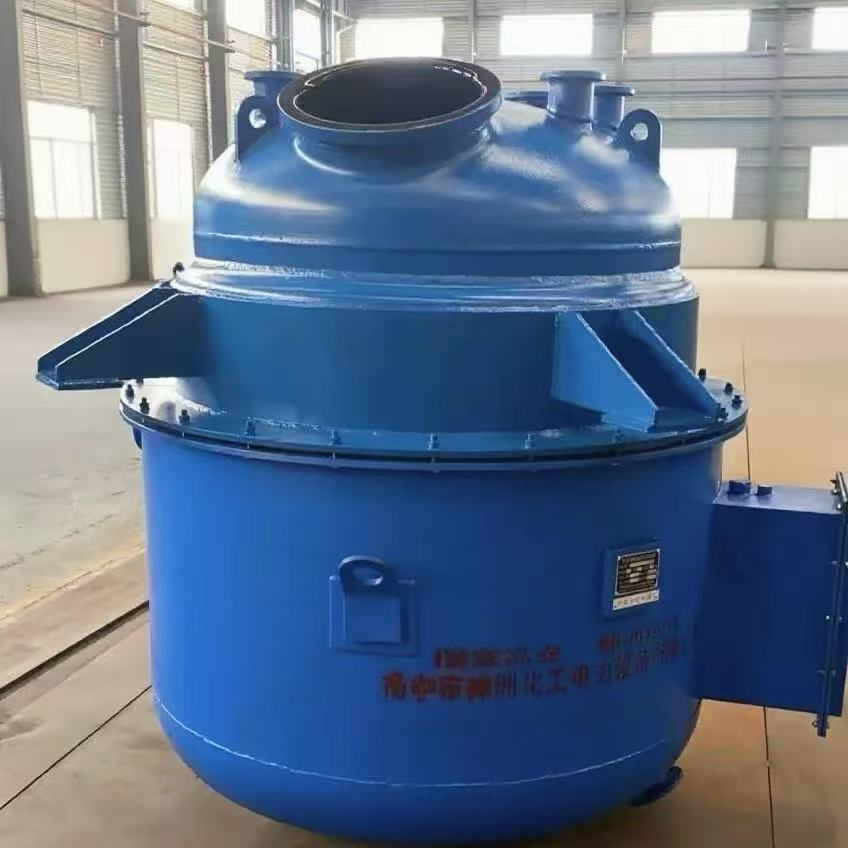
When it comes to industrial heating solutions, high-temperature reactor heaters play a pivotal role in ensuring efficiency and reliability. Understanding their design and operation can make all the difference in achieving optimal performance. At Shenzhou Chemical Industry, we recognize that precision and durability are non-negotiable. This blog dives into the essential insights you need to maximize heater lifespan and output, straight from the perspective of seasoned engineers.
Core Materials Behind Prolonged Heater Lifespan
The longevity of a heater largely hinges on the materials used in its core components. High-grade stainless steel, often enriched with nickel and chromium, stands as a preferred choice for the heating element sheath. Its exceptional resistance to oxidation and corrosion ensures that the heater can withstand repeated thermal cycling without degrading, even in demanding industrial environments. Pairing this with a dense magnesium oxide insulation, compacted under extreme pressure, not only enhances heat transfer but also provides robust electrical insulation, reducing the risk of internal short circuits and hot spots that typically shorten a heater's life.
Equally important is the selection of the resistance wire. Advanced alloys like Kanthal or Nichrome dominate this space, celebrated for their ability to maintain stable resistance at elevated temperatures while resisting embrittlement over time. When precision-engineered with a carefully controlled cold section design, these wires minimize stress at the terminal connections—a common failure point in lesser designs. Such attention to material synergy, where the expansion coefficients of the wire and ceramic insulators are closely matched, prevents micro-cracks that could otherwise lead to premature burnout.
Beyond the heating core, the terminal seals and outer jacket materials play a silent but critical role. Hermetic seals made from specialized glass or ceramic-metal composites block out moisture and contaminants, the archenemies of heater reliability. Meanwhile, outer sheaths crafted from Incoloy or titanium alloys offer an extra layer of defense in chemically aggressive atmospheres. It’s this deliberate combination of materials—each chosen not just for performance but for compatibility with the others—that transforms a simple heater into a durable, long-life solution.
Thermal Uniformity Tactics That Minimize Hot Spots
Achieving even heat distribution starts with thoughtful layout design. Components that run hot shouldn't be clustered together, but rather spaced apart or strategically placed near cooler-running parts to help sink away excess energy. In many designs, using thermal vias under surface-mount devices lets heat bleed into inner copper planes, preventing localized buildup. Pairing this with a careful review of airflow paths—whether passive or fan-driven—ensures every watt finds an escape route before it turns into a trouble spot.
Material choices also play a quiet but powerful role. Thicker copper layers in the PCB stack naturally spread heat more uniformly, reducing the tendency for isolated hot zones. When the budget allows, switching from standard FR-4 to higher-conductivity substrates can further flatten temperature gradients. Where direct conduction isn't enough, heat pipes or vapor chambers can efficiently move thermal loads from cramped areas to spacious heat sink arrays, keeping critical components within safe limits without adding excessive weight or complexity.
Finally, control algorithms can actively suppress hot spots even in dynamic operating conditions. By monitoring on-die sensors or strategically placed thermistors, a system can throttle individual cores, shift workloads across processors, or modulate fan speeds to nudge temperatures back into balance. This adaptive approach is especially valuable in densely packed electronics where physical fixes have reached their limits, offering a software-defined safety net that keeps performance stable and peak temperatures in check.
Power Regulation Nuances for Sensitive Processes
Maintaining stable power delivery in sensitive manufacturing workflows often requires more than off-the-shelf voltage regulators. Subtle fluctuations that most equipment tolerates can introduce unacceptable variations in processes like semiconductor lithography or precision laser cutting. The challenge lies not just in filtering incoming grid noise, but in anticipating the transient demands of the process itself—where a sudden inrush during a specific cycle stage can momentarily sag the supply if the regulation loop isn’t fast enough. Engineers frequently turn to a combination of low-noise linear stages for steady-state precision and fast-response switching topologies to handle dynamic loads, carefully tuning the crossover frequencies to avoid oscillations that could ripple through the entire system.
Another dimension often overlooked is the grounding architecture and its influence on regulation accuracy. In sensitive environments, even millivolt-level ground potential differences between the regulator’s reference point and the load can distort feedback signals, leading the control loop to chase a “wrong” target. This becomes especially thorny when multiple power domains coexist—each with its own return path—and parasitic inductances in shared planes introduce high-frequency coupling. Designers may resort to isolated regulation schemes or remote sensing techniques that compensate for voltage drops along cabling, but these add complexity and can introduce stability concerns if not compensated properly across all operating temperatures.
Beyond the hardware, firmware plays a silent but critical role in managing power nuances. Adaptive algorithms that profile load behavior over time can preemptively adjust regulation parameters before a known disturbance occurs, essentially creating a feedforward path parallel to the feedback loop. This approach proves particularly valuable in processes with repetitive patterns, such as pulsed laser deposition or cyclic electroplating, where the power profile is predictable but unforgiving of lag. However, over-optimization carries its own risks—if the model drifts due to aging components or a subtle change in process chemistry, the regulator may overcorrect and introduce a new source of instability. The art lies in blending real-time monitoring with a conservative adaptive strategy that errs on the side of stability over peak performance, ensuring the process remains within its narrow tolerance band regardless of external or internal shifts.
Failsafe Protocols Beyond Standard Cutoffs
Standard safety cutoffs—thermal fuses, pressure relief valves, or electronic limiters—work well within their designed ranges, but they often rely on predictable failure modes. Real-world mishaps rarely follow the script. A cascading series of minor anomalies, sensor drift, or simultaneous stresses can slip right past these thresholds until it’s too late. Failsafe protocols beyond standard cutoffs fill that gap by adding layers that don’t just wait for a single threshold breach. They actively compare redundant sensor readings, track rate-of-change patterns, and cross-reference unrelated system behaviors to detect the abnormal before it becomes catastrophic.
One approach involves state-awareness—where the protection logic doesn’t blindly trip at a setpoint, but evaluates the entire health status of the device. For example, instead of simply cutting power when temperature exceeds 85°C, the system may watch for a combination: rising temperature paired with declining coolant flow, even if neither has individually crossed its limit. This dynamic envelope of acceptable operation shrinks as confidence in sensor integrity wanes, creating a graceful degradation rather than a sudden shutdown or, worse, a missed hazard.
Another layer emerges in the physical domain: passive architectures that inherently resist failure progression. A chemical reactor might include a catalyst that poisons its own reaction at elevated temperatures, reversing the exotherm without any active intervention. Or a battery pack engineered with current collectors that fracture under extreme swelling, permanently disconnecting the cell long before thermal runaway becomes inevitable. These beyond-cutoff strategies treat the operating environment as an ally, not just a threat to be monitored, and they often continue to function even when control electronics are completely offline.
Placement Geometry and Its Impact on Reaction Rates
The spatial arrangement of reactants can dramatically alter how quickly a reaction proceeds. When molecules are oriented correctly with respect to one another, the likelihood of effective collisions rises—a principle often overshadowed by concentration and temperature effects in textbook discussions. Even subtle shifts in geometry, such as the tilt of a functional group or the distance between two catalytic sites, can be the difference between a sluggish transformation and one that completes in seconds. This sensitivity emerges because the activation energy barrier is not simply a fixed number; it depends on the angle at which molecules approach, the alignment of frontier orbitals, and the steric accessibility of reactive centers.
In heterogeneous catalysis, placement geometry takes on a literal meaning. Catalytic particles deposited on a support exhibit varied activity depending on their position relative to pore mouths, crystalline facets, or other metal nanoparticles. For instance, a platinum atom nestled in a corner site of a nanoparticle might cleave a C–H bond far more effectively than the same atom on a flat terrace. Industrial reactor design leans heavily on this concept—engineers manipulate the packing pattern of catalyst pellets or the geometry of fluid channels to maximize contact efficiency and avoid dead zones where reactants linger unreacted. The right geometry not only accelerates the desired pathway but also suppresses side reactions, steering selectivity in ways that bulk kinetic models often miss.
Biochemistry offers a striking illustration through enzyme active sites, where the placement of a single amino acid side chain can tune reaction rates by several orders of magnitude. The geometry here extends beyond static positioning; dynamic fluctuations in the protein backbone transiently create optimal configurations for catalysis. Mimicking such precision in synthetic systems remains a frontier challenge. Supramolecular chemists design host molecules whose cavities enforce a reactive geometry—forcing two substrates into a specific orientation that would be improbable in free solution. Even in photochemistry, the orientation of a chromophore relative to an electron acceptor determines whether energy transfer outcompetes wasteful decay. Across these diverse contexts, one truth emerges: neglecting placement geometry means neglecting a powerful lever for controlling chemical reactivity.
Scaling Heat Delivery from Lab to Pilot Plant
Moving a heating process from a lab-scale setup to a pilot plant forces you to confront physics that lab experiments often hide. In the lab, a small volume can be heated uniformly with a simple hotplate or jacket, but when you scale up, the surface-to-volume ratio drops and heat transfer rates become the bottleneck. A reactor that reaches temperature in minutes on the bench might take hours at pilot scale, and that shift changes reaction kinetics, selectivity, and even safety margins. Successful scale-up starts not with bigger heaters, but with a careful re-evaluation of how energy gets into the fluid—whether through wall jackets, internal coils, or direct steam injection—and how the mixing regime distributes that energy before local hot spots ruin the batch.
The path from lab data to a pilot-plant design often reveals mismatches in heat delivery assumptions. A common trap is relying on overall heat transfer coefficients measured in small glassware, then applying them to a metal vessel with different fouling behavior and coolant dynamics. Instead, experienced engineers break the problem down: they measure the process-side film coefficient separately, account for utility-side resistance, and watch how viscosity and solids loading change with temperature. They also test non-linear heating profiles early, because what works as a steady ramp in the lab may overshoot or lag under the sluggish response of a large jacket. Simple experiments in a 20-liter stirred vessel can expose these gaps long before a full-scale system is built, saving both time and material.
Beyond the hardware, scaling heat delivery demands a shift in operational thinking. In the lab, you can afford to tweak a PID loop or swap a heating fluid mid-experiment; in a pilot plant, such changes carry cost and downtime. That's why robust scale-up integrates process control strategy from the start, using model-predictive routines or cascade loops that anticipate thermal lag rather than simply reacting to it. It also means designing for the extremes—not just the nominal case—so that the system can handle startup transients, catalyst activation exotherms, or end-of-campaign fouling without tripping interlocks. When heat delivery scales transparently from the bench to the pilot floor, the team spends less time troubleshooting and more time collecting the data needed for the next leap to production.
FAQ
They are employed in industrial and laboratory settings to provide precise, controlled heating for chemical reactors, often in processes like synthesis, distillation, or catalytic reactions where elevated temperatures are essential.
Professional models feature tighter temperature control, higher durability materials, and advanced safety mechanisms, making them suitable for demanding applications where consistency and reliability are non-negotiable.
You need to evaluate the required temperature range, heating uniformity, material compatibility, control system precision, and the physical dimensions that fit your reactor setup without compromising performance.
Uniform heating prevents hot spots that can degrade sensitive compounds or cause uneven reaction rates, ensuring product quality and repeatable outcomes across batches.
Regular calibration, proper insulation, and following the manufacturer’s operational guidelines help maintain efficiency. Also, monitoring thermal profiles during operation can catch drifts early.
Look for over-temperature protection, leak detection, pressure relief systems, and fail-safe shutdown mechanisms. These features protect both the equipment and operators from hazardous conditions.
Routine inspection of heating elements, cleaning of contact surfaces, checking electrical connections, and replacing worn seals or gaskets will minimize downtime and extend service life.
Conclusion
Achieving optimal performance with professional high-temperature reactor heaters demands a careful blend of material science, precise control, and thoughtful design. The longevity of these systems hinges on core materials like advanced ceramics and high-grade alloys that resist thermal degradation and chemical corrosion, ensuring prolonged heater lifespan even under extreme conditions. Equally critical is managing thermal uniformity; strategic placement of heating elements and the use of multi-zone configurations minimize hot spots, safeguarding sensitive reactions and preserving product consistency. Power regulation plays a subtle yet vital role—sophisticated PID controls and smooth ramping profiles prevent overshoot, which is especially crucial for processes where temperature excursions could compromise yield or safety.
Beyond standard cutoffs, robust failsafe protocols integrate redundant sensors, automatic shutdown sequences, and real-time diagnostics to mitigate risks during runaway events or equipment faults. The geometry of heater placement within the reactor further influences reaction rates by shaping flow patterns and heat transfer efficiency; engineers often optimize this by aligning heater arrays with computational fluid dynamics insights. When scaling from lab to pilot plant, maintaining heat delivery fidelity becomes paramount—direct geometric scaling is rarely sufficient, requiring adjustments in power density and circulation strategies to replicate the precise thermal environment that made bench-scale reactions successful.
Contact Us
Contact Person: Mr. Wang
Email: [email protected]
Tel/WhatsApp: 8613705299955
Website: https://vip.e-baixing.com/szhgyw