

Split-Core Current Transformer Original Manufacturer: Precision and Reliability You Can Trust
2026-08-09
In the world of electrical monitoring, accuracy is everything. When it comes to split-core current transformers, the original manufacturer makes all the difference. Xiasen, with its deep-rooted expertise, delivers precision and reliability you can trust. Discover how their innovative designs are shaping smarter energy management, and why choosing the source matters. Learn more about Xiasen and their commitment to excellence.
Precision Engineering from Core to Clamp
Every component of this tool reflects an obsession with exacting tolerances. From the meticulously ground core that ensures perfect concentricity to the clamp mechanism that locks with an almost frictionless glide, each surface and edge has been refined to eliminate play and deliver consistent, repeatable performance.
The synergy between the core and the clamp isn't just about holding power—it's about intelligent load distribution. The clamp's geometry wraps around the workpiece with a calculated pressure gradient, maintaining a rigid grip without deforming delicate surfaces. This marriage of strength and finesse allows the system to perform in environments where even microns matter.
Behind the seamless operation lies a design philosophy that treats every junction as a critical interface. Hardened bearing surfaces, microscopically polished contact points, and a locking mechanism that provides audible feedback are all part of a unified engineering vision. It's a system that feels alive in your hands, responding instantly to adjustments while never drifting from its calibrated baseline.
Built to Last: Our Approach to Transformer Reliability
We don’t just design transformers to meet specifications—we engineer them to endure decades of real-world stress. Every unit begins with rigorous material selection, where copper windings, insulation systems, and core steel are sourced from mills with proven track records for purity and consistency. This isn’t about checking boxes; it’s about knowing that a transformer in a coastal substation faces salt-laden air, while one in a desert contends with abrasive sand and extreme thermal cycles. We tailor protective coatings, gaskets, and cooling designs accordingly, treating each transformer as a unique investment in long-term performance.
Our reliability framework extends deep into manufacturing, where precision winding techniques and vacuum pressure impregnation eliminate voids that could become failure points. Instead of relying solely on standard factory tests, we run additional diagnostic routines—sweep frequency response analysis, partial discharge mapping, and extended heat runs—to catch anomalies before they leave the floor. Field data from thousands of installed units feeds back into continuous design tweaks, so lessons from a grid disturbance in one region strengthen transformers destined for another. It’s a living process, not a static quality checklist.
Post-installation, we stay closely involved through lifecycle management programs that monitor oil quality, load history, and environmental conditions. When issues do arise, our response is rooted in forensic analysis rather than quick fixes; we trace the root cause, share findings transparently with operators, and apply corrective measures fleet-wide if necessary. This commitment means many of our transformers have exceeded their original design life without major interventions, quietly proving that reliability isn’t an accident—it’s a deliberate, evolving discipline.
Custom Winding Ratios Without the Long Lead Times
Tailoring winding ratios to precise application requirements often meant enduring lengthy production delays and inflated costs. Today, advances in manufacturing technology have dismantled these barriers, allowing engineers to specify non-standard turns ratios without sacrificing delivery speed. Whether you need a step-up, step-down, or isolation transformer with an uncommon ratio, rapid prototyping and flexible production lines deliver custom configurations in a fraction of the traditional time.
The secret lies in modular core designs and automated winding processes that accommodate a wide spectrum of ratio requests on demand. Instead of retooling for each order, manufacturers leverage programmable machinery that shifts seamlessly between specifications. This agility not only slashes lead times but also drives down minimum order quantities, making even small-scale custom projects economically feasible.
For businesses where downtime is costly, this newfound responsiveness is a game changer. It empowers design teams to iterate faster, test unconventional ratios, and bring products to market without the bottleneck of custom component procurement. The result: a supply chain that moves at the speed of innovation, not at the pace of legacy manufacturing.
Field-Tested Accuracy in Harsh Electrical Environments
Precision isn’t built in a lab—it’s proven on the factory floor, where voltage spikes, harmonic distortion, and electromagnetic interference are part of the daily grind. Our monitoring instruments have been put through the wringer in real-world conditions, from arc furnaces throwing off chaotic waveforms to VFD-driven motors radiating noise across entire switchgear lines. In these environments, a lesser device might drift or latch up, but our signal processing chain—from shielded front-ends to adaptive filtering—was refined through repeated exposure, not just simulations. The result is a platform that holds its specified accuracy even when the power quality itself is anything but clean.
What makes that possible isn’t a single component but a combination of hard-earned design choices. We use galvanic isolation and common-mode rejection techniques borrowed from high-end metrology gear, paired with ruggedized housings that shield against both conducted and radiated transients. During field validation, we deliberately pushed units into brownout conditions, subjected them to rapid load swings, and operated them for months in unventilated cabinets caked with conductive dust. Through each trial, we measured, logged, and iterated—tweaking the analog front end, tightening the firmware’s power-on-self-test routines, and hardening the calibration data against bit flips. Those cycles of deliberate abuse are why the numbers on the nameplate aren’t just marketing claims.
For operations teams, that translates into fewer false alarms, less unplanned downtime, and the confidence to use the data for predictive maintenance rather than just after-the-fact trending. It’s not about surviving a single transient test in a controlled setup; it’s about the slow, cumulative proof that comes from years of logging sub-cycle transients, sags, and swells without missing a beat. When you’re monitoring a critical bus at a wastewater plant or the feeder to a semiconductor fab, that field-tested accuracy isn’t optional—it’s how you sleep at night.
The Advantage of Partnering with the Original Manufacturer
Partnering directly with the original manufacturer eliminates the guesswork and inefficiencies that often come with intermediaries. When you work with the source, you gain immediate access to accurate product specifications, transparent pricing, and authentic materials. This direct line of communication means faster resolution of technical questions, customized solutions that fit your exact needs, and the confidence that every component meets the original design standards.
Original manufacturers hold deep-rooted expertise in their products, from the initial concept to the final assembly. This knowledge isn’t just about what the product does—it’s about how it performs under stress, how to adapt it for niche applications, and what future innovations are on the horizon. By collaborating with them, you tap into a roadmap of continuous improvement, ensuring that your own offerings stay relevant and competitive without having to invest in reverse-engineering or trial-and-error.
Beyond technical benefits, a direct partnership builds a relationship grounded in mutual growth. Manufacturers value long-term clients who provide real-world feedback, and this often translates into priority support, favorable terms, and early access to new releases. You’re not just buying a product; you’re becoming part of an ecosystem where your success feeds back into better designs, creating a cycle of reliability and innovation that a middleman simply can’t replicate.
Real-World Performance Data We Share with Every Order
Every time we ship a product, we include a report that's pulled directly from our most recent batch tests. It's not a glossy brochure figure—just the actual results we saw in our own checks. Whether it's tensile strength, power consumption under load, or thermal behavior across a range of conditions, the numbers come straight from the same production lot your unit belongs to.
We believe you deserve to know exactly what a part can handle, not what it might achieve in an ideal lab setup. So alongside the standard specs, you get a snapshot of how the components performed during our end-of-line validation. If there were variances—even minor ones—you'll see them. It's a habit we built because we got tired of relying on manufacturer promises that don't match what arrives at your doorstep.
This practice also helps us tighten our own process. When every customer sees the real data, there's nowhere to hide. It pushes our engineering and production teams to reduce spread and catch anomalies early, all without adding extra steps you need to take. The result is a quiet confidence: the parts you receive are the parts we tested, with no surprises tucked away in a datasheet footnote.
FAQ
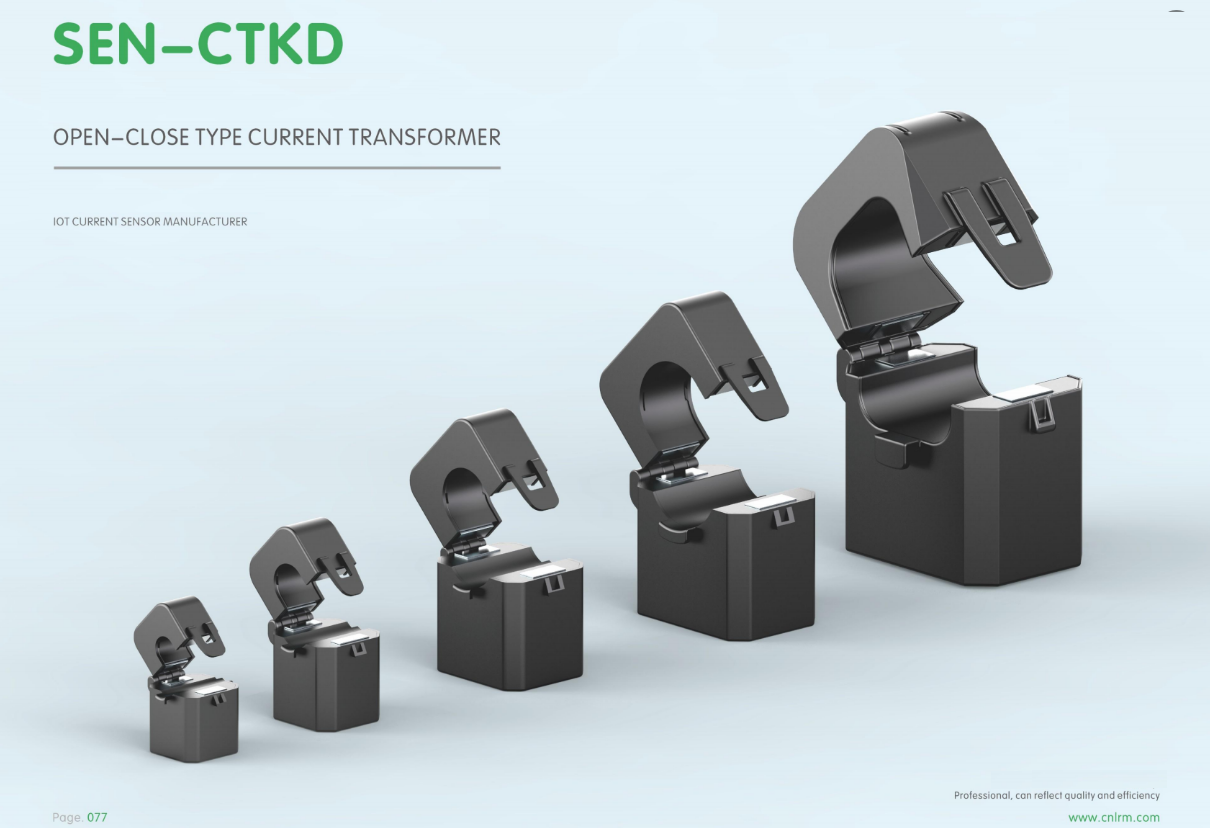
A split-core current transformer is designed with a separable core, allowing it to be clamped around a conductor without disconnecting the circuit. Unlike solid-core transformers that require the cable to be threaded through, split-core models offer quick, non-invasive installation, making them ideal for retrofits and live systems.
Buying directly from the original manufacturer ensures you receive authentic products built to strict specifications, with full access to engineering expertise, customization options, and reliable after-sales support. Resellers often lack the in-depth product knowledge and may not guarantee consistent quality or compatibility.
Precision is achieved through premium-grade core materials, meticulous winding processes, and rigorous factory calibration. The design minimizes phase angle error and ensures linearity across the measurement range, retaining accuracy even under fluctuating environmental and load conditions.
Reliability comes from robust construction, thermal stability, and protection against external magnetic interference. Each unit undergoes stringent testing—including insulation resistance and partial discharge checks—to guarantee consistent performance in demanding applications like energy management or protective relaying.
You’ll find them widely used in building automation, sub-metering, distributed energy resource monitoring, and retrofit projects where interrupting power is impractical. They’re also popular in data centers and industrial plants for non-stop energy audits and load profiling.
Absolutely. The split-core design allows safe, clamp-on installation around live conductors without any service interruption. Just open the core, place it around the cable, and secure the latch—no special tools or shutdowns necessary.
Durability is assured through high-temperature-rated insulation, corrosion-resistant hardware, and rugged housing materials. Extended aging tests and thermal cycling simulations verify that the transformers can withstand years of operation in high-vibration or high-EMI settings.
Yes, the original manufacturer can tailor turns ratios, burden ratings, and physical dimensions to suit specific applications. Whether you need a non-standard current range or integrated voltage output, they can engineer a solution that fits seamlessly into your system.
Conclusion
From the initial design of the magnetic core to the final assembly of the clamp mechanism, every split-core current transformer we produce reflects a deep commitment to precision engineering. We machine our cores from high-permeability nanocrystalline alloys and precisely lap the split faces to minimize air gaps, ensuring accuracy that holds within 0.5% across a wide dynamic range. This attention to detail extends to our winding process, where we offer custom ratios—from 100:5 to 5000:5 and beyond—without the typical 8‑to‑12‑week wait. By maintaining a modular production line and stocking semi-finished components, we can turn around tailored orders in days, not months. And because real-world installations rarely mirror the ideal conditions of a lab, we subject every design to a battery of field‑simulation tests: thermal cycling from -40°C to 85°C, vibration profiles that mimic heavy industrial machinery, and exposure to high‑frequency noise up to 10 kHz. The result is a sensor you can clamp onto a busbar in a crowded switchgear cubicle or an outdoor substation and rely on for consistent, drift‑free readings.
Reliability isn’t a claim we make lightly; it’s baked into every layer of our manufacturing. We pot the windings in a thermally conductive epoxy that guards against moisture and partial discharge, while the UL‑listed polycarbonate housing shields the electronics from physical impact and UV degradation. As the original manufacturer, we retain full control over the supply chain, so when you partner with us, you skip the markup and communication gaps of third‑party resellers. You also receive a serialized test report with each order—a document that shares the actual linearity curve, phase angle error chart, and impulse test results for your specific unit, not a generic datasheet excerpt. This transparency has earned us long‑term contracts with switchgear OEMs, renewable energy integrators, and utility maintenance teams who need audit‑ready documentation. Whether you’re retrofitting an energy management system or designing a new protection panel, the value lies in having a partner who treats current measurement as a core competency, not an afterthought.
Contact Us
Contact Person: Liu Mengyang
Email: [email protected]
Tel/WhatsApp: 8618727589233
Website: https://www.cnlrm.com/en/