

Top Distribution Box Manufacturer Shares Insider Tips for Selecting Reliable Power Distribution Equipment
2026-11-02
When power distribution fails, everything stops. That’s why selecting the right equipment isn’t just a purchasing decision—it’s a reliability decision. CNKEEYA, as a top distribution box manufacturer, offers a rare look at the key factors their engineers check first. Read on for practical tips that can save you from expensive downtime.
Start with the Actual Load Profile, Not the Nameplate
Most design mistakes begin with a single number pulled from the equipment label. The nameplate rating tells you what a machine can tolerate at full load, but it says almost nothing about what the machine will actually do during a normal shift. If you size conductors, protective devices, or backup power around that figure, you are designing for a theoretical maximum that may occur for only a few seconds each day.
The real load profile is where the useful information lives. It shows cold-start surges, extended idle time, and partial-load operation that never appear on the nameplate. A 75 kW motor might draw 80 kW for a short inrush, then settle into 20–30 kW for hours. Without that curve, you will oversize the generator, add unnecessary cooling capacity, and pay for efficiency losses that compound year after year.
Begin with measured data, trend logs, or a carefully constructed duty cycle. Treat the nameplate as a boundary condition, not a design target. When you reverse the usual order, the system fits the actual demand more closely—lower upfront cost, quieter operation, and fewer surprises when production starts.
Why Busbar Material and Plating Decide Your Equipment’s Lifespan
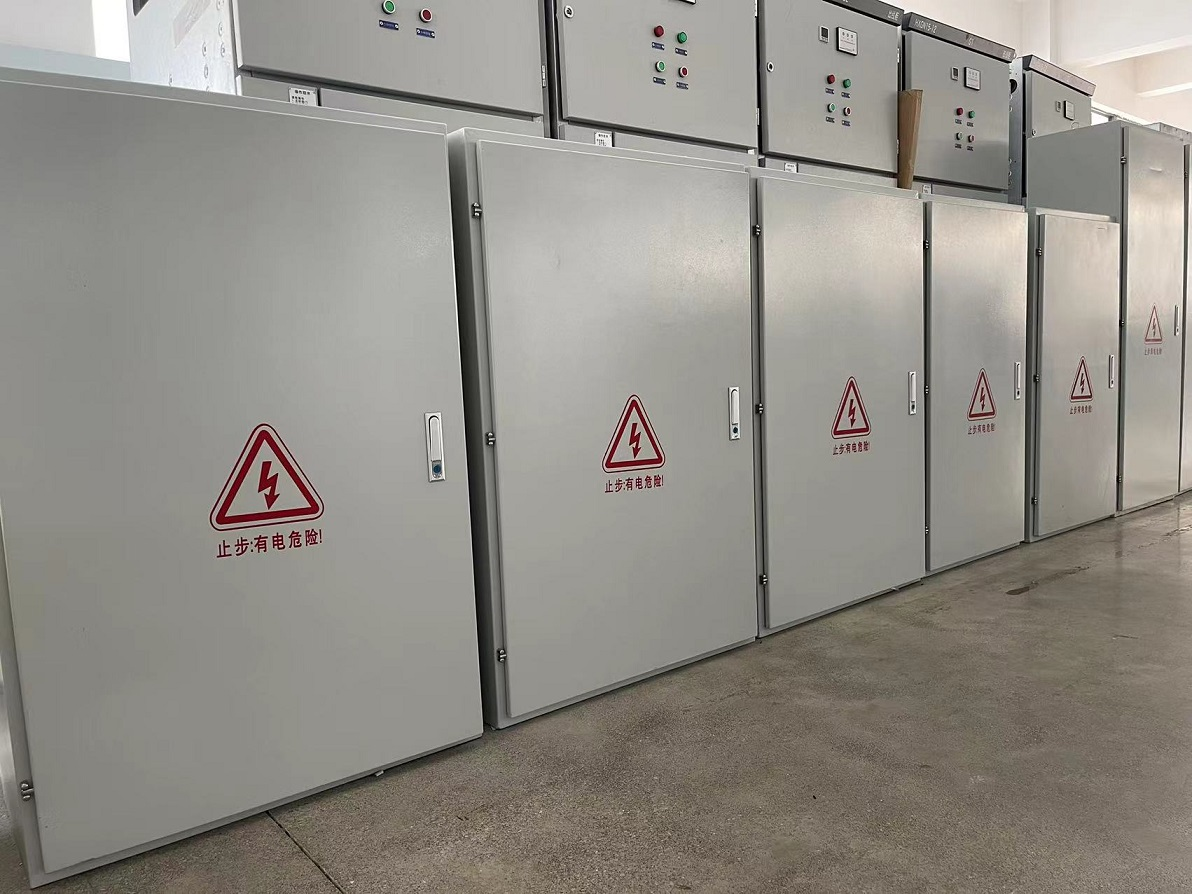
Busbars rarely grab the spotlight, yet they carry the entire electrical heartbeat of your equipment. The base material you choose sets the stage for how well that heartbeat stays steady over time. Copper offers excellent conductivity and handles heat well under sustained loads, but it tarnishes quickly and can be expensive. Aluminum is lighter and cheaper, though it expands more with temperature swings and needs larger cross-sections to match copper's current-carrying capacity. What many overlook is how the material's thermal expansion, creep behavior, and resistance to corrosion interact with the connections and enclosures around it. A mismatch here can loosen joints, raise resistance, and quietly shorten the life of everything downstream.
Plating acts as the first line of defense against environmental attack and electrical degradation. Bare copper oxidizes into a high-resistance patina, while bare aluminum forms an oxide layer that can cause hot spots at termination points. Tin plating is the workhorse for many industrial settings: it protects against corrosion, provides a stable contact surface, and resists fretting at bolted joints. Silver offers lower contact resistance for high-current, high-reliability applications but costs more and can tarnish in sulfur-rich atmospheres. Nickel shines in harsh chemical environments or where high temperatures are common, though its conductivity is not as impressive. The plating thickness matters too—too thin, and it wears through after repeated thermal cycles; too thick, and you may see cracking or flaking under mechanical stress.
Longevity is not about picking the most expensive material or the shiniest plating. It is about matching both to your actual operating environment: ambient temperature swings, humidity, chemical exposure, mechanical vibration, and expected load profile. A copper busbar with the wrong plating in a coastal facility can fail faster than an aluminum one with a well-chosen coating. Regular thermal imaging and torque checks reveal early signs of degradation before they become catastrophic. Spend time understanding the interplay between substrate and plating, and your busbars will quietly keep working years after cheaper combinations have already been replaced.
The Certification Marks That Actually Matter in the Field
When you start comparing credentials, the alphabet soup can be overwhelming. But in the field, people don't ask how many letters you have after your name. They ask whether you can solve the problem in front of you. That's why the certifications that carry weight are the ones tied to hands-on competence and recognized by the folks who actually do the work day to day.
Some certifications are nothing more than a receipt for sitting through a webinar. Others demand months of study, a proctored exam, and sometimes a practical component. The difference shows up quickly on a job site. If you can walk through a real scenario and explain your reasoning, that's what separates a meaningful credential from a PDF badge.
Talk to experienced professionals in your niche, and a handful of names come up repeatedly. Often they're issued by established industry bodies rather than vendors looking to lock you into their ecosystem. The best ones require renewal through continuing education, which keeps the knowledge current. In the end, a certification matters only as much as the respect it earns from the people whose opinion you care about.
Heat Dissipation Is Where Cheap Units Quietly Fail
Most budget units ship with undersized heatsinks and fans that barely move air. Under sustained load, the internal temperature climbs fast, forcing the processor to throttle back. You'll notice it first as random stutters or a drop in frame rates after thirty minutes of use. Over time, the constant heat cycling stresses solder joints and capacitors, which is why these units often die just outside the warranty window.
The real problem isn't raw performance on day one—it's that heat soaks into every component. Plastic housings deform slightly, thermal paste dries out, and fan bearings wear down from spinning at max RPM all the time. A well-cooled unit runs quieter and lasts years longer because it never has to fight its own exhaust. Cheap units don't fail on a benchmark chart; they fail quietly on a hot afternoon when the fan gives up and the board warps.
Smart Customization for Tight Spaces and Future Expansion
Tight spaces often force a compromise between immediate functionality and long-term adaptability. Our approach flips that trade-off by embedding customization into the core structure itself. Instead of relying on fixed dimensions or preset layouts, each unit is assembled from modular components that can be reconfigured without heavy tooling or downtime. A wall panel might slide into a corner to serve as a desk, then fold back when you need walking room. Brackets accept add-on shelves, rails support hanging storage, and cable channels snap open for easy rerouting. Because these adjustments happen on the fly, a cramped office corner becomes a workstation, a reading nook, or a storage bay without ever feeling cluttered.
Future expansion is handled the same way: you never have to replace the system, only reshape it. Base frames come with pre-drilled anchor points aligned to a common grid, so adding a second tier, a fold-out bed, or a rotating arm is a matter of minutes rather than a weekend project. This keeps the footprint lean today while protecting your investment tomorrow. We intentionally avoid proprietary connectors that force you back to us for every small tweak; standard bolts, hex keys, and a bit of patience are enough. The result is a living setup that grows alongside your needs, whether you are furnishing a studio apartment, a mobile clinic, or a maker workshop where every inch counts.
How to Spot a Manufacturer That Will Still Answer Calls Next Year
A manufacturer that values long-term partnerships tends to leave subtle clues in how they handle pre-sale questions. If they respond to a simple email with a generic template rather than asking a follow-up question about your actual production needs, that’s usually a sign their support will only get thinner after the invoice is paid. Look for vendors who reference specific details you mentioned, propose adjustments to your design, or even gently push back when something won’t work in real manufacturing. Those small behaviors show they’re thinking beyond closing a single order.
Another practical test is to call them outside of normal sales hours or send a message late on a Friday. The ones likely to still answer next year often have someone monitoring communication channels beyond a single sales rep. That doesn’t mean they need 24/7 live chat, but if your point of contact goes silent for days without an out-of-office note or an alternative person to reach, that’s a structural weakness. Solid manufacturers build in redundancy because they know production delays don’t follow business hours.
Finally, check how they handle mistakes or unexpected problems during the sampling phase. A manufacturer that owns up to a material substitution, a missed tolerance, or a delayed shipment without making excuses is far more likely to remain reachable and accountable in the long run. If every issue gets blamed on the shipping company or a nameless factory worker, future calls will probably go to voicemail once they have your money.
FAQ
Start with the environment. Powder-coated steel works for dry indoor settings, but if moisture or chemicals are present, go for stainless steel or polycarbonate. Polycarbonate is lighter and resists corrosion, but it won't handle the same mechanical impact as steel. Match the material to the worst-case conditions, not the average day.
Look at the busbar cross-section and the support points. Thicker copper or aluminum bars reduce hot spots, and good support prevents sagging under high current. Ask the manufacturer for temperature rise test data at full load, not just the rated current. A 10-degree difference in busbar temperature can double the lifespan of the insulation.
IP ratings give a starting point, but they don't tell you about corrosion resistance or long-term seal degradation. For washdown areas, check that the gasket material is rated for the cleaning chemicals used. For very dusty sites, ask about ventilation and heat dissipation, since a high IP rating can trap heat inside the enclosure.
Focus on third-party test reports rather than a wall of logos. Look for IEC 61439 for low-voltage assemblies, UL 67 or UL 891 if you're in North America, and type-tested designations. A manufacturer that can show you the actual test setup and results is worth more than a generic certificate of conformity.
Ask for the temperature rise test at the rated current with all outgoing circuits loaded simultaneously, not just one or two. Check that the test was done in an ambient close to your site's maximum temperature. If they only show a single thermal image or a summary sheet, request the full test curve over time. Real testing shows stable temperatures, not just a quick snapshot.
Underestimating future load growth is number one. Many people size the box for today's breaker count and leave no spare space. Another mistake is ignoring the incoming cable bending radius; a compact box can be impossible to terminate large cables safely. Always add at least 20% spare capacity and verify cable entry dimensions before ordering.
Standard layouts are cheaper and faster, but they often force compromises on cable routing and future expansion. If your load profile is irregular or the site has space constraints, a custom layout pays off quickly. Ask for a 3D drawing of the proposed internal arrangement before committing, and check that all breaker handles and metering displays remain accessible after installation.
Conclusion
Most project delays and premature failures trace back to sizing decisions made before a single quote is finalized. A distribution box manufacturer with real field experience will ask for your actual load profile—duty cycles, inrush currents, harmonic content—not just the rated amps on a nameplate. That distinction changes breaker coordination, conductor sizing, and even enclosure ventilation. Equally telling is what sits behind the breakers: busbar material and plating. Tinned copper holds up far better than bare aluminum in humid or mildly corrosive environments, and the difference shows up as pitting, hot spots, and loose connections within a few years. Certification marks also deserve a closer look than many buyers give them. Look for type-tested assemblies and component-level approvals that match your region’s installation codes, not a generic CE mark or a faded sticker. In the field, the marks that reduce inspection headaches are those tied to short-circuit withstand ratings and ingress protection, because those are the ones inspectors actually verify.
Heat dissipation is another quiet failure point. A compact enclosure may look tidy on a wall, but if busbars and breakers are packed without airflow paths, the unit will derate itself in summer or trip unexpectedly under sustained load. Cheap boxes often skip thermal modeling, and that cost lands on the operator months later. For tight mechanical rooms or outdoor pads, smart customization matters more than a long catalog. Good manufacturers offer split bus layouts, removable gland plates, and reserved space for future feeders without turning the enclosure into a service nightmare. Finally, ask how the factory handles the first year after delivery. A supplier that can send a photo of your exact assembly during production, answer technical questions with named engineers, and keep records of your build will still be reachable next year—because the real test is not the datasheet, but whether someone picks up the phone when a breaker trips at 6 a.m.
Contact Us
Contact Person: Queenie
Email: [email protected]
Tel/WhatsApp: +86 15558806611
Website: https://www.cnkeeya.com