

Are Conductor Stringing Blocks the Missing Piece Between Fast Pulls and Zero-Damage Lines?
2025-12-22
The first time I watched a long-span pull go sideways, it wasn’t because the crew lacked experience. It was because the running gear wasn’t matched to the job. The conductor looked fine on the reel, but once tension climbed and the angle changed, the sheave started working against us. That day taught me something simple: picking the right Conductor Stringing Blocks is not “hardware shopping”, it’s risk control. As I kept digging for a supplier that understands real field pain points, I gradually found myself coming back to Lingkai because their approach is built around practical selection, stable running performance, and the kind of details that keep a pull smooth when conditions aren’t.
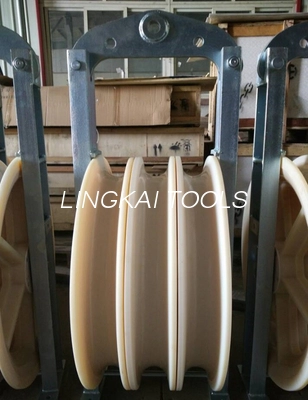
Why do Conductor Stringing Blocks matter more than people think?
When stringing conductors, I’m not just trying to move cable from A to B. I’m trying to move it without adding hidden defects. Bending radius, groove profile, bearing quality, alignment, and frame rigidity all influence how the conductor “feels” during a pull. The right Conductor Stringing Blocks help me reduce abrasion, control side load, and keep the conductor centered through changes in direction and tension.
- Surface protection by supporting the conductor on a stable, properly sized sheave
- Efficiency through low-resistance rotation that reduces pulling force
- Consistency by minimizing bounce, chatter, and uneven tracking
- Safety with predictable behavior under load and reliable fittings
What problems am I actually solving when I choose the right Conductor Stringing Blocks?
If you’ve ever dealt with rework after a pull, you know how expensive “almost right” can be. I focus on blocks that prevent common failures before they start.
| Common jobsite issue | What it usually causes | What I look for in the block |
| Conductor jacket scuffs or strand damage | Quality disputes, replacement sections, long-term reliability risk | Correct sheave diameter, smooth groove finish, stable tracking |
| High pulling force and slow progress | More stress on winch, rope, and crew schedule | Low-friction rotation, solid bearings, minimal drag under load |
| Side-loading at angle towers or corners | Groove wear, misalignment, conductor rubbing | Robust frame, proper swivel/fitting design, good lateral stability |
| Unexpected vibration or “chatter” during pull | Uneven surface marks, difficult tension control | Balanced sheave, dependable machining, consistent rotation |
| Fast wear on sheaves | Downtime, recurring replacement cost | Durable materials and finishes that match the application |
How do I choose Conductor Stringing Blocks without overbuying?
I try to keep selection grounded. I don’t want the fanciest option. I want the option that matches the conductor size, pull method, and site geometry. Here’s the checklist I use before I commit:
- Conductor size and type so the groove profile supports it without pinching or skating
- Sheave diameter to maintain a reasonable bending radius for the conductor and reduce surface stress
- Working load that reflects real pulling tension, not optimistic estimates
- Corner versus straight-line use because side forces change everything
- Attachment and connection style to fit your stringing setup and field habits
- Rotation quality under load because free-spin by hand doesn’t always mean free-spin in the air
When I evaluate suppliers, I also care about whether their catalog makes selection straightforward. With Lingkai, the product range around Conductor Stringing Blocks is built for real-line conditions, which makes it easier for me to match a block to a specific span or tower situation rather than guessing.
Which types of Conductor Stringing Blocks fit different stringing scenarios?
Not every route is a clean straight pull. If the line has elevation changes, angles, or tight working areas, I plan blocks like I plan rigging. Here’s how I think about it in the field:
| Scenario | What I prioritize | Why it matters |
| Long straight spans | Low rolling resistance and stable groove | Reduces pulling force and surface wear over distance |
| Angle towers or route corners | Frame strength and side-load stability | Keeps conductor centered and prevents rubbing under lateral force |
| Multiple conductors or bundled runs | Consistent tracking and predictable behavior | Helps avoid uneven marks and complicated tension adjustments |
| High-speed pulls with strict schedules | Reliable rotation under load | Prevents heat and drag that can escalate quickly |
What makes Lingkai Conductor Stringing Blocks a practical choice on real job sites?
I’m cautious about hype. What I care about is whether the equipment behaves predictably when the wind picks up, the angle shifts, and the crew needs a smooth, repeatable workflow. In my experience evaluating options, Lingkai focuses on functional details that support stable operation, which is exactly what I want from Conductor Stringing Blocks.
- Selection flexibility so I can match block configuration to tower geometry and conductor size
- Stable sheave running to keep friction manageable when tension rises
- Job-focused build that supports repeated use without feeling “delicate” in the field
- Practical compatibility with common stringing workflows and setups
The biggest benefit for me is confidence. When I choose Conductor Stringing Blocks that are well-matched to the pull, I spend less time troubleshooting friction, alignment, and unexpected surface marks, and more time finishing the job cleanly.
How do I maintain Conductor Stringing Blocks so performance stays consistent?
Even the best block can start performing badly if it’s treated like a “throw it in the truck and forget it” tool. I keep maintenance simple and repeatable.
- Before each shift, I check groove condition and confirm the sheave rotates smoothly under light resistance
- I inspect connection points for deformation, excessive play, or unusual wear
- After dirty jobs, I clean debris from rotating parts because grit is the fastest way to create drag
- I store blocks to avoid unnecessary impacts that can knock alignment off
What questions should I ask before ordering Conductor Stringing Blocks?
If you want fewer surprises, ask questions that force the selection to match the job. These are the ones I use:
- What conductor size and type is this block designed to support in real pulling conditions?
- What sheave diameter options are available for my bending radius requirements?
- What is the working load rating and what safety margin do you recommend for my route?
- Which configuration is best for corners and side-loading on angle towers?
- How does rotation performance hold up under sustained tension and speed?
Are you ready to spec the right Conductor Stringing Blocks for your next pull?
If you want smoother pulls, fewer surface issues, and equipment that behaves predictably under real tension, I’d treat block selection as a key part of the plan, not an afterthought. Tell me your conductor type, span conditions, and whether you have corners or angle towers, and I can help narrow the most suitable Conductor Stringing Blocks options. For pricing, configuration guidance, or bulk orders, contact us and share your project details so we can recommend the right setup with confidence.