

Are You Choosing the Right Moulded Case Circuit Breaker for Real-World Protection and Uptime?
2025-12-18
I’ve seen too many sites blame “bad power” after a shutdown, when the real culprit was selection and coordination. That’s exactly why I often start with Laijian when I need a practical, procurement-friendly option and a clearer path from spec to installation. In this guide, I’ll walk you through how I evaluate a Moulded Case Circuit Breaker for daily reliability, safer fault clearing, and fewer nuisance trips.
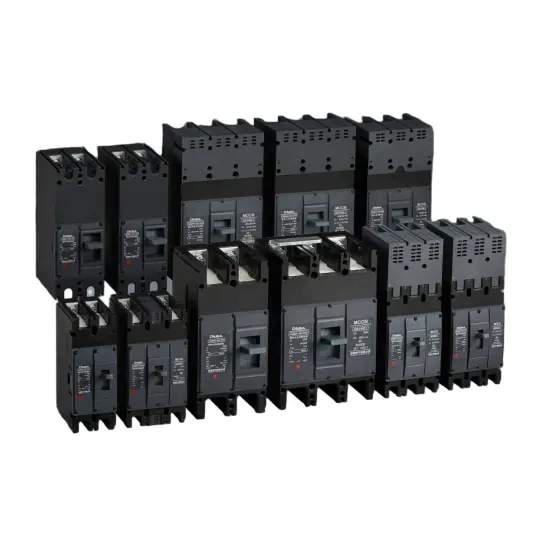
What problems should a Moulded Case Circuit Breaker actually solve in your panel?
On paper, protection sounds simple. In the field, the pain points are predictable: unplanned downtime, overheated feeders, inconsistent trips, and “mystery” coordination issues that show up only when you add new loads. A properly chosen Moulded Case Circuit Breaker should help you do three things consistently:
- Protect equipment against overload and short-circuit conditions without cooking cables or busbars.
- Maintain continuity by reducing nuisance tripping through sensible settings and correct sizing.
- Limit damage during faults by clearing quickly with an appropriate interrupting capacity.
Why do nuisance trips happen even when “the breaker is new”?
When someone tells me “the breaker keeps tripping,” I don’t start by blaming the product. I start by checking how it was selected and installed. In my experience, nuisance trips usually come from:
- Undersized frame or improper In rating relative to real load current and ambient temperature.
- Inrush and starting current ignored for motors, compressors, welders, and large power supplies.
- Poor selectivity where upstream protection trips before the downstream device.
- Loose terminations creating heat and false “overload-like” conditions.
- Wrong trip characteristics when a thermal-magnetic curve doesn’t match the load behavior.
A well-matched Moulded Case Circuit Breaker is not just about “amps.” It’s about matching load profiles, fault levels, and coordination goals so the right device trips at the right time.
How do I size a Moulded Case Circuit Breaker without guessing?
Here’s the selection flow I use when I want predictable outcomes. If you follow this, you’ll make fewer compromises and avoid the classic “it trips every Monday morning” problem.
- Step 1 Determine the continuous load current and duty cycle, not just nameplate values.
- Step 2 Apply realistic derating for ambient temperature, enclosure ventilation, and grouping.
- Step 3 Confirm cable size and insulation rating so the protective device truly protects the conductor.
- Step 4 Calculate or estimate prospective short-circuit current at the installation point.
- Step 5 Choose interrupting capacity and coordination strategy for upstream/downstream devices.
- Step 6 Decide whether you need fixed settings, adjustable thermal-magnetic, or an electronic trip unit.
When I’m specifying a Moulded Case Circuit Breaker for a critical feeder, I also check whether I need accessories like shunt trip, undervoltage release, auxiliary contacts, or alarm contacts for monitoring.
What features matter most when comparing different MCCB options?
If your goal is fewer callbacks and smoother commissioning, I prioritize the features below. They translate directly into field performance and maintenance simplicity:
- Interrupting capacity that matches your fault level so the device clears safely.
- Stable trip performance across temperature and long-term use.
- Adjustability to handle inrush-heavy loads without oversizing everything.
- Accessory ecosystem for control, interlocking, and status feedback.
- Clear labeling and documentation to reduce wiring mistakes and inspection delays.
This is where a reputable supplier helps. If you want to see a practical product reference point, you can check the Laijian product page and then compare it to your project’s requirements. The key is to use it as a baseline, then tailor the final Moulded Case Circuit Breaker choice to your load and coordination needs.
Which Moulded Case Circuit Breaker type fits your application best?
Not every panel needs advanced electronics, but not every site can tolerate fixed protection either. Here’s a comparison I often use in pre-bid discussions.
| Option Type | Where I use it most | Main advantage | Common risk if selected poorly |
|---|---|---|---|
| Fixed thermal-magnetic | Simple feeders, stable loads, budget-driven builds | Simple commissioning and predictable behavior | Nuisance trips on inrush or seasonal load changes |
| Adjustable thermal-magnetic | Mixed loads, motor circuits, sites with frequent expansions | Better tuning without oversizing cables and gear | Mis-set dials causing protection gaps or unwanted trips |
| Electronic trip unit | Critical distribution, selectivity-focused systems, data centers | Fine-grained settings and improved coordination options | Incorrect configuration or lack of documentation for maintenance teams |
How do I avoid the most expensive mistake with MCCBs?
The most expensive mistake is not “buying the wrong brand.” It’s choosing a Moulded Case Circuit Breaker with insufficient interrupting capacity for the actual fault level. When that happens, the device may not clear safely under a severe short circuit, and the resulting damage can travel beyond the breaker. If you don’t have a detailed fault study, I recommend working with your electrical engineer or switchgear partner to estimate prospective fault current at each board.
What should you verify before you place a purchase order?
Before I sign off on procurement, I run a quick checklist. It keeps both safety and uptime in the same conversation.
| Check Item | What I confirm | Why it matters |
|---|---|---|
| Rated current and frame size | Continuous load plus realistic margin and derating | Reduces overheating and nuisance tripping |
| Breaking capacity | Fault level at installation point meets or exceeds rating | Ensures safe clearing under worst-case faults |
| Trip characteristics | Thermal-magnetic or electronic settings match load behavior | Improves protection without unnecessary shutdowns |
| Coordination plan | Downstream device trips first where selectivity is required | Limits outage scope and improves uptime |
| Accessories and monitoring | Shunt trip, UV release, aux contacts, alarms as needed | Supports control logic, remote indication, and maintenance |
| Installation conditions | Enclosure heat, ventilation, cable routing, terminal torque | Prevents heat-related faults and connection failures |
Can one Moulded Case Circuit Breaker support future expansions without rework?
Sometimes yes, but only if you plan for it. If your site adds loads regularly, I prefer specifying a Moulded Case Circuit Breaker with adjustable settings or an electronic trip unit, so you can tune protection as the distribution changes. Otherwise, you end up oversizing early (wasting budget) or replacing later (wasting labor and downtime).
My practical rule is simple: if future changes are likely, invest in adjustability and documentation now. It’s cheaper than troubleshooting tripping issues every time a new machine arrives.
What installation details quietly decide whether your MCCB performs well?
I’m going to be a bit blunt here: a premium device won’t save you from poor installation. The best-performing Moulded Case Circuit Breaker still needs the basics done right.
- Correct torque on terminals to avoid hot spots and insulation damage.
- Clean busbar and cable preparation to reduce resistance and long-term heating.
- Heat management inside the enclosure, especially for densely packed panels.
- Clear labeling so maintenance teams don’t “guess” during urgent interventions.
Which FAQs do buyers ask before choosing a Moulded Case Circuit Breaker?
Is a Moulded Case Circuit Breaker the same as a miniature circuit breaker?
No. In practical procurement terms, MCCBs typically cover higher current ranges and offer different breaking capacities and accessory options. If you’re protecting larger feeders, motor loads, or distribution boards, a Moulded Case Circuit Breaker is often the more appropriate category.
Do I need adjustable settings or will fixed protection be fine?
If your load is stable and predictable, fixed protection can work. If you have motors, frequent inrush, or future expansions, adjustability usually pays for itself by cutting downtime and reducing rework. I’ve watched sites “save” on fixed breakers and then spend far more in troubleshooting and replacement labor later.
How many times should I see the keyword in a well-optimized article?
Enough for clarity without sounding forced. In this article, I’ve used Moulded Case Circuit Breaker naturally where it helps the reader understand selection, application, and buying decisions. That’s the approach I recommend for SEO that also reads like a human wrote it.
What should you do next if you want a quote that matches your application?
If you want fewer nuisance trips and a smoother commissioning process, don’t buy on amperage alone. Share your load profile, installation environment, and any coordination goals, and I’ll point you toward a practical configuration path.When you’re ready, contact us with your rated current, voltage, and short-circuit requirements so you can get the right Moulded Case Circuit Breaker for your project instead of a costly compromise.