

Can an Indoor High Voltage Load Switch Be Operated Under Load Breaking Conditions Safely
2026-08-04
For electrical engineers and facility managers, the question of whether an Indoor High Voltage Load Switch can handle load breaking operations without compromising safety is not merely academic—it is a daily operational concern. The short answer is yes, but only when the device is properly rated, correctly installed, and operated within its designated parameters. At Toonice, we have spent over a decade manufacturing Indoor High Voltage Load Switch solutions that prioritize both performance and personnel protection. However, understanding the technical boundaries of load breaking is essential before any live operation begins.
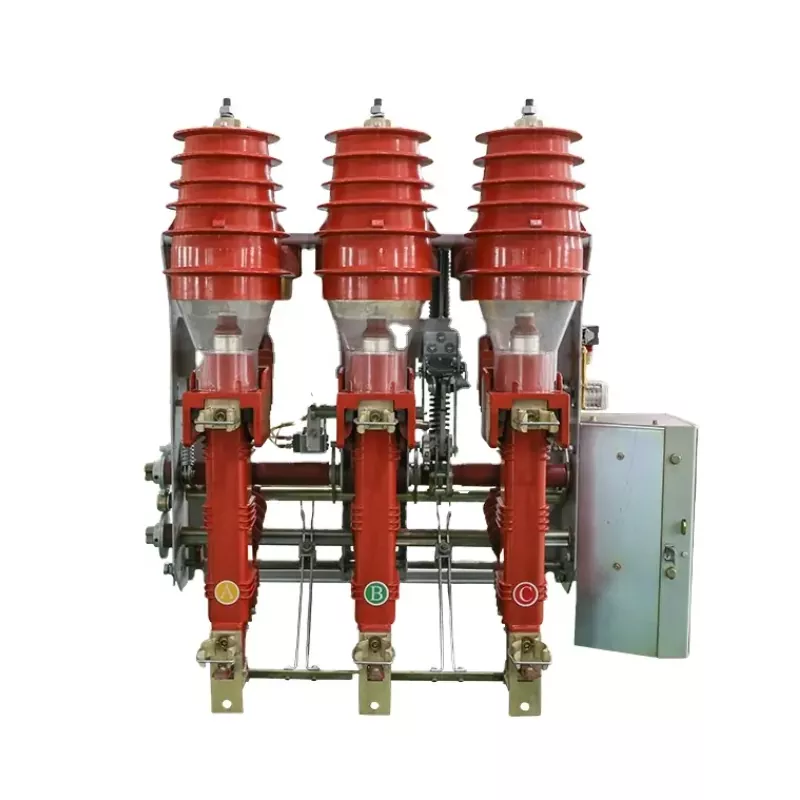
Understanding Load Breaking in Indoor High Voltage Switches
Load breaking refers to the ability to interrupt or establish electrical circuits while current is flowing. Unlike circuit breakers, which are designed to interrupt fault currents, a standard Indoor High Voltage Load Switch is typically intended for making and breaking normal load currents—not short-circuit currents. The critical distinction lies in the arc-quenching medium used.
Modern Indoor High Voltage Load Switch devices employ one of three primary arc-extinction technologies:
| Technology | Arc-Quenching Medium | Maximum Breaking Current (Typical) | Suitable for Load Breaking? |
|---|---|---|---|
| Air-Insulated | Ambient air | Up to 630A | Yes (limited operations) |
| SF6-Insulated | Sulfur hexafluoride gas | Up to 1250A | Yes (highly reliable) |
| Vacuum-Interrupter | Vacuum | Up to 1250A | Yes (excellent durability) |
Each technology offers distinct advantages, but all can perform safe load breaking provided the switch is sized correctly for the application.
Key Safety Factors for Load Breaking Operations
Operating an Indoor High Voltage Load Switch under load requires attention to several critical parameters. The following table outlines the essential safety checks that should be performed before any load-breaking maneuver:
| Safety Parameter | Recommended Practice | Consequence of Neglect |
|---|---|---|
| Rated breaking current | Never exceed nameplate rating | Contact welding or arc flash |
| Operating mechanism condition | Inspect springs and linkages quarterly | Delayed or incomplete opening |
| Insulation integrity | Perform dielectric testing annually | Internal flashover |
| Interlock system functionality | Test mechanical/electrical interlocks monthly | Unauthorized access or misoperation |
| Grounding continuity | Verify resistance < 1Ω | Dangerous touch potentials |
Toonice integrates all these safety checks into our factory acceptance testing, ensuring that every Indoor High Voltage Load Switch shipped from our facility meets or exceeds IEC 60265-1 and GB 3804 standards.
The Role of Fuse Combination in Safe Load Breaking
Many Indoor High Voltage Load Switch configurations include a fuse combination unit. In this arrangement, the switch handles normal load making and breaking, while the fuses provide backup protection against short-circuit currents. This hybrid design enhances safety because:
-
The switch does not need to interrupt fault currents directly
-
Fuses clear high-magnitude faults within milliseconds
-
The switch can be safely opened after the fuse has isolated the faulted circuit
This is why Toonice recommends fused Indoor High Voltage Load Switch assemblies for distribution networks where load fluctuations are common.
Frequently Asked Questions About Indoor High Voltage Load Switch Load Breaking
Q1: Can an Indoor High Voltage Load Switch be used to break motor starting currents?
A1: Yes, but with a critical limitation. Motor starting currents can be 6 to 8 times the full-load current. An Indoor High Voltage Load Switch must have a making capacity that exceeds the peak inrush current, and a breaking capacity that covers the steady-state running current after startup. For direct motor starting, Toonice recommends using a load switch rated at least 1.5 times the motor's locked-rotor current. If the motor is subject to frequent starts (more than 5 per hour), a vacuum-type Indoor High Voltage Load Switch is preferable due to its superior contact erosion resistance. Always consult the switch's duty cycle classification—Class E2 or E3 indicates enhanced electrical endurance for repetitive operations.
Q2: What happens if I accidentally close an Indoor High Voltage Load Switch onto a faulted line?
A2: This is known as "closing onto a fault," and it is one of the most severe stresses an Indoor High Voltage Load Switch can encounter. The switch's making capacity (peak current) must be high enough to withstand the electromagnetic forces generated during the event. If the switch lacks sufficient making capacity, the contacts may repel, weld, or even explode due to arc pressure. However, a properly designed Indoor High Voltage Load Switch with a fuse combination will allow the fuse to clear the fault before the switch contacts separate. Toonice equips all our load switches with high-speed making mechanisms that ensure positive contact closure, even under adverse conditions. After such an event, the switch should be inspected for contact erosion and insulation damage before being returned to service.
Q3: How do I verify that my Indoor High Voltage Load Switch is still safe for load breaking after years of service?
A3: Verification requires a structured maintenance program. First, perform a contact resistance measurement using a micro-ohmmeter—an increase of more than 20% from the baseline indicates oxidation or pitting. Second, conduct a mechanical operation test: perform 5 open-close cycles at no load, listening for unusual sounds or hesitation. Third, test the auxiliary contacts and interlocks to confirm they signal correctly. Fourth, measure the insulation resistance with a 5kV megger—values below 1000 MΩ warrant immediate attention. Toonice provides a detailed 10-point annual maintenance checklist with every Indoor High Voltage Load Switch, and our technical support team can assist with interpreting test results. If the switch has exceeded 10,000 mechanical operations or 1,000 full-load breaking operations, consider a factory refurbishment or replacement.
Operational Best Practices for Maximum Safety
To ensure that your Indoor High Voltage Load Switch performs reliably under load breaking conditions, follow these proven guidelines:
-
Always use the manual operating handle with the door closed – this prevents arc exposure to personnel.
-
Verify the load current does not exceed 80% of the switch's rated breaking capacity – this provides a safety margin for transient overcurrents.
-
Perform visual inspections before each operation – look for discoloration, soot, or moisture ingress.
-
Maintain a logbook – record every load-breaking operation, including date, current level, and any abnormal observations.
-
Train operators – ensure they understand the difference between load breaking and fault interruption.
Why Toonice Stands Out in Indoor High Voltage Load Switch Safety
Toonice designs every Indoor High Voltage Load Switch with a three-tier safety philosophy: inherent arc containment, positive mechanical interlocking, and clear visual indication of contact position. Our SF6 and vacuum models undergo type tests that include 100 load-breaking operations at rated current—double the IEC requirement. Additionally, our switches feature a visible break gap that allows operators to confirm physical isolation before any maintenance work begins.
Conclusion and Contact Information
Operating an Indoor High Voltage Load Switch under load breaking conditions is inherently safe when the equipment is properly selected, maintained, and operated according to established protocols. The technology exists, the standards are clear, and the track record across global distribution networks is overwhelmingly positive. However, safety is not a one-time achievement—it is a continuous commitment to quality, training, and technical diligence.
Contact us at Toonice today to discuss your specific load switching requirements. Our engineering team will help you select the right Indoor High Voltage Load Switch for your application, provide comprehensive operation manuals, and offer remote or on-site training for your staff. Reach out via our website or email—we are ready to ensure your load breaking operations are as safe as they are efficient.