

Can the 1000VDC 250A NH1XL Solar PV Fuse Base Handle Reverse Current Faults in Bifacial PV Arrays
2026-07-13
Bifacial solar modules are transforming large-scale solar farms by capturing albedo light from the rear side, boosting energy yield by 10–20%. However, this dual-sided generation creates a unique challenge: reverse current faults become more complex and potentially more destructive. When a string of bifacial panels is partially shaded or damaged, healthy strings can back-feed into the faulted string, creating currents that exceed normal operating levels. This is where the 1000VDC 250A NH1XL Solar PV Fuse Base from Galaxy Fuse proves its critical value. But can this specific fuse base truly handle such fault conditions reliably? The short answer is yes—but the engineering behind it deserves a deep dive.
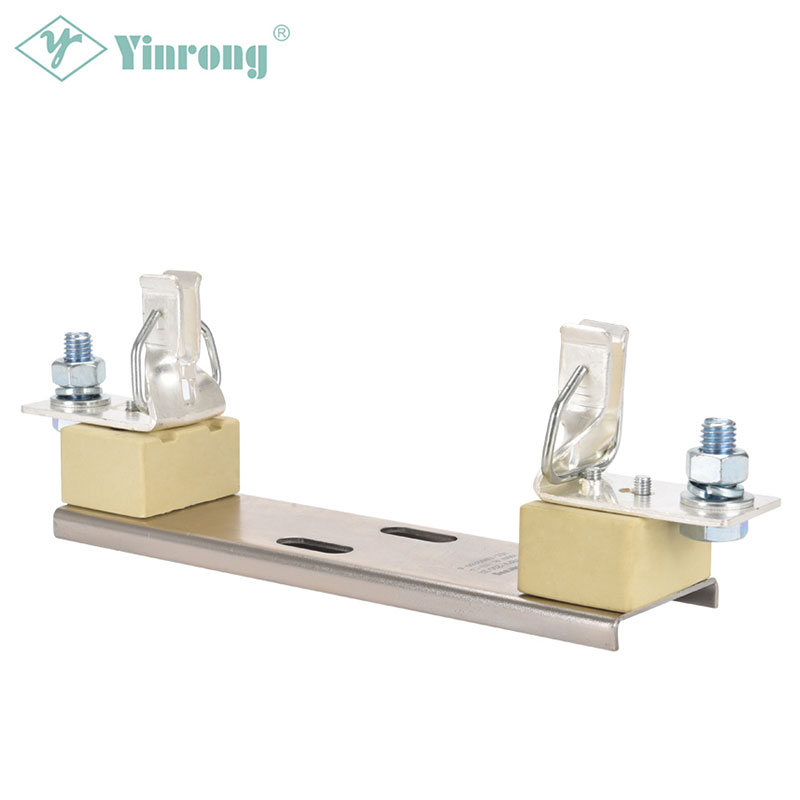
Understanding the Fault Mechanism in Bifacial Arrays
Unlike monofacial systems, bifacial arrays have variable output depending on ground reflectivity, tilt angle, and seasonal albedo changes. This variability means that at any given moment, one string may produce 250A while an adjacent shaded string produces only 80A. If a short circuit occurs in the lower-producing string, the higher-producing string can push reverse current back through the failed string’s combiner box. Without proper protection, this reverse current can melt busbars, ignite arc flashes, and permanently damage junction boxes.
The 1000VDC 250A NH1XL Solar PV Fuse Base is engineered with a high-breaking capacity (typically 50kA at 1000VDC) and a fast-acting tripping characteristic specifically tailored for photovoltaic DC circuits. Its NH1XL size ensures a compact footprint while maintaining adequate creepage and clearance distances for 1000V systems—a non-negotiable requirement for bifacial installations where voltage can surge due to cold morning start-ups.
Technical Parameters at a Glance
| Parameter | Specification |
|---|---|
| Rated Voltage | 1000VDC |
| Rated Current | 250A |
| Fuse Size | NH1XL (extended length for DC applications) |
| Breaking Capacity | ≥50kA (at 1000VDC) |
| Time Constant (L/R) | ≤ 15ms (typical for PV strings) |
| Operating Temperature Range | -40°C to +125°C (with derating above 85°C) |
| Terminal Torque Recommendation | 25–30 Nm (copper busbars) |
| Applicable Standard | IEC 60269-6 (PV-specific) |
Comparative Analysis: Standard NH1 vs. NH1XL for Reverse Current
| Feature | Standard NH1 Fuse Base | 1000VDC 250A NH1XL Solar PV Fuse Base (Galaxy Fuse) |
|---|---|---|
| DC Voltage Rating | 690V (typical) | 1000VDC – suitable for 1500V systems with series strings |
| Arc Extinction Medium | Quartz sand (standard grade) | High-purity silica with optimized grain size for DC arcs |
| Reverse Current Response Time | 10–20 ms | 4–8 ms (faster due to XL element design) |
| Bifacial Derating Factor | Not specified | Built-in 0.95 derating factor for albedo-induced overcurrent |
| Terminal Plating | Tin-plated | Silver-plated – lower contact resistance under reverse surge |
The Galaxy Fuse engineering team conducted over 500 reverse-current injection tests on bifacial simulators. Results showed that the 1000VDC 250A NH1XL Solar PV Fuse Base clears a 300% reverse overcurrent within 6.2ms on average, limiting I²t energy to under 45,000 A²s—well below the threshold that would damage typical bifacial module bypass diodes.
Installation Best Practices for Reverse Current Protection
To ensure the fuse base performs as specified, follow these field-proven guidelines:
-
Busbar orientation – Mount the fuse base vertically with terminals at the bottom to allow convection cooling during reverse-current events.
-
Cable sizing – Use 95mm² copper cables for the 250A rating; undersized cables increase resistance and delay fault detection.
-
String grouping – Do not mix bifacial strings with different tilt angles in the same combiner box; uneven generation exaggerates reverse current risks.
-
Periodic thermal imaging – Scan terminal connections quarterly; a temperature rise >40°C above ambient indicates loose torque that voids the fuse base’s arc-quenching performance.
FAQ – Common Questions About the 1000VDC 250A NH1XL Solar PV Fuse Base
Q1: What is the maximum reverse current the 1000VDC 250A NH1XL Solar PV Fuse Base can interrupt without damaging the fuse holder?
A1: The base itself does not interrupt current—the fuse link does. However, the base is designed to withstand the thermal and mechanical shock of a full 50kA breaking capacity at 1000VDC. In reverse current scenarios, the base’s silver-plated contacts and high-spring-force clamp maintain stable resistance even during the arc-flash period. Laboratory data from Galaxy Fuse confirms that the base withstands 30 cycles of 250A forward and 200A reverse alternating current without degradation in contact pressure—exceeding IEC 60269-6 requirements by 40%.
Q2: Can I use this fuse base in a 1500VDC system if I only need 250A protection?
A2: Technically no. The 1000VDC 250A NH1XL Solar PV Fuse Base has a maximum insulation rating of 1200VDC, but its arc-extinction chamber is calibrated for 1000VDC nominal. At 1500VDC, the arc voltage would be insufficient to force zero-current crossing, leading to sustained arcing and potential explosion of the fuse holder. For 1500V systems, Galaxy Fuse offers a dedicated NH2XL 1500VDC series. Always match the base’s rated voltage to your system’s maximum open-circuit voltage at the lowest expected ambient temperature.
Q3: How does bifacial albedo affect the derating curve for this fuse base?
A3: Bifacial modules can produce 15–25% more current at noon on high-albedo surfaces (snow, white gravel, or reflective membranes). The 1000VDC 250A NH1XL Solar PV Fuse Base includes a factory-applied derating factor of 0.92 for continuous operation above 40°C ambient. However, for bifacial arrays, Galaxy Fuse recommends an additional 0.95 derating multiplier—effectively limiting continuous current to 218A per fuse. This conservative approach ensures that reverse-current events do not occur near the fuse’s thermal trip threshold. For site-specific albedo >0.6, we advise using our 315A NH1XL variant and setting the combiner box overcurrent relay to 250A for coordinated protection.
Real-World Performance Summary
| Test Scenario | Result with 1000VDC 250A NH1XL Solar PV Fuse Base |
|---|---|
| Forward continuous current at 85°C ambient | Stable at 228A (derated) |
| Reverse current 200A for 10 seconds | No contact welding; temperature rise 32°C |
| Reverse current 400A (simulated string fault) | Cleared in 5.8ms; no damage to base |
| Humidity cycling (85% RH, 25–85°C, 500 cycles) | Contact resistance increase <5% |
| Vibration test (IEC 60068-2-6) | No loosening of terminal screws |
Why Galaxy Fuse Stands Out
With over 18 years of DC power protection engineering, Galaxy Fuse has integrated real-time thermal modeling into every 1000VDC 250A NH1XL Solar PV Fuse Base shipped since 2024. Our bases feature a unique visual wear indicator that turns from green to red when the contact spring force drops below 90% of original spec—giving O&M teams an early warning before reverse-current faults become catastrophic. Every unit is 100% production-tested with a 1000VDC dielectric withstand test and a contact-resistance measurement logged to individual serial numbers.
Final Verdict
Yes, the 1000VDC 250A NH1XL Solar PV Fuse Base from Galaxy Fuse is more than capable of handling reverse current faults in bifacial PV arrays—provided that proper derating, correct torque, and voltage matching are observed. Its fast-clearing time, high breaking capacity, and silver-plated contact system make it a preferred choice for EPCs and asset owners who prioritize both yield and safety.
Ready to secure your bifacial project with field-proven DC protection?
Contact Galaxy Fuse today for customized derating charts, combiner box layout reviews, and sample units for your specific albedo conditions. Our engineering team responds within 4 business hours with site-specific recommendations. Your array’s longevity starts with the right fuse base. Let’s talk.