

Fixed or Draw-Out: Which Low Voltage Switchgear Suits Your Plant?
2026-09-24
When a plant expands, the electrical team faces a decision that will affect maintenance for the next 20 years: should the new Low Voltage Switchgear be fixed or draw-out? The difference is not just about how the breaker is mounted. It is about how long it takes to replace a breaker, how much space the switchgear requires, how safe the maintenance procedure is, and how much the initial investment will be. A fixed switchgear is simpler and less expensive. A draw-out switchgear is more flexible and easier to maintain. The right choice depends on the plant's downtime tolerance, maintenance philosophy, and budget. This guide provides a decision framework based on real project data.
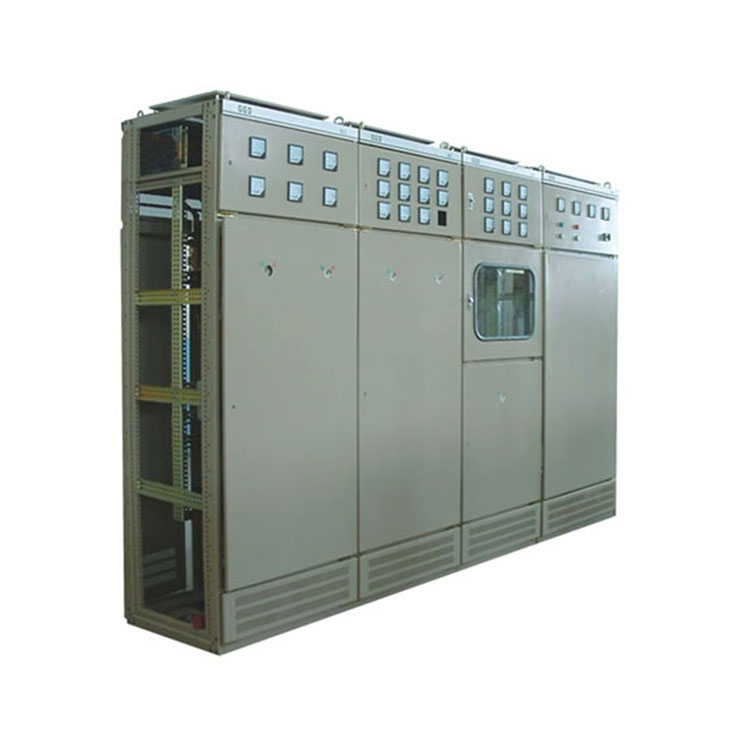
1. How Do Fixed and Draw-Out Designs Differ in Daily Operation?
In a fixed Low Voltage Switchgear, the circuit breaker is bolted directly to the busbars and the cable connections. To replace or service the breaker, the operator must disconnect the cables, remove the bolts, and physically lift the breaker out of the enclosure. This process takes 2 to 4 hours and requires a qualified electrician. In a draw-out design, the breaker is mounted on a carriage that slides into a compartment. The breaker is connected to the busbars through primary disconnects and to the control circuit through secondary disconnects. To remove the breaker, the operator turns a handle to disconnect the primary and secondary circuits, then slides the breaker out on rails. The process takes 15 to 30 minutes. The table below compares the operational differences.
| Operational factor | Fixed switchgear | Draw-out switchgear |
| Breaker replacement time | 2 – 4 hours | 15 – 30 minutes |
| Required tools | Wrenches, cable tools | None (handle provided) |
| Risk of incorrect reconnection | Moderate | Low (keyed connectors) |
| Arc flash exposure during maintenance | Higher (live busbars exposed) | Lower (breakers removed to safe area) |
| Spare breaker requirement | 1 per frame size (for critical circuits) | 1 per frame size (shared across compartments) |
In our factory, we manufacture both fixed and draw-out Low Voltage Switchgear. The choice depends on the criticality of the circuit and the maintenance strategy. For a plant that cannot tolerate more than 30 minutes of downtime on a critical feeder, the draw-out design is the better choice.
2. What Is the Cost Difference and How Does It Affect the Payback Period?
The initial cost of a draw-out Low Voltage Switchgear is 20 to 40 percent higher than a fixed switchgear of the same rating. The additional cost is due to the carriage mechanism, the primary and secondary disconnects, the compartment barriers, and the higher precision required in manufacturing. However, the total cost of ownership depends on the maintenance and downtime costs over the life of the equipment. The table below shows a simplified cost comparison for a plant with 20 feeders.
| Cost factor | Fixed switchgear | Draw-out switchgear |
| Initial equipment cost (20 feeders) | $45,000 | $60,000 |
| Breaker replacement time (per event) | 3 hours | 0.5 hours |
| Downtime cost per hour | $2,000 | $2,000 |
| Expected maintenance events over 20 years | 15 | 15 |
| Total downtime cost over 20 years | $90,000 | $15,000 |
| Total cost of ownership | $135,000 | $75,000 |
Payback calculation: The additional upfront cost of $15,000 for the draw-out design is recovered after just 6 maintenance events (15 events x $2,000 per hour x 2.5 hours saved = $75,000 saved). Most plants reach this point within 5 to 7 years.
Conso Electrical Science and Technology Co., Ltd. manufactures Low Voltage Switchgear in both fixed and draw-out configurations. Our factory provides a total cost of ownership calculator that allows plant managers to compare the two options based on their specific downtime cost and maintenance frequency.
3. How Does Maintenance Safety Differ Between the Two Designs?
Safety is a critical factor in switchgear selection. In a fixed Low Voltage Switchgear, the maintenance technician must work near live busbars when replacing a breaker. The busbars remain energized, and the technician must use appropriate personal protective equipment and follow a strict lockout/tagout procedure. In a draw-out design, the breaker can be moved to a safe area before maintenance begins. The busbars are isolated behind shutters that close automatically when the breaker is removed. This reduces the arc flash risk. The table below compares the safety features of the two designs.
| Safety feature | Fixed switchgear | Draw-out switchgear |
| Busbar exposure during maintenance | Live busbars exposed | Automatic shutters isolate busbars |
| Arc flash boundary | Larger (technician near live parts) | Smaller (work performed remotely) |
| Lockout/tagout complexity | Higher (multiple points) | Lower (single handle position) |
| Required PPE level | Higher (arc flash suit) | Lower (standard electrical PPE) |
In our factory, we design our draw-out Low Voltage Switchgear with automatic safety shutters and mechanical interlocks that prevent the breaker from being inserted or removed while the circuit is closed. These features are tested to IEC 61439-2 standards.
4. Which Design Is Right for Different Plant Types?
The choice between fixed and draw-out depends on the plant type and the operational profile. For a small workshop with a single shift and low downtime cost, a fixed Low Voltage Switchgear is sufficient and more economical. For a continuous process plant, such as a chemical plant or a data center, where downtime costs are high and maintenance must be performed quickly, the draw-out design is preferred. For a plant with frequent process changes or planned expansions, the draw-out design provides more flexibility because breakers can be moved between compartments. The table below summarizes the recommended design for different plant types.
| Plant type | Downtime cost | Maintenance frequency | Recommended design |
| Small workshop | Low | Low | Fixed |
| Commercial building | Moderate | Low | Fixed or draw-out |
| Continuous process plant | High | Moderate | Draw-out |
| Data center | Very high | High | Draw-out |
| Plant with frequent expansion | Moderate | Moderate | Draw-out |
Conso Electrical Science and Technology Co., Ltd. has supplied Low Voltage Switchgear to plants in over 30 countries. Our factory can provide a consultation to determine the optimal design based on the plant's downtime cost, maintenance strategy, and future expansion plans.
Frequently Asked Questions About Fixed and Draw-Out Low Voltage Switchgear
Summary for Plant Electrical Managers
The choice between fixed and draw-out Low Voltage Switchgear is a decision that affects maintenance time, safety, and total cost of ownership. Fixed switchgear is simpler and less expensive, but it takes longer to maintain and requires more safety precautions. Draw-out switchgear is more expensive upfront, but it reduces downtime, improves safety, and provides more flexibility for future expansion. The right choice depends on the plant's downtime cost, maintenance frequency, and expansion plans. Conso Electrical Science and Technology Co., Ltd. has been manufacturing Low Voltage Switchgear for over 18 years and provides full technical support and total cost of ownership analysis for our customers.
Conso Electrical Science and Technology Co., Ltd. manufactures fixed and draw-out Low Voltage Switchgear in a range of ratings and configurations. We provide short-circuit calculation, thermal analysis, and full type test reports.