

How a Current Transformer Works and Its Key Applications
2026-07-02
Article Summary:
A current transformer (CT) is a critical instrument used in electrical power systems to measure high alternating currents safely and accurately. This article explains its working principle, types, applications, selection methods, installation practices, and common troubleshooting insights. It also highlights how manufacturers like Youbian provide reliable solutions for industrial and utility-grade power monitoring systems.
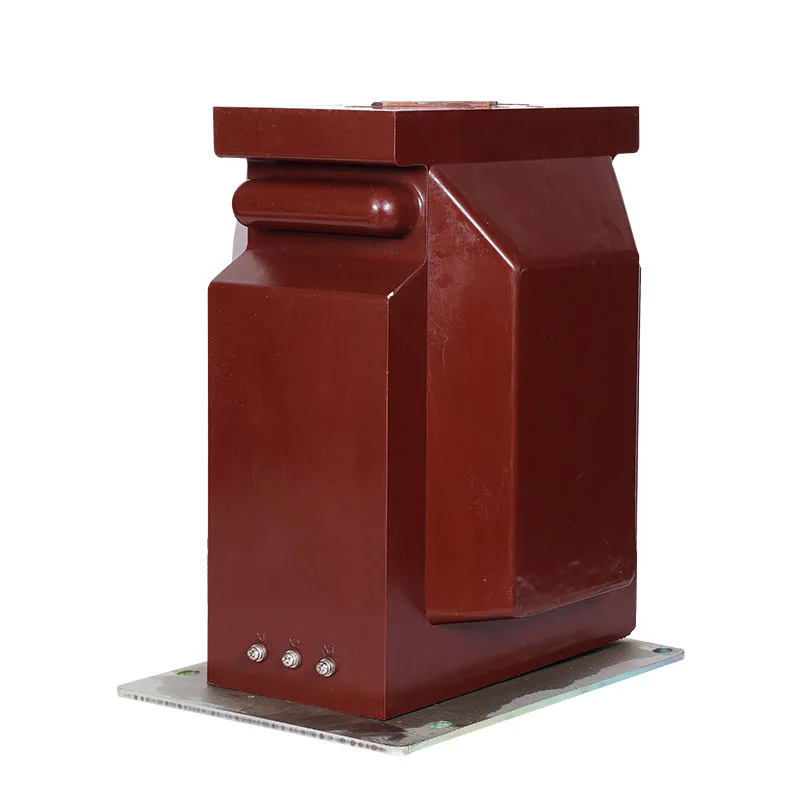
Table of Contents
- 1. Introduction to Current Transformer
- 2. Working Principle of Current Transformer
- 3. Types of Current Transformers
- 4. Key Applications
- 5. Selection Guide
- 6. Installation and Safety Considerations
- 7. Common Problems and Troubleshooting
- 8. Technical Comparison Overview
- 9. Why Accuracy Matters
- 10. Why Choose Youbian
- FAQ
1. Introduction to Current Transformer
A current transformer is an essential electrical device used to step down high AC currents to a lower, measurable level. This enables safe monitoring, protection, and control of power systems without directly exposing instruments or operators to high current levels.
In industrial environments, power distribution networks, and substations, CTs are indispensable for accurate metering and protection relays. Without them, modern electrical infrastructure would lack the safety and precision required for stable operation.
2. Working Principle of Current Transformer
The working principle of a current transformer is based on electromagnetic induction. The primary winding carries the high current, while the secondary winding produces a reduced proportional current suitable for measurement devices.
When alternating current flows through the primary conductor, it generates a magnetic field. This field induces a current in the secondary winding, which is directly proportional to the primary current based on the turns ratio.
- Primary winding: Carries the main line current
- Secondary winding: Delivers scaled-down current output
- Core: Enhances magnetic coupling efficiency
This transformation ensures that measurement instruments operate safely without direct exposure to hazardous current levels.
3. Types of Current Transformers
Different applications require different CT designs. Below is a structured overview:
| Type | Description | Typical Use |
|---|---|---|
| Wound CT | Primary winding is physically wrapped around the core | Low current, laboratory applications |
| Bar-Type CT | Uses a straight conductor as primary winding | Industrial power systems |
| Ring Type CT | Donut-shaped core with conductor passing through | Switchgear and panel installations |
| Split Core CT | Can be opened and installed without disconnecting cables | Retrofit and maintenance projects |
4. Key Applications
Current transformers are widely used across power and industrial systems:
- Electrical power metering in substations
- Protective relay systems for fault detection
- Industrial automation and load monitoring
- Energy management systems in commercial buildings
- Grid stability and distribution control
In modern energy infrastructure, CTs ensure operational transparency and system safety by enabling continuous current monitoring.
5. Selection Guide
Choosing the right current transformer requires careful evaluation of multiple parameters:
| Factor | Consideration |
|---|---|
| Current Ratio | Must match system load requirements |
| Accuracy Class | Defines measurement precision level |
| Burden Capacity | Total load connected to secondary circuit |
| Frequency | Typically 50Hz or 60Hz systems |
| Insulation Level | Critical for high-voltage environments |
Manufacturers such as Youbian provide customized CT solutions tailored to different industrial requirements, ensuring compatibility and stability in complex electrical environments.
6. Installation and Safety Considerations
Correct installation is crucial for CT performance and safety. Improper installation can lead to inaccurate readings or equipment failure.
- Never open-circuit the secondary winding while energized
- Ensure proper grounding to avoid voltage buildup
- Maintain correct polarity during wiring
- Use rated insulation materials for high-voltage systems
Industrial-grade CTs, such as those provided by Youbian, are designed with enhanced insulation and durable housing to support long-term operation in harsh environments.
7. Common Problems and Troubleshooting
Even high-quality CT systems may encounter issues over time:
- Measurement error: Often caused by incorrect ratio selection
- Overheating: Results from excessive burden load
- Signal distortion: Due to magnetic saturation of the core
- Loose connections: Leads to unstable readings
Routine inspection and proper system calibration help minimize these issues and ensure long-term reliability.
8. Technical Comparison Overview
| Feature | Standard CT | High-Precision CT |
|---|---|---|
| Accuracy | Moderate | High |
| Cost | Lower | Higher |
| Application | Basic monitoring | Protection & metering systems |
| Stability | Standard | Enhanced under load variation |
9. Why Accuracy Matters
Accurate current measurement is fundamental to system efficiency, safety, and cost control. Even minor deviations in CT readings can lead to incorrect billing, protection failure, or system instability.
In large-scale industrial environments, precise CT performance directly affects energy optimization and equipment protection strategies.
10. Why Choose Youbian
Youbian is a professional supplier of electrical measurement and instrumentation solutions, specializing in high-quality current transformers designed for industrial, utility, and commercial applications.
Based on advanced manufacturing techniques and strict quality control systems, Youbian products are engineered to deliver stable performance, long service life, and high measurement accuracy. Their product range supports diverse applications, from power distribution networks to smart energy monitoring systems.
FAQ
Q1: What is the main function of a current transformer?
A current transformer reduces high current values to a safe, measurable level for monitoring and protection systems.
Q2: Can a CT operate without a load on the secondary side?
No. Operating a CT without a burden can generate dangerous high voltage levels and damage the device.
Q3: What is the difference between metering and protection CTs?
Metering CTs focus on accuracy for measurement, while protection CTs are designed to perform reliably during fault conditions.
Q4: How often should a CT be maintained?
Regular inspection is recommended annually, with calibration depending on system criticality.
Q5: Why choose Youbian CT products?
They provide stable performance, high precision, and adaptability to different industrial environments.
Conclusion:
Understanding current transformers is essential for ensuring safe, efficient, and reliable power system operations. Whether for industrial monitoring or utility-scale protection, selecting the right CT directly impacts system performance. With advanced engineering and dependable manufacturing capabilities, Youbian offers solutions tailored to modern electrical challenges.
For professional consultation, technical support, and customized solutions, contact Youbian today and explore how advanced current transformer technology can improve your power system efficiency — contact us.