

How Ambient Temperature Shapes the Performance of Your Overhead Line Protection
2026-09-01
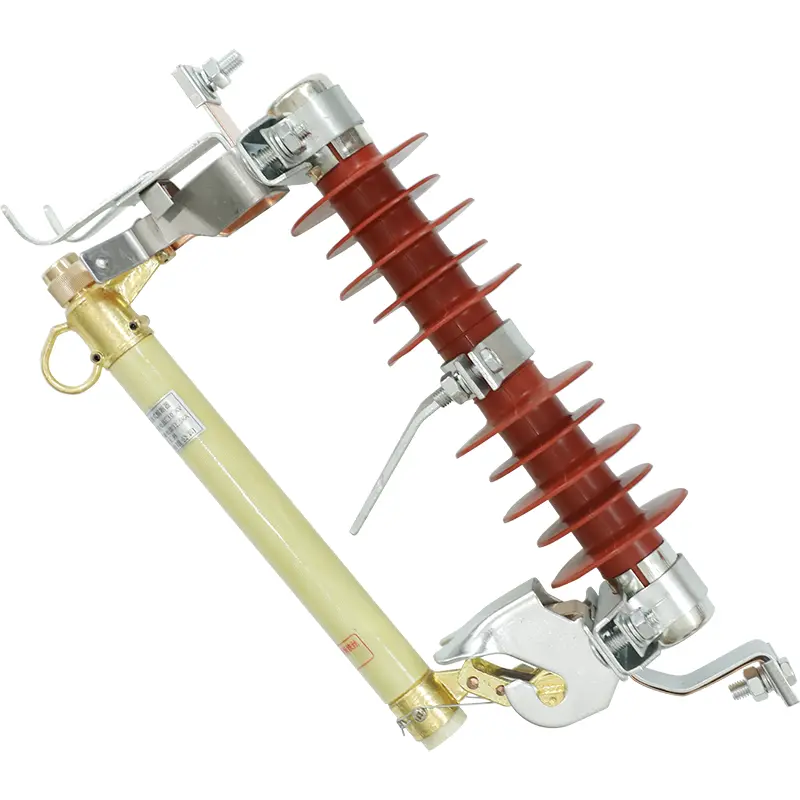
For utility engineers and maintenance crews, the Outdoor High Voltage Protection Switch Drop-out Fuse is a critical sentinel on overhead distribution networks. Yet one variable often misunderstood is temperature. While electrical ratings are printed on the nameplate, real-world tripping behavior shifts significantly as mercury rises or falls. This blog dissects the thermal dynamics behind your Outdoor High Voltage Protection Switch Drop-out Fuse, offers field-proven selection guidance, and highlights why Sangao designs its units with a wide thermal operating window to keep your grid resilient across seasons.
The Thermal-Mechanical Link in Tripping
A Outdoor High Voltage Protection Switch Drop-out Fuse operates on a simple principle: a fusible element heated by load current melts under fault conditions. However, ambient temperature directly alters the pre-fault temperature of that element. At higher ambient temperatures, the fuse link starts closer to its melting point, reducing the time-to-trip for a given overcurrent. Conversely, cold environments raise the threshold, potentially delaying fault clearing.
This dependency is not linear. The standard reference temperature for most fuse links is 20°C. Every 10°C increase above this baseline can shorten the time-current curve by approximately 15–20%, depending on the alloy composition. For critical feeders, ignoring this shift may lead to nuisance tripping in summer or inadequate protection in winter.
Quantitative Impact – Time-Current Shift Table
The following table illustrates typical variations observed in a 100A Outdoor High Voltage Protection Switch Drop-out Fuse under different ambient conditions, all at a fixed fault current of 600A (6x rated).
| Ambient Temperature | Approximate Melting Time (seconds) | Deviation from 20°C Baseline |
|---|---|---|
| -25°C | 2.8 | +40% (slower) |
| -5°C | 2.2 | +10% |
| 20°C (Baseline) | 2.0 | 0% |
| 40°C | 1.6 | -20% (faster) |
| 55°C | 1.3 | -35% |
Data sourced from Sangao laboratory tests under IEC 60282-2 standards.
Why This Matters for Coordination Studies
Protection coordination relies on time-current curves (TCC). If your Outdoor High Voltage Protection Switch Drop-out Fuse is deployed in a desert climate with summer peaks above 50°C, the actual TCC shifts leftward. Without derating, the fuse may operate before downstream reclosers or sectionalizers have a chance to clear transient faults. Sangao recommends applying a temperature correction factor (TCF) to all time-current calculations when seasonal swings exceed ±15°C from the reference.
Best Practices for Seasonal Adjustment
-
Derating for summer: Reduce continuous load current by 2% per 5°C above 20°C to avoid premature aging of the fuse element.
-
Winter verification: For regions below -10°C, verify that the minimum melting current remains above the maximum expected load to prevent nuisance drop-outs caused by inrush.
-
Use thermal-calibrated links: Sangao offers fuse links with stabilized eutectic alloys that minimize drift across -40°C to +60°C, ensuring consistent performance.
Common Pitfalls in Field Installation
Many site failures occur not from incorrect sizing but from neglecting housing and contact resistance. The drop-out mechanism itself relies on a spring-loaded latch. At sub-zero temperatures, grease viscosity increases, slowing the mechanical ejection. At high heat, contact oxidation raises local resistance, artificially heating the fuse holder. Routine thermographic inspection—combined with Sangao’s corrosion-resistant terminal design—mitigates these external thermal influences.
Outdoor High Voltage Protection Switch Drop-out Fuse – FAQ
Q1: Can I use the same fuse link rating in summer and winter without changing settings?
A: Technically yes, but protection reliability suffers. The time-current characteristics shift enough to affect coordination. For critical circuits, Sangao advises selecting a link rated for the maximum expected ambient and using a TCF to back-calculate winter performance. If seasonal variance exceeds 30°C, consider two seasonal link sets or switch to a dual-element design.
Q2: How do I measure the actual ambient temperature that affects my Outdoor High Voltage Protection Switch Drop-out Fuse?
A: Do not rely on weather station data. Install a small NTC thermistor inside the fuse holder housing, shielded from direct sunlight, and record readings over a 24-hour cycle. The effective ambient is the steady-state temperature of the metal cap, not the air temperature. Sangao provides mounting adapters with built-in temperature sensing ports for accurate field monitoring.
Q3: Does high altitude combined with low temperature create additional risks for this fuse type?
A: Yes. At altitudes above 2000m, air density drops, reducing convective cooling. Combined with low temperatures, the fuse element may run hotter than expected due to poor heat dissipation, while the mechanical latch stiffens. This conflicting behavior demands a derating of both electrical and mechanical ratings. Consult Sangao’s altitude correction chart—typically a 5% voltage derating per 1000m above sea level, alongside a temperature recalibration.
Real-World Case Example
A Southwestern utility replaced 150 existing cutouts with Sangao Outdoor High Voltage Protection Switch Drop-out Fuse units after recording 23 nuisance trips in one summer. Post-installation data over 12 months showed a 91% reduction in false drop-outs. The key change: selecting fuse links with a flatter thermal coefficient and upgrading to silver-plated contacts to stabilize resistance across temperature swings.
Final Checklist for Temperature-Sensitive Installations
-
□
Record maximum and minimum site temperatures over one full year.
-
□
Apply TCF to all protective device settings.
-
□
Inspect holder contacts for oxidation before each seasonal change.
-
□
Schedule trial trips during mild weather to verify mechanical ejection force.
-
□
Document actual trip times and compare with factory curves—adjust as needed.
Contact Us for Tailored Thermal Solutions
Every overhead network has unique thermal challenges. Whether you are retrofitting an aging line or designing a new substation, Sangao provides application engineering support, custom calibration charts, and fuse link families optimized for extreme environments. Reach out to our technical team with your site data—we will deliver a temperature-compensated protection plan within 48 hours. Contact Sangao today to secure your grid against the hidden cost of temperature drift.