

How Are Battery Thermal Pads Shaping the Next Generation of Energy Storage Systems?
2025-12-24
Article Abstract
Battery Thermal Pads have become a critical thermal interface material in lithium-ion batteries, power storage systems, electric vehicles, and consumer electronics. This article provides a comprehensive, professional, and technically detailed exploration of how Battery Thermal Pads function, how to select and evaluate them, and how they influence long-term battery performance and safety.
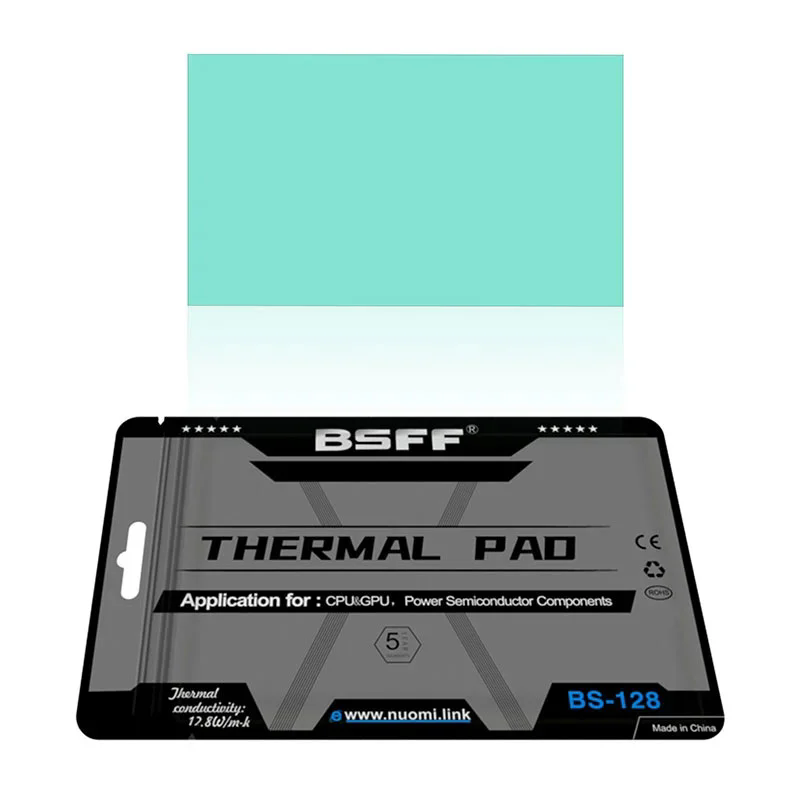
Table of Contents
- How Do Battery Thermal Pads Work in Battery Systems?
- How Are Battery Thermal Pad Parameters Defined and Evaluated?
- How Are Battery Thermal Pads Applied Across Industries?
- How Should Common Questions About Battery Thermal Pads Be Answered?
- How Will Battery Thermal Pads Evolve With Future Battery Technologies?
- How Does Nuomi Support Advanced Battery Thermal Management?
Outline
- Technical overview of Battery Thermal Pads
- Key material and performance parameters
- Industrial and commercial application analysis
- Common technical questions and expert answers
- Future trends and innovation directions
How Do Battery Thermal Pads Work in Battery Systems?
Battery Thermal Pads are engineered thermal interface materials designed to fill microscopic air gaps between battery cells and heat dissipation components such as aluminum housings, cooling plates, or heat sinks. Air is a poor conductor of heat, and even precisely machined surfaces contain surface irregularities. By compressing under controlled pressure, Battery Thermal Pads conform to these irregularities, creating a continuous thermal conduction path.
In modern battery systems, temperature uniformity is as critical as peak temperature reduction. Uneven heat distribution accelerates cell degradation, increases internal resistance, and can lead to localized thermal runaway. Battery Thermal Pads address this issue by distributing heat evenly across the interface, allowing cooling systems to function more efficiently and predictably.
From an engineering perspective, Battery Thermal Pads serve three simultaneous roles: thermal conduction, mechanical buffering, and electrical insulation. This multifunctional nature makes them indispensable in compact and high-energy-density battery assemblies.
How Are Battery Thermal Pad Parameters Defined and Evaluated?
Selecting an appropriate Battery Thermal Pad requires a clear understanding of its technical parameters. These parameters directly influence thermal performance, durability, and compatibility with battery architectures.
| Parameter | Typical Range | Engineering Significance |
|---|---|---|
| Thermal Conductivity | 1.5 – 12.0 W/m·K | Determines the efficiency of heat transfer from battery cells to cooling structures |
| Thickness | 0.5 – 5.0 mm | Controls gap filling capability and compression behavior |
| Hardness (Shore 00) | 20 – 70 | Affects conformability and long-term contact stability |
| Operating Temperature | -40°C to 200°C | Ensures reliability under extreme charging and discharging conditions |
| Electrical Insulation | >5 kV/mm | Prevents short circuits and enhances system safety |
Beyond numerical values, professional evaluation also considers compression set, aging resistance, flame retardancy, and chemical stability. These factors determine whether a Battery Thermal Pad can maintain performance over thousands of thermal cycles.
How Are Battery Thermal Pads Applied Across Industries?
Battery Thermal Pads are widely adopted across multiple industries due to their adaptability and reliability. In electric vehicles, they are installed between cylindrical or prismatic battery cells and liquid cooling plates to maintain optimal operating temperatures during high-load driving and fast charging.
In energy storage systems, Battery Thermal Pads help stabilize large battery modules by minimizing thermal gradients, which is essential for long service life and predictable performance. Consumer electronics, such as laptops and power tools, also rely on thin-profile Battery Thermal Pads to manage heat in confined spaces.
Industrial automation and telecommunications infrastructure increasingly incorporate Battery Thermal Pads to ensure uninterrupted operation in environments with fluctuating ambient temperatures.
How Should Common Questions About Battery Thermal Pads Be Answered?
Q: How does thermal conductivity affect battery lifespan?
A: Higher thermal conductivity enables faster heat dissipation, reducing sustained high temperatures that accelerate electrolyte decomposition and electrode degradation, thereby extending battery lifespan.
Q: How is the correct thickness of a Battery Thermal Pad determined?
A: Thickness selection is based on gap measurement under assembly conditions, accounting for component tolerances and compression force to ensure full surface contact without excessive stress.
Q: How do Battery Thermal Pads improve system safety?
A: By maintaining temperature uniformity and providing electrical insulation, Battery Thermal Pads reduce the risk of localized overheating, short circuits, and thermal runaway events.
How Will Battery Thermal Pads Evolve With Future Battery Technologies?
As battery energy density continues to increase, thermal management requirements will become more stringent. Future Battery Thermal Pads are expected to incorporate hybrid fillers, advanced silicone matrices, and enhanced flame-retardant properties to meet evolving safety standards.
The integration of smart thermal materials capable of adapting to temperature changes is also under active development. These innovations aim to further improve efficiency while reducing overall system weight and complexity.
Sustainability considerations are driving research into environmentally friendly materials and recyclable thermal interface solutions, aligning thermal management technologies with global environmental goals.
How Does Nuomi Support Advanced Battery Thermal Management?
Nuomi specializes in the development and manufacturing of high-performance Battery Thermal Pads engineered for demanding applications across automotive, energy storage, and industrial sectors. By focusing on material innovation, precise parameter control, and consistent quality standards, Nuomi delivers solutions that support reliable and efficient thermal management in modern battery systems.
Organizations seeking to optimize battery safety, performance, and longevity are encouraged to explore tailored Battery Thermal Pad solutions. Contact Nuomi to discuss technical requirements, application scenarios, and customized thermal management strategies designed to meet specific project goals.