

How Can a Customized Control Panel Improve Vessel Control and Automation?
2026-09-11
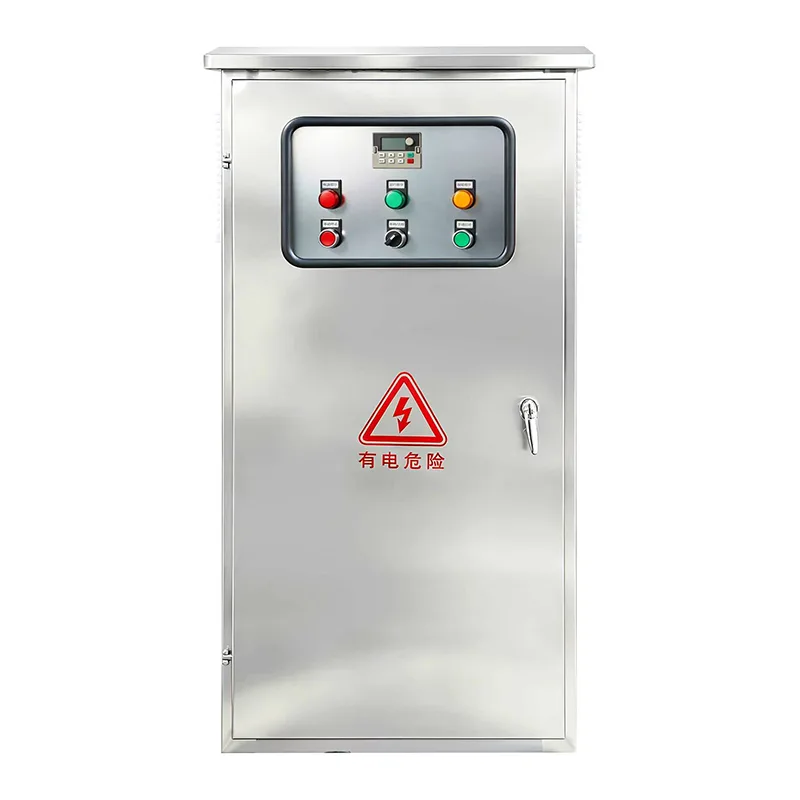
A modern Control Panel is more than an electrical enclosure or collection of switches. It serves as an important interface between operators, electrical equipment, motors, automation systems, and monitoring devices. In marine applications, however, a standard panel may not always fit the space, electrical configuration, operating environment, or control requirements of a particular vessel. This is why customized Control Panel solutions are becoming increasingly valuable for shipbuilders, marine equipment integrators, and vessel operators.
For different vessel types, the panel may need to accommodate different loads, control logic, installation spaces, communication requirements, and operating habits. Zhejiang Csivei Automation Co., Ltd. provides customized control solutions designed around specific application requirements, helping customers build more practical and integrated automation systems. Its Control Panel solutions can also be adapted to different vessel configurations, providing greater flexibility for marine projects.
What Makes a Control Panel Important for Vessel Operations?
A Control Panel acts as a centralized point for operating, monitoring, and protecting electrical and automation equipment. Depending on the application, it can integrate components such as circuit breakers, contactors, PLCs, variable frequency drives, relays, displays, and communication interfaces.
For marine applications, this centralized approach can make equipment status easier to understand and operational decisions faster to execute.
Key functions can include:
- Equipment control: Start, stop, adjust, and manage connected equipment.
- Real-time monitoring: Display voltage, current, temperature, speed, power, alarms, and other operating information.
- Protection: Help protect motors and electrical equipment against abnormal operating conditions.
- Automation: Execute predefined sequences and control logic.
- Communication: Connect different electrical and automation devices.
- Alarm management: Provide clear indications when faults or abnormal conditions occur.
Modern marine automation systems commonly integrate functions such as propulsion, power management, auxiliary equipment, ballast systems, HVAC, alarms, and monitoring into coordinated control architectures.
Why Does Vessel-Specific Customization Matter?
A major challenge in marine electrical projects is that no two vessels necessarily have exactly the same requirements.
A small fishing vessel, for example, may prioritize compact dimensions and straightforward operation, while a commercial cargo vessel may require more extensive monitoring, power distribution, and automation. Yachts and special-purpose vessels can have completely different space, appearance, and user-interface requirements.
This makes vessel-specific customization an important advantage.
Typical Vessel Requirements
| Vessel Type | Typical Control Priorities |
|---|---|
| Fishing Vessel | Compact design, engine and auxiliary control |
| Cargo Vessel | Power distribution, motor control, monitoring |
| Container Ship | Electrical management, automation, equipment monitoring |
| Yacht | Compact layout, user-friendly operation, customized appearance |
| Ferry | Passenger-service equipment, power and safety monitoring |
| Offshore Vessel | Robust control, alarms, monitoring, demanding environments |
| Special-Purpose Vessel | Application-specific control logic and integration |
A properly engineered Control Panel can therefore be designed around the vessel instead of forcing the vessel to adapt to a fixed panel configuration.
This is particularly valuable when installation space is limited. Panel dimensions, component arrangement, cable entry, interface configuration, and operator access can all affect installation efficiency and daily operation.
How Does a Customized Control Panel Improve Efficiency?
Customization can improve efficiency in several ways.
1. Better Space Utilization
Marine equipment rooms and control areas often have strict space limitations. A customized panel can be arranged according to the available installation area and cable routing requirements.
Instead of using a generic enclosure that leaves inefficient gaps or creates difficult cable routes, the panel layout can be planned around the vessel's actual installation conditions.
2. Easier Operation
A clear control interface helps operators identify equipment status quickly. Buttons, indicators, meters, displays, and alarm functions can be positioned according to operational priorities.
This can reduce unnecessary operation steps and make troubleshooting more intuitive.
3. Improved Equipment Integration
A customized Control Panel can combine multiple control components into one coordinated solution. Csivei, for example, manufactures Control Panels designed to integrate breakers, contactors, PLCs, and drives for precise motor control and equipment protection.
For marine applications, this type of integration can help simplify the relationship between individual electrical devices and the vessel's broader automation system.
4. Easier Project Adaptation
Marine projects frequently involve different specifications, equipment brands, control requirements, and installation conditions. A configurable panel architecture makes it easier to adapt the system to individual project requirements.
Which Features Should a Marine Control Panel Have?
The right configuration depends on the vessel and application, but several characteristics are particularly valuable.
Electrical reliability
Components should be appropriately selected and arranged for stable long-term operation.
Clear visualization
Operators should be able to identify operating status, warnings, and faults without unnecessary complexity.
Flexible communication
Modern marine systems may need to exchange information between controllers, monitoring systems, and other onboard equipment.
Protection functions
Appropriate protective components and control logic can help reduce the impact of electrical faults and abnormal operating conditions.
Compact construction
Efficient enclosure design is particularly important where onboard installation space is limited.
Customizable control logic
Different vessels may require different starting sequences, interlocks, alarm conditions, or equipment priorities.
How Can Zhejiang Csivei Automation Support Customized Vessel Projects?
Zhejiang Csivei Automation Co., Ltd. focuses on electrical automation products including Control Panel, VFD Control Panel, and other industrial control solutions. Its engineering-oriented approach allows the panel to be developed according to the customer's application rather than relying exclusively on an off-the-shelf configuration.
For projects requiring customization, customers can provide technical information such as electrical diagrams, equipment lists, power requirements, installation dimensions, and control requirements. Engineers can then develop an appropriate panel structure and component configuration.
This approach is particularly useful when a project requires:
- Customized panel dimensions
- Different electrical component configurations
- Motor or pump control
- VFD integration
- PLC-based control
- Customized alarm functions
- Specific communication interfaces
- Different vessel control architectures
- Retrofit or replacement projects
The company's existing control-panel service model also emphasizes developing solutions around customer designs, including panel layouts and wiring configurations.
What Are the Practical Benefits for Shipbuilders?
For shipbuilders and marine system integrators, a customized Control Panel can provide several practical benefits:
- Project-specific design – The panel can correspond to the vessel's actual electrical architecture.
- Simplified installation – Factory-assembled and tested panels can reduce some onsite wiring and commissioning work.
- Improved maintainability – Logical component arrangement makes inspection and troubleshooting easier.
- Scalable configuration – Additional functions can be incorporated according to project requirements.
- Better operator experience – Controls and displays can be positioned around actual operating procedures.
For complex marine automation projects, modular and configurable systems are widely used because they can be adapted to different vessel types and control requirements.
Why Choose Vessel-Specific Control Instead of a Standard Panel?
The biggest difference is flexibility.
A standard Control Panel may be suitable when the application is simple and highly standardized. However, a customized solution becomes more valuable when vessel size, equipment, control logic, installation space, or operating requirements vary significantly.
| Standard Control Panel | Customized Vessel Control Panel |
|---|---|
| Fixed configuration | Application-specific configuration |
| Limited layout flexibility | Vessel-specific layout |
| Standard component arrangement | Components selected for the project |
| General-purpose operation | Customized control logic |
| Less adaptable to unusual spaces | Designed around installation conditions |
| Suitable for standardized applications | Suitable for complex or specialized vessels |
The ability to support different vessel types and customized requirements is therefore one of the most important advantages of a professional marine Control Panel solution.
The Future of Control Panels in Marine Automation
As vessels become increasingly connected and automated, Control Panels are evolving from simple switching cabinets into integrated control interfaces. More systems are expected to communicate with one another, while operators increasingly require centralized access to operating information.
For shipbuilders and equipment suppliers, the ideal solution is not simply a panel that switches equipment on and off. It should provide a reliable connection between electrical hardware, automation logic, monitoring functions, and the people operating the vessel.
With its experience in automation and electrical control products, Zhejiang Csivei Automation Co., Ltd. can provide customized Control Panel solutions for projects with different technical requirements. Whether the application involves a compact vessel, commercial ship, offshore equipment, yacht, or other specialized marine platform, customization can help create a Control Panel that better matches the vessel's actual operating environment and system architecture.
If you are looking for a reliable Control Panel manufacturer capable of supporting vessel-specific designs and customized automation requirements, Zhejiang Csivei Automation Co., Ltd. can help develop a solution around your project. Contact us to discuss your vessel type, electrical requirements, installation conditions, and desired control functions, and explore a Control Panel solution built specifically for your application.