

How Can a Low Noise Gasoline Generator Deliver Reliable Power Without Excessive Noise?
2026-09-04
A Low Noise Gasoline Generator is increasingly important for users who need dependable electricity without the disruptive sound associated with traditional generators. From boats and marine equipment to outdoor events, emergency backup systems, workshops, and recreational applications, the ideal generator must balance power output, fuel efficiency, portability, durability, and acoustic comfort. Modern low-noise designs commonly use features such as enclosed structures, vibration reduction, optimized exhaust systems, and inverter technology to reduce operating noise. For marine applications in particular, generator dimensions, ventilation, mounting position, and power requirements must be carefully considered.
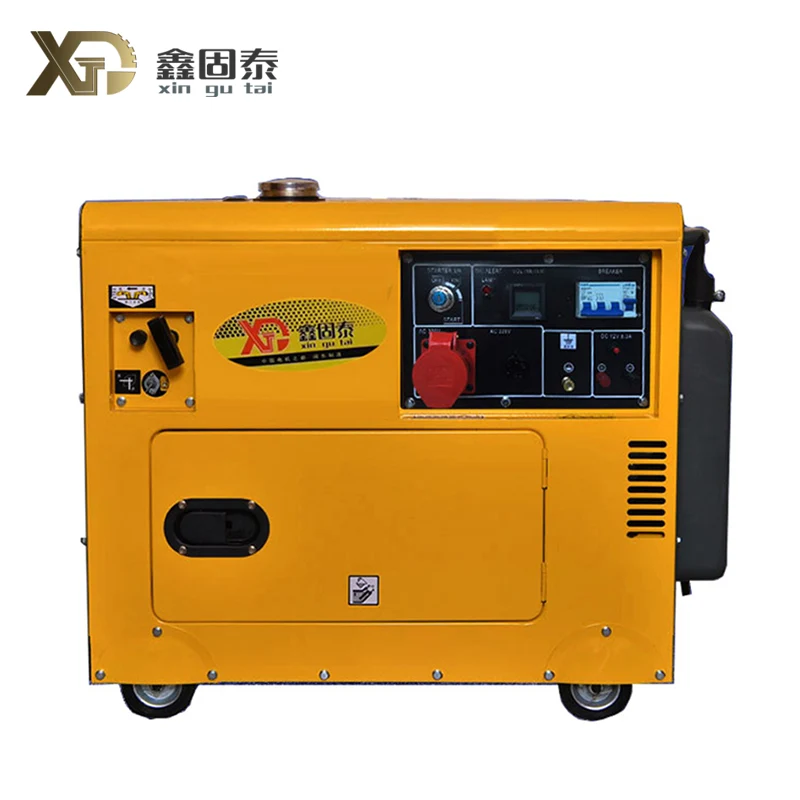
Why Is a Low Noise Gasoline Generator Important?
Noise is more than an inconvenience. A loud generator can interfere with communication, disturb nearby people, and reduce comfort during nighttime operation. This is especially relevant on boats, yachts, campsites, residential properties, and commercial locations where quiet operation is highly valued.
A Low Noise Gasoline Generator helps provide a better balance between power and user comfort.
Key benefits include:
- Reduced operating noise for more comfortable environments
- Stable electricity supply for essential equipment
- Better suitability for nighttime operation
- Compact and portable designs for flexible installation
- Improved fuel efficiency when equipped with intelligent engine control
- Reduced vibration through optimized mechanical construction
- Cleaner electrical output when inverter technology is incorporated
For example, commercially available inverter gasoline generators can achieve noise levels around the 58–63 dB range under specified test conditions, although noise figures should always be compared using the same distance and load conditions.
How Does Low-Noise Technology Improve Generator Performance?
Low-noise operation is not achieved through a single component. It normally requires a combination of mechanical, electrical, and structural engineering.
1. Optimized Engine Operation
A gasoline engine generates noise through combustion, mechanical movement, and exhaust gases. Optimizing engine speed according to the actual electrical load can reduce unnecessary high-speed operation.
An economy or variable-speed mode can therefore contribute to both lower noise and reduced fuel consumption.
2. Vibration Reduction
Mechanical vibration can amplify generator noise. High-quality mounting systems, balanced rotating components, shock-absorbing structures, and carefully designed frames can help reduce vibration transmission.
This is particularly valuable on boats, where vibration may travel through the deck or hull and become more noticeable inside cabins.
3. Acoustic Enclosure
An enclosed generator structure can help contain mechanical and exhaust noise. However, enclosure design must maintain adequate airflow and cooling.
A well-designed enclosure should therefore balance:
Noise control + ventilation + heat dissipation + maintenance accessibility
4. Inverter Technology
Inverter generators can regulate engine speed according to electrical demand while producing stable power. This makes them particularly attractive for applications involving sensitive electronic equipment, recreational equipment, and mobile power systems.
Why Is Boat-Type Customization a Major Advantage?
For marine customers, a standard generator may not always be the best solution. Boats and yachts have limited installation space, unique structural layouts, strict weight considerations, and specific electrical requirements.
This is why boat-type customization can be a major competitive advantage.
Quanzhou Gutai Machinery Equipment Co., Ltd. focuses on providing generator solutions that can be adapted to different application requirements, including customized boat-type configurations.
Instead of simply selecting an off-the-shelf generator, customers can discuss requirements such as:
- Installation space and overall dimensions
- Generator shape and structural configuration
- Required rated and maximum power
- 50 Hz or 60 Hz frequency
- Voltage requirements
- Fuel tank capacity
- Starting method
- Cooling requirements
- Noise-reduction structure
- Mounting arrangements
- Control panel configuration
- Marine application requirements
- Exterior design and branding
This flexibility is particularly useful when the generator must fit into a designated compartment or integrate with an existing boat power system.
Low Noise Gasoline Generator vs. Traditional Open-Frame Generator
The difference between a quiet enclosed generator and a conventional open-frame model can be significant.
| Feature | Low Noise Gasoline Generator | Traditional Open-Frame Generator |
|---|---|---|
| Noise control | Excellent | Basic |
| User comfort | High | Moderate |
| Marine suitability | High with customization | Depends on installation |
| Portability | Usually good | Varies |
| Electronics compatibility | Excellent with inverter design | Depends on configuration |
| Night operation | More suitable | Less suitable |
| Custom enclosure | Available on selected designs | Limited |
| Vibration control | Optimized | Usually basic |
The actual noise level depends on generator size, load, engine speed, enclosure, measurement distance, and test conditions. Therefore, buyers should not compare decibel figures without checking how each manufacturer conducted its test.
Where Can a Low Noise Gasoline Generator Be Used?
A properly configured Low Noise Gasoline Generator can serve many applications.
Marine and Boat Applications
This is one of the most demanding use cases. A generator may provide electricity for lighting, communication equipment, refrigeration, entertainment systems, battery charging, and other onboard loads.
With boat-type customization, the generator can be designed around the available installation area rather than forcing the boat owner to redesign the space around a standard product.
Camping and RVs
Quiet operation is highly desirable in campgrounds and recreational environments. A compact generator can supply electricity for lighting, small appliances, charging equipment, and other equipment while minimizing disturbance.
Emergency Backup Power
During power interruptions, gasoline generators can provide temporary electricity for essential household or commercial equipment. A low-noise model is particularly useful when the generator may need to operate close to occupied areas.
Outdoor Events
Exhibitions, temporary facilities, mobile businesses, and outdoor activities often require portable electricity. Low-noise operation helps maintain a more comfortable environment for visitors and staff.
What Should Buyers Consider Before Purchasing?
Selecting the right generator requires more than looking at the maximum wattage.
Power Requirements
First calculate the continuous running load and starting load of the equipment. Motors, compressors, pumps, and air conditioners may require significantly higher starting power than their running power.
Noise Level
Check the stated dB(A) value and, importantly, the measurement distance and operating load. A noise specification without test conditions is difficult to compare accurately.
Dimensions and Weight
For boats, RVs, and compact installations, physical dimensions can be just as important as electrical specifications.
Fuel Efficiency
Fuel consumption affects operating costs and runtime. An appropriately sized generator generally performs more efficiently than a significantly oversized unit operating at very low loads.
Customization Capability
For specialized applications, ask whether the manufacturer can modify:
- Generator dimensions
- Structural configuration
- Voltage and frequency
- Control systems
- Noise-reduction structure
- Mounting configuration
- Exterior appearance
- Boat-type installation design
This is where working directly with an experienced manufacturer can provide greater flexibility.
Why Choose Quanzhou Gutai Machinery Equipment Co., Ltd.?
For buyers seeking a combination of reliable power, practical engineering, and application-oriented customization, Quanzhou Gutai Machinery Equipment Co., Ltd. can provide a professional solution for different generator requirements.
One of its notable advantages is the ability to support boat-type customization. Rather than treating marine customers as a standard-generator application, customized solutions can be developed around the actual installation environment.
This approach can help customers achieve a better combination of:
- Low-noise operation
- Suitable power output
- Compact installation
- Practical fuel capacity
- Stable performance
- Customized structure
- Marine-oriented installation
- OEM/ODM requirements
For distributors, marine equipment suppliers, boat manufacturers, and project buyers, customization can also make it easier to develop products for different target markets.
Simple Checklist for Buyers
Before placing an order, consider the following:
- What is the required rated power?
- What is the maximum starting load?
- What voltage and frequency are required?
- How quiet does the generator need to be?
- Where will it be installed?
- What are the maximum allowable dimensions?
- Is weight an important limitation?
- Does the generator need boat-type customization?
- Is inverter output required?
- What starting method is preferred?
- Are OEM/ODM or branding services required?
FAQ About Low Noise Gasoline Generator
Is a Low Noise Gasoline Generator completely silent?
No. Gasoline engines inevitably produce mechanical, combustion, and exhaust noise. The purpose of low-noise engineering is to significantly reduce perceived operating noise rather than eliminate it completely.
Is a low-noise generator suitable for boats?
Yes, provided that the generator is correctly configured for the marine installation. Space, ventilation, cooling, mounting, electrical requirements, and noise transmission should all be considered.
Can the generator be customized for a specific boat?
Yes. Boat-type customization is particularly valuable when the available installation space or hull configuration does not match standard generator dimensions.
Is inverter technology necessary?
Not necessarily. However, inverter technology can provide stable electrical output and enable more flexible engine-speed control, making it attractive for recreational, mobile, and electronics-related applications.
How should generator noise specifications be compared?
Always compare the measurement distance, load condition, generator operating mode, and test method. A 60 dB specification measured under light load cannot automatically be compared with a 60 dB specification measured at full load.
Conclusion
Choosing a Low Noise Gasoline Generator is about more than simply finding a quieter engine. The best solution combines appropriate power output, efficient fuel consumption, vibration control, acoustic design, stable electricity, convenient installation, and application-specific engineering.
For marine users, boat-type customization can be especially important because every vessel has different space, weight, mounting, ventilation, and power requirements. With customized structural and performance solutions, Quanzhou Gutai Machinery Equipment Co., Ltd. can help customers develop generator configurations that better match their actual applications.
Whether you are sourcing generators for boats, yachts, RVs, outdoor projects, emergency backup, or commercial distribution, choosing the right configuration at the beginning can improve both user experience and long-term operating value.
Looking for a reliable Low Noise Gasoline Generator or a customized boat-type generator solution? Contact us today to discuss your power requirements, installation dimensions, performance expectations, and OEM/ODM customization needs. Quanzhou Gutai Machinery Equipment Co., Ltd. is ready to help you develop a practical and market-oriented generator solution.