

How Can a Molded Case Circuit Breaker Make Low Voltage Power Distribution Safer and Easier to Manage?
2026-05-14
When I look at a low voltage distribution project, I rarely start with price alone. I start with risk, load behavior, installation space, maintenance pressure, and the cost of one unexpected shutdown. That is why I pay close attention to the protection device behind each feeder, panel, motor circuit, or compact substation. In this area, Wenzhou Xifa Electrical Equipment Co., Ltd. has gradually built its product range around practical electrical protection needs, and its Molded Case Circuit Breaker solutions are designed for buyers who need dependable overload protection, short circuit protection, and flexible configuration without making the electrical cabinet unnecessarily complicated.
A breaker may look like a small part of the system, but in real projects it often decides whether a fault remains controlled or becomes expensive damage. I have seen procurement teams focus only on rated current, then later discover that breaking capacity, pole configuration, trip characteristics, accessories, and installation compatibility matter just as much. A well-selected Molded Case Circuit Breaker gives a distribution system a cleaner protection structure and helps engineers manage electrical faults with more confidence.
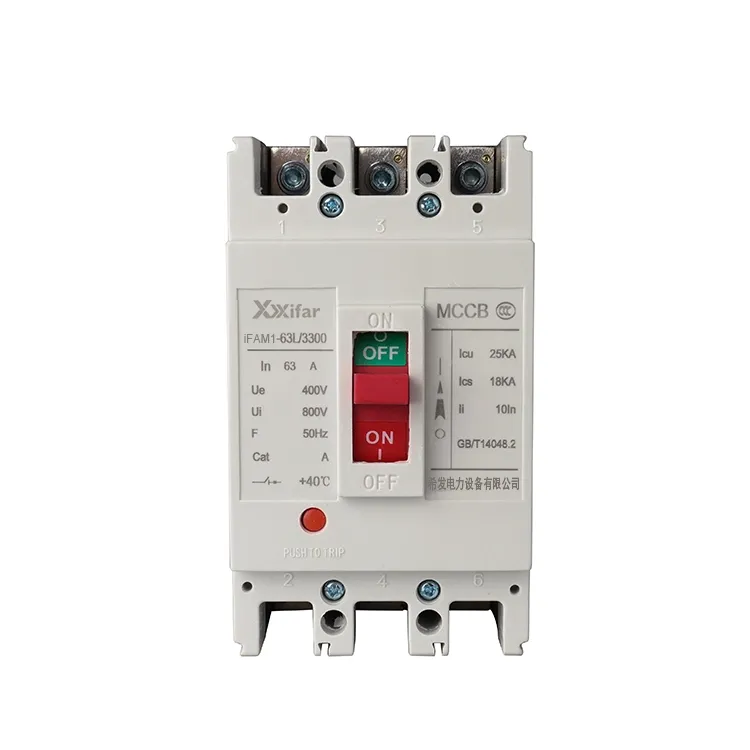
What Should I Expect from a Molded Case Circuit Breaker in Real Electrical Projects?
I expect a Molded Case Circuit Breaker to do more than simply turn a circuit on and off. In a commercial building, factory, data center, mining site, petrochemical facility, or renewable energy station, the breaker must respond quickly when current rises beyond a safe level. It should also hold stable under normal load conditions, because nuisance tripping can be almost as frustrating as insufficient protection.
In practical terms, I usually evaluate an MCCB by asking whether it can support the following work conditions:
- Protecting branch circuits from overload and short circuit faults
- Serving as a main or feeder breaker in low voltage distribution panels
- Working with three phase and four wire power systems where applicable
- Supporting motor circuits, control cabinets, and compact substations
- Offering different rated current options for different load levels
- Allowing functional accessories such as auxiliary contacts, shunt trips, undervoltage trips, alarm contacts, or motorized operation
- Providing stable mechanical operation for repeated switching and maintenance use
This is where a properly configured Molded Case Circuit Breaker becomes valuable. It gives engineers a compact protection device that can be adapted to different circuits instead of forcing every project into the same electrical layout.
Why Does Breaking Capacity Matter When I Select a Molded Case Circuit Breaker?
Rated current tells me how much current the breaker is designed to carry under normal operation. Breaking capacity tells me how much fault current the breaker can safely interrupt. That second number is easy to overlook, but it is one of the most important details in product selection.
If the available short circuit current in the system is higher than the breaker's interrupting capacity, the breaker may not be able to clear the fault safely. That can damage equipment, create downtime, and raise safety concerns for the whole installation. For this reason, I never treat all breakers with the same ampere rating as equal.
| Selection Factor | Why I Check It | What It Helps Prevent |
|---|---|---|
| Rated current | To match the normal load demand of the circuit | Overheating, undersized protection, unnecessary replacement |
| Breaking capacity | To confirm the breaker can interrupt fault current safely | Arc damage, equipment failure, unsafe fault clearing |
| Number of poles | To fit AC, DC, single phase, or three phase systems | Incorrect wiring structure and poor circuit isolation |
| Trip type | To match overload and short circuit response requirements | Nuisance tripping or slow protection response |
| Accessory options | To support remote control, alarms, and system monitoring | Limited maintenance visibility and poor automation compatibility |
| Installation size | To make sure the breaker fits inside the panel design | Cabinet redesign, wiring inconvenience, delayed installation |
A strong Molded Case Circuit Breaker selection process should always include both current rating and fault interruption requirements. I prefer this approach because it reduces the chance of buying a breaker that looks suitable on paper but fails to meet the actual power system conditions.
How Do I Know Which Molded Case Circuit Breaker Fits My Application?
I usually start by identifying the circuit's role. A main incoming circuit, a feeder circuit, a motor circuit, and a distribution branch do not always need the same breaker configuration. The load type, starting current, cable size, upstream protection, and installation environment all influence the decision.
For a general purchasing discussion, I would divide common applications like this:
| Application | Common Buyer Concern | Useful MCCB Feature |
|---|---|---|
| Industrial distribution panel | Stable protection for multiple branch circuits | Wide current range, reliable trip performance, compact structure |
| Commercial building power system | Safe and manageable low voltage distribution | Clear circuit isolation, overload protection, short circuit protection |
| Motor control circuit | Starting current and load fluctuation | Appropriate trip setting and motor protection compatibility |
| Compact substation feeder | Protection coordination with upstream and downstream equipment | Suitable breaking capacity and dependable mechanical endurance |
| Renewable energy or infrastructure project | Long service life and consistent operation | Durable contacts, stable housing, accessory flexibility |
| OEM electrical cabinet | Repeatable supply and configuration flexibility | Multiple pole options, customized parameters, packaging support |
When I choose a Molded Case Circuit Breaker, I also look at whether the supplier can support different pole numbers and accessory combinations. For example, a standard distribution cabinet may need a fixed type MCCB, while a more automated system may benefit from auxiliary contacts, alarm contacts, or a motor operating mechanism.
What Product Advantages Should Matter Most to Electrical Buyers?
Product advantages should be practical, not decorative. I do not need vague claims when I am selecting electrical protection equipment. I need to know whether the breaker can support stable operation, whether the structure is reliable, whether the product range covers real project needs, and whether the supplier understands how electrical buyers make decisions.
From a buyer's point of view, the advantages I care about most include:
- Reliable protection performance because overload and short circuit faults must be interrupted before they damage cables, panels, or connected equipment.
- Wide specification coverage because different projects may require different current ratings, pole configurations, and installation layouts.
- Accessory flexibility because modern power systems often need signal feedback, remote tripping, alarm output, and control integration.
- Durable material selection because conductive parts, contacts, housing material, and mechanical structure all affect long term performance.
- Factory inspection before delivery because buyers need consistent products rather than unpredictable batches.
- OEM and project support because electrical distributors and cabinet manufacturers often need customized labels, packaging, technical parameters, or project documentation.
A Molded Case Circuit Breaker with these advantages can help buyers reduce selection mistakes, improve installation efficiency, and maintain safer power distribution over time.
Why Do I Pay Attention to Accessories Instead of Only the Breaker Body?
Many buyers compare only the shell size, current rating, and price. I understand why they do that, but it is not enough for a professional electrical system. Accessories often decide how well the breaker works with the rest of the control and monitoring design.
For example, auxiliary contacts can help indicate whether the breaker is open or closed. A shunt trip can allow remote tripping when the system detects an emergency. An undervoltage trip can disconnect the circuit when voltage falls below a safe level. Alarm contacts can help maintenance teams identify fault conditions more quickly.
| Accessory | How I Use It | Why It Helps |
|---|---|---|
| Auxiliary contact | For breaker status indication | Improves visibility in control panels |
| Shunt trip | For remote tripping | Supports emergency shutdown and system control |
| Undervoltage trip | For voltage loss protection | Helps prevent unsafe operation under abnormal voltage |
| Alarm contact | For fault signal output | Helps maintenance staff locate problems faster |
| Motorized mechanism | For remote opening and closing | Useful in automated or hard to access systems |
That is why I consider accessory support a serious advantage. A Molded Case Circuit Breaker is not always a standalone component. In many projects, it becomes part of a larger protection, control, and monitoring system.
How Can a Molded Case Circuit Breaker Help Reduce Long Term Project Costs?
The cheapest breaker at the purchasing stage is not always the most economical breaker in operation. A low quality product can create hidden costs through installation delays, unstable tripping, short service life, poor compatibility, or repeated maintenance. I prefer to look at the total cost of use.
A suitable Molded Case Circuit Breaker can help reduce long term costs in several ways:
- It protects cables and downstream equipment from overload damage.
- It helps isolate short circuit faults before they spread through the system.
- It supports organized panel design, which makes installation and maintenance easier.
- It allows engineers to choose suitable accessories instead of redesigning the control system later.
- It improves replacement planning when the supplier offers stable specifications and repeatable product supply.
- It reduces downtime risk in buildings, factories, substations, and infrastructure projects.
In my view, this is the real value of the product. It is not just a breaker. It is a protection decision that affects the electrical system throughout its service life.
Which Details Should I Confirm Before Sending an Inquiry?
A clear inquiry saves time for both the buyer and the supplier. When I prepare a request for a Molded Case Circuit Breaker, I usually include technical information instead of asking only for a general quotation. This helps the supplier recommend the right model faster and reduces the chance of receiving an unsuitable option.
I would suggest preparing these details:
- Rated current requirement, such as 63A, 125A, 160A, 200A, 250A, 400A, or other project values
- Number of poles, such as 1P, 2P, 3P, 3P plus N, or 4P
- AC or DC application
- Required breaking capacity
- Application type, such as panel protection, motor protection, feeder protection, or main circuit protection
- Needed accessories, such as auxiliary contact, shunt trip, undervoltage trip, alarm contact, or motorized operation
- Installation method and cabinet space requirements
- Quantity, delivery schedule, packaging needs, and OEM requirements
If some technical details are not confirmed yet, I would still explain the project background. A responsible supplier can usually help narrow down the selection based on system voltage, load type, and installation purpose.
Is Molded Case Circuit Breaker Selection Only a Technical Decision?
It is technical, but not only technical. It is also a purchasing decision, a safety decision, and a long term maintenance decision. I want a product that matches the electrical design, but I also want stable supply, clear communication, consistent quality control, and practical after sales support.
This is especially important for distributors, panel builders, contractors, and project buyers. They are not buying one isolated product for one isolated job. They often need a supplier that can support repeated orders, multiple specifications, and project based configuration. A Molded Case Circuit Breaker supplier with a broader electrical product background can make sourcing easier, especially when the project also involves other circuit protection and switching products.
I also value communication speed. When a project has a tight delivery schedule, waiting too long for model confirmation or accessory clarification can delay the whole cabinet assembly process. Practical product support matters.
How Do I View Xifa MCCB Solutions for Different Buyers?
I see Xifa's MCCB range as suitable for buyers who want practical configuration options rather than a single fixed product. The product line covers low voltage circuit protection needs for distribution panels, industrial facilities, construction projects, compact substations, and other power applications. The availability of different rated current options, pole structures, breaking capacity choices, and functional accessories gives buyers more room to match real installation conditions.
For distributors, this means broader stock planning. For panel builders, it means easier matching with cabinet designs. For contractors, it means the breaker can be selected according to project drawings and site requirements. For OEM buyers, it means product appearance, packaging, and technical details can be discussed based on the intended market.
A good Molded Case Circuit Breaker should make power distribution safer, but it should also make the purchasing process clearer. That combination is what I would look for when comparing suppliers.
Why Should I Contact a Manufacturer Before Finalizing the Model?
Even experienced buyers can miss small details. A breaker may have the correct current rating but the wrong pole structure. It may fit the load but not the cabinet. It may have enough breaking capacity for one project but not another. It may need an accessory that was not listed in the original purchase request.
That is why I prefer to confirm the application before placing an order. Sharing the project type, wiring system, rated current, expected fault level, and accessory requirements can help the supplier recommend a more accurate Molded Case Circuit Breaker. This makes the final purchase more reliable and reduces the risk of costly replacement later.
If you are selecting MCCB products for a distribution panel, industrial facility, compact substation, motor circuit, or OEM electrical cabinet, I recommend sending your technical requirements to Wenzhou Xifa Electrical Equipment Co., Ltd. for model guidance and quotation support. To discuss specifications, accessories, customization, or bulk purchasing needs, please leave an inquiry or contact us today.