

How Can a Narrow Linewidth Laser Improve Precision in Modern Applications?
2026-05-21
Summary: Narrow linewidth lasers are critical in industries requiring extreme precision and stability, such as telecommunications, sensing, spectroscopy, and quantum technologies. This article explores the principles, advantages, and practical applications of narrow linewidth lasers, addressing common challenges and solutions to help engineers and researchers optimize performance in their systems.
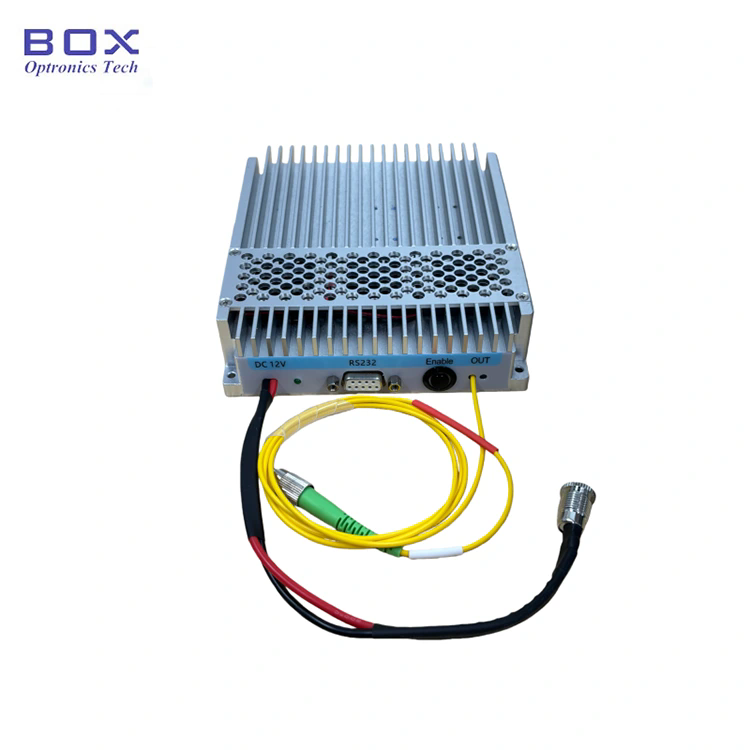
Table of Contents
- Introduction to Narrow Linewidth Lasers
- Working Principles of Narrow Linewidth Lasers
- Key Benefits and Advantages
- Applications Across Industries
- Guidelines for Selecting the Right Laser
- Common Challenges and Solutions
- Frequently Asked Questions
- Contact Box Optronics
Introduction to Narrow Linewidth Lasers
Narrow linewidth lasers, sometimes referred to as single-frequency or ultra-stable lasers, are designed to emit light with extremely low spectral width, typically in the range of a few kilohertz (kHz) to several megahertz (MHz). Unlike conventional lasers, which have broader linewidths, narrow linewidth lasers provide superior coherence, stability, and reduced noise, which are essential in high-precision applications.
Box Optronics specializes in manufacturing state-of-the-art narrow linewidth lasers tailored to meet the exacting demands of modern scientific and industrial applications. By focusing on minimizing phase noise and spectral broadening, these lasers ensure consistent performance in sensitive measurement systems.
Working Principles of Narrow Linewidth Lasers
Narrow linewidth lasers achieve their stability through a combination of design techniques and advanced materials. Key factors include:
- Optical Feedback Control: Using high-quality cavities and external resonators to stabilize the emission frequency.
- Temperature and Current Regulation: Maintaining precise operating conditions to reduce wavelength drift.
- Low Noise Electronics: Employing advanced drivers and modulation systems to minimize electronic interference.
These mechanisms collectively narrow the laser's spectral output, allowing it to remain highly coherent over long periods. For researchers and engineers, this translates to more accurate measurements and less signal degradation in sensitive systems.
Key Benefits and Advantages
Implementing a narrow linewidth laser offers multiple advantages over conventional laser systems. Key benefits include:
| Benefit | Description |
|---|---|
| High Coherence | Ensures stable phase over long distances, essential for interferometry and high-resolution spectroscopy. |
| Reduced Noise | Minimizes phase noise and frequency fluctuations, improving system reliability and accuracy. |
| Precise Wavelength Control | Enables accurate targeting in sensing, LIDAR, and metrology applications. |
| Enhanced Signal Integrity | Supports long-distance optical communications with minimal dispersion and attenuation. |
Applications Across Industries
Narrow linewidth lasers have become indispensable in several high-tech sectors. Major applications include:
- Telecommunications: Improving long-haul fiber optic transmission and wavelength division multiplexing (WDM) systems.
- Spectroscopy: High-resolution atomic and molecular spectroscopy relies on narrow linewidth lasers for precise identification of spectral lines.
- LIDAR and Remote Sensing: Enhances range resolution and measurement accuracy for autonomous vehicles and environmental monitoring.
- Quantum Computing and Research: Provides the stability required for manipulating qubits and ultra-sensitive experiments.
- Metrology: Ensures ultra-precise distance measurements and calibration in scientific instruments.
Guidelines for Selecting the Right Laser
Choosing a narrow linewidth laser involves evaluating technical requirements against available options. Consider the following factors:
- Linewidth Specification: Identify the required spectral width for your application. Some tasks may tolerate a few MHz, while others demand kHz-level stability.
- Output Power: Ensure the laser provides adequate power for your system without sacrificing coherence.
- Environmental Stability: Consider lasers with temperature and vibration compensation if operating in variable conditions.
- Integration Needs: Evaluate compatibility with existing systems, including fiber coupling and modulation interfaces.
Box Optronics offers tailored solutions to match these requirements, helping clients achieve optimal system performance.
Common Challenges and Solutions
Despite their advantages, narrow linewidth lasers present certain challenges. Understanding these can help users avoid common pitfalls:
- Thermal Drift: Temperature fluctuations can alter wavelength. Using thermoelectric cooling or environmental shielding mitigates this effect.
- Mode Hopping: Sudden jumps between cavity modes reduce stability. Selecting lasers with single-mode operation prevents this issue.
- Noise Susceptibility: Electrical or mechanical noise may degrade performance. Employing low-noise drivers and vibration damping improves consistency.
Proper system design and expert support from companies like Box Optronics can significantly reduce these challenges.
Frequently Asked Questions
-
Q1: What is a narrow linewidth laser?
A laser with an extremely small spectral width, providing high coherence and stability for precise applications.
-
Q2: Why is narrow linewidth important in spectroscopy?
It allows for accurate measurement of spectral lines without broadening, essential for high-resolution analysis.
-
Q3: Can these lasers be used in outdoor LIDAR systems?
Yes, with proper environmental compensation, they enhance range resolution and reduce noise.
-
Q4: How does Box Optronics support integration?
They provide customized solutions, including fiber coupling, temperature control, and low-noise electronics to ensure seamless integration.
Contact Box Optronics
If you’re seeking high-performance narrow linewidth lasers for your research, telecommunications, or industrial applications, contact us today to explore our tailored solutions and expert support. Box Optronics is committed to providing reliable, precise, and cutting-edge laser technology to meet your most demanding requirements.