

How Can a Pad Mounted Transformer Make Power Distribution Safer, Cleaner, and Easier to Manage?
2026-05-07
When I evaluate distribution equipment for residential projects, commercial sites, and light industrial facilities, I do not only look at rated capacity or voltage range. I look at how the equipment will behave in the real world after installation, during maintenance, and under daily operating pressure. That is why I keep paying close attention to Pad Mounted Transformer solutions from manufacturers such as Conso Electrical Science and Technology Co., Ltd., especially when a project needs compact layout, protected access, dependable service life, and a cleaner appearance for public-facing environments.
In my experience, many buyers are not struggling to understand what a transformer does. They are struggling to choose a unit that fits limited site space, simplifies cable routing, reduces exposure of energized parts, and does not turn future maintenance into a headache. A well-designed Pad Mounted Transformer addresses those practical concerns in a way that overhead or less integrated distribution arrangements often cannot.
I have also noticed that decision-makers usually ask the same thing in different words. They want to know whether the equipment is safe enough for urban use, whether it is flexible enough for project-specific requirements, and whether it will help them avoid installation or operational delays. That is exactly where a modern Pad Mounted Transformer proves its value.
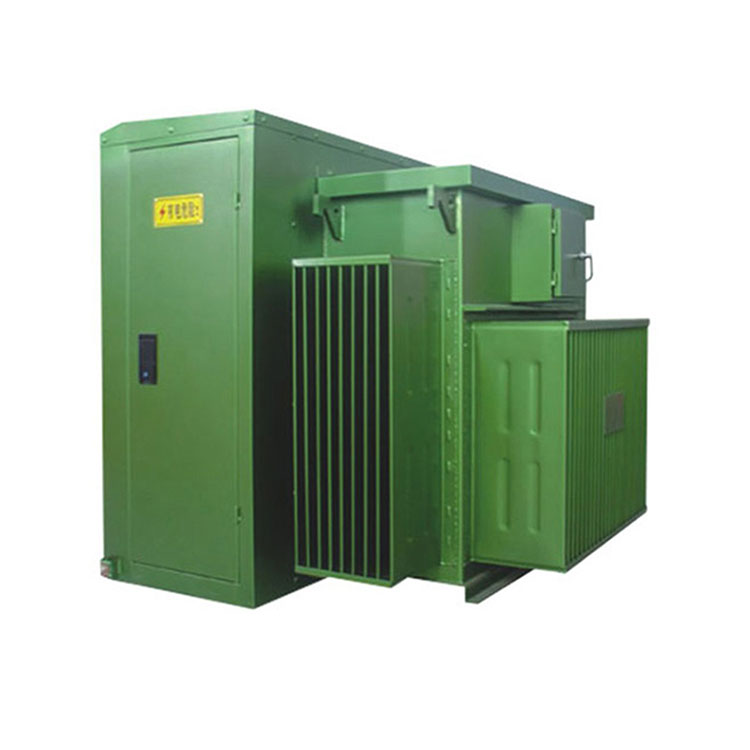
What Makes a Pad Mounted Transformer So Useful in Modern Distribution Projects?
I see this type of transformer as a practical answer to modern site constraints. Instead of forcing planners to work around exposed infrastructure, a Pad Mounted Transformer allows the distribution point to stay enclosed, compact, and easier to integrate into the surroundings. This matters in neighborhoods, business parks, renewable energy connections, public utility upgrades, and industrial zones where safety, appearance, and footprint all matter at the same time.
- I can place it in environments where space is limited and site planning is strict.
- I can support underground distribution networks more neatly.
- I can reduce visual clutter compared with more exposed arrangements.
- I can improve controlled access through enclosed cabinet design.
- I can coordinate medium-voltage input and low-voltage output in a more organized way.
For many projects, that combination is more important than flashy specifications. Buyers usually want equipment that solves layout and operation problems before those problems become expensive.
Why Do So Many Buyers Worry About Safety First?
I think that concern is completely reasonable. Distribution equipment is rarely judged only by performance data on paper. It is judged by whether the site team, the operator, and the end user can trust it in everyday conditions. A Pad Mounted Transformer is attractive because its enclosed structure helps create a more controlled operating environment. When the design separates compartments properly and supports safer cable access, it gives buyers more confidence during both installation and service.
From my perspective, safety is not one single feature. It is the result of several design decisions working together.
| Buyer Concern | What I Look For | Why It Matters in Practice |
|---|---|---|
| Unauthorized access | Lockable enclosed cabinet | Helps protect critical components in public or semi-public areas |
| Operational safety | Clear compartment separation | Supports safer switching, inspection, and service work |
| Cable management | Orderly underground cable connection layout | Reduces confusion during installation and maintenance |
| Environmental exposure | Weather-resistant enclosure design | Improves suitability for outdoor service conditions |
| Long-term reliability | Stable manufacturing and testing process | Helps lower the risk of avoidable field issues |
When I compare options for a utility expansion or a commercial development, these points influence purchasing decisions far more than broad marketing language ever could.
Which Pain Points Can a Pad Mounted Transformer Actually Solve?
I do not like content that praises equipment without dealing with the problems buyers face every day. So I would rather say it directly. Buyers usually come to this category because something in the project is already difficult. The site is crowded. The local environment is sensitive. The customer wants safer equipment. The contractor wants faster installation. The operator wants fewer service complications. A Pad Mounted Transformer is relevant because it speaks to those specific pain points.
- It helps when the available footprint is limited.
- It helps when the project prefers underground distribution instead of exposed lines and structures.
- It helps when appearance matters in residential, campus, or commercial locations.
- It helps when the owner wants a more integrated and protected installation point.
- It helps when buyers need capacity and voltage options aligned with real application needs rather than one rigid standard.
That last point matters more than many people expect. In actual procurement, one of the biggest frustrations is not finding a transformer in general. It is finding one that fits the load profile, site condition, and utility framework without forcing too many compromises.
How Does the Compact Structure Improve Real Installation Work?
I often see installation teams underestimate how much time is lost when equipment layout is awkward. A transformer may be technically correct and still create unnecessary labor if cable entry is inconvenient, if site clearance becomes messy, or if the equipment footprint competes with roads, fencing, landscaping, or adjacent assets.
This is why I value the compact layout of a Pad Mounted Transformer. It usually supports a more disciplined installation process. On projects where every square meter matters, that can make a real difference.
| Installation Factor | Traditional Problem | How a Compact Pad-Mounted Layout Helps |
|---|---|---|
| Site planning | Equipment takes up too much visible or operational space | Allows more efficient use of constrained outdoor areas |
| Cable routing | Connections become harder to organize | Supports cleaner underground cable arrangement |
| Project coordination | Civil and electrical work overlap poorly | Makes the installation point easier to define early |
| Visual acceptance | Equipment disrupts the surrounding environment | Creates a neater power distribution appearance |
For me, that is not just an engineering convenience. It is a cost-control advantage. Cleaner planning often means fewer surprises later.
What Should I Check Before Choosing the Right Model?
I never recommend selecting a transformer based on one headline specification alone. Capacity matters, but it is only one piece of the picture. The right purchase decision usually depends on the relationship between system voltage, load demand, installation environment, available footprint, protection expectations, and future expansion plans.
When I review a Pad Mounted Transformer option, I usually walk through the following checklist.
- What are the primary and secondary voltage requirements?
- What load profile will the site actually carry now and later?
- What environmental conditions will the transformer face outdoors?
- How much space is truly available for placement and maintenance access?
- Does the project require standard capacity or a more tailored configuration?
- What level of testing and quality control does the supplier provide before shipment?
These questions sound basic, but they prevent expensive mismatch. A buyer who skips them may still receive equipment on time and still end up with a poor fit.
Why Does Customization Matter More Than Many Buyers Expect?
I have seen plenty of projects where standardization helps, but I have also seen many where rigid standardization becomes the problem. Not every site fits a perfectly fixed template. Load characteristics vary. Utility practices vary. Civil layouts vary. That is why supplier flexibility matters.
A manufacturer that can adapt a Pad Mounted Transformer to project requirements gives buyers a stronger chance of getting a better fit instead of forcing the project to bend around the equipment. In practical terms, customization can support more efficient procurement when the site has unusual capacity needs, non-standard distribution planning, or local compliance expectations.
| Project Need | Why Flexibility Helps | Procurement Benefit |
|---|---|---|
| Special capacity requirement | Standard models may not match the actual load plan | Reduces the chance of overbuying or under-sizing |
| Different voltage arrangement | Grid and end-use conditions vary by project | Supports smoother system integration |
| Site-specific layout | Space and cable path restrictions differ from site to site | Improves practical installability |
| Operational preference | Maintenance teams may need clearer or more familiar access logic | Improves long-term usability |
That is one reason I pay attention to suppliers that understand the difference between selling a catalog item and supporting a real distribution project.
How Can I Judge Whether a Supplier Is Truly Reliable?
I think buyers should be careful here. A polished sales message is easy to produce. Reliable manufacturing support is harder. I prefer to look at whether the supplier can discuss production discipline, testing logic, application scenarios, and long-term cooperation in a grounded way. That usually tells me more than brand slogans do.
When a company presents its Pad Mounted Transformer offering with a clear sense of application fit, production control, and user-side practicality, I take that seriously. I also pay attention to whether the supplier appears comfortable serving different project scales rather than pushing only one standard option.
- I look for consistency in product range and category focus.
- I look for evidence that the supplier understands field use, not only factory output.
- I look for a willingness to discuss testing, lead time, and technical matching clearly.
- I look for communication that helps reduce procurement uncertainty instead of adding to it.
That kind of supplier is usually much easier to work with when a project moves from inquiry to technical confirmation and then to delivery.
Is a Pad Mounted Transformer a Good Choice for Residential and Commercial Areas?
In many cases, yes. I find it especially suitable when a project wants safer outdoor distribution equipment with a cleaner look and a more compact footprint. Residential communities, campuses, office parks, retail developments, and mixed-use sites often care about both functional performance and how the infrastructure fits into the environment.
That does not mean every project should use the same specification. It means this transformer category is often a strong fit where planners want a practical balance between safety, spatial efficiency, and visual order.
For commercial owners, I also think there is another advantage. The more organized the distribution point is, the easier it becomes to explain the installation to stakeholders who are not electrical specialists. A good Pad Mounted Transformer solution can be easier to accept because it looks intentional rather than improvised.
What Mistakes Do Buyers Most Commonly Make During Procurement?
I have seen several patterns repeat. None of them are unusual, but all of them can delay a project or weaken the final result.
- Choosing by price alone without checking application fit
- Ignoring future load growth and sizing too narrowly
- Underestimating installation space and maintenance clearance
- Assuming all enclosed transformers perform the same way
- Failing to confirm technical details early with the supplier
In my view, the best purchasing process is not the fastest one on paper. It is the one that removes doubt before the equipment reaches site. That is why technical communication matters so much when selecting a Pad Mounted Transformer.
Why Do I See This Equipment as a Long-Term Value Decision Rather Than a Simple Purchase?
I think this is the right way to frame it. Buyers are not just purchasing hardware. They are choosing a distribution solution that will affect site safety, service convenience, layout efficiency, and public-facing appearance for years. That is a long-term operational decision.
When I consider lifecycle value, a well-matched Pad Mounted Transformer often stands out because it helps avoid hidden costs caused by poor fit, awkward installation, or difficult maintenance access. Even before we talk about electrical performance, that practical value is significant.
In other words, a better transformer choice can reduce friction across multiple teams at once. Engineers benefit. Contractors benefit. Operators benefit. Owners benefit. That is exactly why this category remains so relevant in modern distribution planning.
How Should I Move Forward If I Want a Better-Fit Transformer Solution?
If I were sourcing for a real project today, I would not begin with a generic request for quotation and hope for the best. I would begin with load requirements, voltage data, site conditions, layout constraints, and service expectations. Then I would discuss those needs with a supplier that understands how to align a Pad Mounted Transformer with actual operating conditions rather than forcing me into a one-size-fits-all answer.
If you are comparing options and want a transformer solution that fits your project more precisely, now is the right time to start that conversation. Share your voltage level, capacity target, application scenario, and installation conditions with us. We can help you evaluate a suitable Pad Mounted Transformer approach for your project. Contact us today and send your inquiry to discuss specifications, matching options, and next-step recommendations.