

How Can a Ring Main Unit Improve Power Distribution Reliability?
2026-04-13
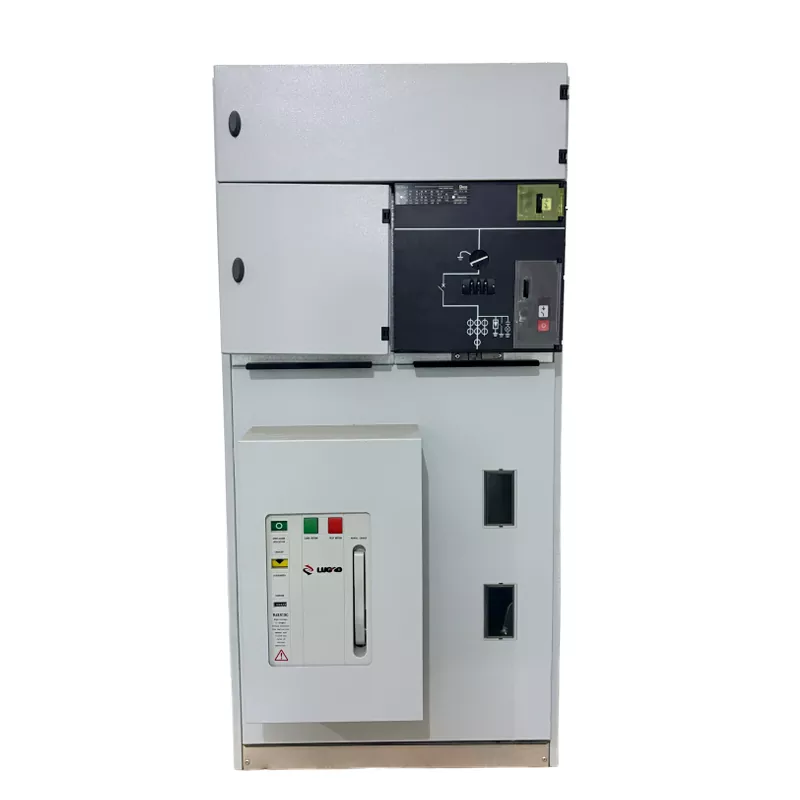
When I look at modern distribution networks, I see the same pressure points come up again and again: limited installation space, rising safety requirements, expanding load demand, and the need to reduce maintenance without compromising performance. That is exactly where Lugao Power Co.,Ltd gradually enters the conversation in a practical way. In projects where continuity, compact design, and operational safety matter, a well-designed Ring Main Unit often becomes one of the smartest choices for medium-voltage power distribution.
I have found that buyers do not just want equipment that works on day one. They want systems that are easier to install, simpler to manage, safer for operators, and dependable across years of real service. A properly engineered Ring Main Unit helps solve those problems by combining switching, protection, and distribution functions into one compact and efficient solution that suits industrial, commercial, utility, and infrastructure environments.
Why Do So Many Power Projects Need a Better Distribution Solution?
In real purchasing decisions, the challenge is rarely about buying a single product. It is about making the whole network more stable while keeping construction, operation, and long-term ownership costs under control. I often see decision-makers facing several concerns at once:
- How can we maintain reliable power supply in a limited footprint?
- How can we improve operational safety for field personnel?
- How can we reduce maintenance requirements in demanding environments?
- How can we prepare for future expansion without rebuilding the entire system?
- How can we choose equipment that fits both technical standards and project budgets?
These are the situations where a compact and integrated Ring Main Unit stands out. Instead of relying on bulky arrangements or fragmented equipment layouts, the unit offers a more organized and efficient way to handle medium-voltage distribution.
What Makes a Ring Main Unit So Practical in Daily Operation?
I like to think about usefulness in simple terms: does the equipment make life easier for the people who install it, operate it, and maintain it? In many applications, the answer is yes. A Ring Main Unit is valued because it brings together protection, switching, and cable connection functions inside a compact enclosure. This reduces complexity on site and improves the consistency of the power distribution arrangement.
From a user perspective, the biggest advantage is not only the compact footprint. It is the balance between safety, stability, and manageable operating cost. When networks need to run continuously in industrial parks, commercial buildings, public facilities, or residential power systems, that balance matters more than flashy specifications.
Which Buyer Problems Can a Ring Main Unit Help Solve?
I usually break the value down into buyer pain points, because that is how most project teams evaluate equipment in the real world.
| Buyer Concern | Common Site Problem | How the Solution Helps |
|---|---|---|
| Space limitation | Switchgear rooms are small or land cost is high | Compact cabinet structure helps reduce installation footprint |
| Safety requirement | Operators need clearer and safer switching conditions | Interlocking design and enclosed structure support safer operation |
| Low maintenance target | Frequent servicing increases cost and downtime | Sealed construction helps lower routine maintenance needs |
| System expansion | Load demand may grow after the initial project stage | Expandable configurations support future network development |
| Project flexibility | Different sites require different layouts and ratings | Custom configurations help match practical application needs |
For many buyers, these practical benefits matter far more than abstract technical language. The right equipment should solve a real operational problem, not just look good in a catalog.
How Does Compact Design Create Real Project Value?
Space is expensive, especially in urban substations, industrial facilities, utility upgrades, and commercial power rooms. I have seen many projects where footprint reduction directly improved the economics of the installation. A Ring Main Unit makes sense because it concentrates important functions into a tighter layout without losing system usability.
This compact approach can support:
- More efficient equipment room planning
- Faster installation in constrained locations
- Cleaner cable and compartment organization
- Better suitability for modern city and infrastructure projects
- Easier integration into new and retrofit applications
That is one reason buyers involved in municipal works, energy distribution upgrades, commercial complexes, and industrial development often prefer this type of equipment. The value is not only technical. It is spatial, operational, and financial at the same time.
Why Does Safety Matter So Much When Choosing Medium-Voltage Equipment?
No serious buyer wants to compromise on safety. That part is non-negotiable. In medium-voltage distribution, operator protection, fault management, and equipment stability are all central to purchasing decisions. A well-built Ring Main Unit is attractive because its enclosed structure, switching arrangement, and protective functions help create a safer working environment.
From my perspective, safety value often appears in four areas:
- Reduced exposure of critical live parts
- More controlled switching operation
- Improved fault isolation capability
- Better support for reliable distribution continuity
For buyers managing public buildings, factories, hospitals, transportation projects, or utility distribution points, this matters every day. Safer operation is not just about compliance. It is about reducing preventable risk across the full life cycle of the project.
What Helps Reduce Maintenance Pressure Over Time?
One of the most common frustrations I hear from project owners is that equipment may look affordable at the purchase stage, but the maintenance burden grows later. This is why low-maintenance design has become such an important buying factor. In many applications, a Ring Main Unit is favored because its sealed and integrated structure can help reduce routine upkeep compared with more exposed or complicated arrangements.
That long-term advantage becomes especially meaningful when equipment is installed in:
- Remote sites where service access is limited
- Busy facilities that cannot tolerate extended downtime
- Dusty, humid, or industrial environments
- Projects with strict lifecycle cost targets
When I evaluate value from a total cost perspective, maintenance reduction is never a small detail. It can shape the real ownership experience far more than the initial quotation alone.
Which Applications Benefit Most from This Type of Equipment?
A Ring Main Unit fits a surprisingly wide range of projects because the core need is universal: distribute power safely, reliably, and efficiently in medium-voltage systems. The application range is one of the reasons it remains relevant across many markets.
| Application Area | Typical Need | Practical Benefit |
|---|---|---|
| Industrial parks | Stable distribution for production lines and support systems | Compact and reliable switching arrangement |
| Commercial buildings | Continuous power service in limited technical rooms | Efficient use of available installation space |
| Residential communities | Reliable local distribution with manageable maintenance | Orderly and dependable network support |
| Public infrastructure | Safe operation in transport and municipal projects | Improved distribution control and protection |
| Grid upgrades | Flexible equipment for expanding or modernizing systems | Support for modular and future-ready design |
When buyers ask whether this equipment is too specialized, I usually say the opposite. It is popular because it adapts well to different use cases without losing its core strengths.
How Can Buyers Judge Product Quality Beyond Basic Specifications?
This is where smart procurement really begins. I do not think a buyer should stop at voltage class or cabinet dimensions. Those details matter, but they are only part of the picture. A more useful evaluation looks at how the product will behave over time, how the supplier supports customization, and how easily the equipment can be integrated into the actual project environment.
I would usually recommend focusing on the following points:
- Whether the structure supports stable and safe operation
- Whether the design is suitable for the project footprint
- Whether the equipment can be adapted for different distribution needs
- Whether the supplier understands export, project coordination, and technical support
- Whether the solution helps reduce lifecycle cost, not only purchase cost
This is also why buyers often pay attention to manufacturers that can provide more than just a unit price. A dependable supplier should be able to support selection, communication, and practical project matching from the early stage onward.
Why Does Customization Matter More Than Many Buyers Expect?
No two projects are exactly alike. Load profile, installation environment, utility standard, protection requirement, and available space can all differ. That is why customization should not be treated as an extra luxury. In many cases, it is what makes the final solution workable.
When I look at a project involving a Ring Main Unit, I pay attention to how flexible the supplier can be in cabinet arrangement, internal layout, and project-specific adaptation. Buyers want equipment that fits the site, not equipment that forces the site to fit the product.
This practical approach can improve:
- Project compatibility
- Installation efficiency
- Operational convenience
- Future expansion planning
- Overall return on investment
That is one reason companies with manufacturing experience and application understanding are often more attractive than suppliers who only provide standard quotations.
What Should Buyers Really Expect from a Reliable Supplier?
In my view, the product is only one part of the decision. The supplier relationship matters almost as much. Buyers need clear communication, timely technical support, realistic production coordination, and a better understanding of what the project actually requires. A strong supplier does not just sell a Ring Main Unit. They help reduce uncertainty during selection, ordering, and implementation.
That support may include:
- Clear product matching for specific projects
- Practical advice on configuration and application
- Flexible OEM or custom options
- Stable production and delivery coordination
- Responsive follow-up during inquiry and procurement
This is where manufacturers with broader export and engineering awareness can make a meaningful difference for international buyers.
How Can the Right Choice Support Long-Term Distribution Performance?
When a buyer chooses a distribution product, the real question is not only whether it can be installed quickly. The real question is whether it can continue delivering stable, safe, and manageable performance as the project grows and operating demands change. A carefully selected Ring Main Unit supports that long-term goal because it combines compact structure, practical protection, easier maintenance planning, and adaptability for modern distribution systems.
I see this as a long-view decision. Buyers who focus only on the lowest initial number often end up paying more through service interruptions, inefficient layouts, and higher maintenance burden. Buyers who focus on performance, usability, and lifecycle practicality usually make the stronger investment.
Why Is Now a Good Time to Upgrade Your Distribution Approach?
Power distribution expectations are rising everywhere. Projects need to be faster, cleaner, safer, and more flexible than before. Whether you are developing a new installation or improving an existing network, this is a good moment to rethink how your medium-voltage system is built. A reliable Ring Main Unit can help you move toward a distribution setup that is easier to manage and better suited for present and future demand.
If you are comparing options for industrial, commercial, residential, utility, or infrastructure use, Lugao Power Co.,Ltd is worth considering as a practical manufacturing partner. If you want a solution built around performance, compact design, and real project needs, please contact us today for more product details, technical communication, or a tailored quotation. Your next inquiry could be the first step toward a smarter and more dependable power distribution system.