

How Can a Ring Main Unit Make Medium Voltage Power Distribution Safer and Easier to Manage?
2026-05-18
When I look at a medium voltage distribution project, I rarely judge the equipment only by its rated voltage or cabinet size. I care more about whether the system can keep power stable, protect operators, save installation space, and reduce future maintenance pressure. That is why I often pay close attention to manufacturers with practical engineering experience, such as Lugao Power Co.,Ltd, when evaluating a Ring Main Unit for industrial plants, urban grids, commercial buildings, renewable energy stations, and infrastructure projects.
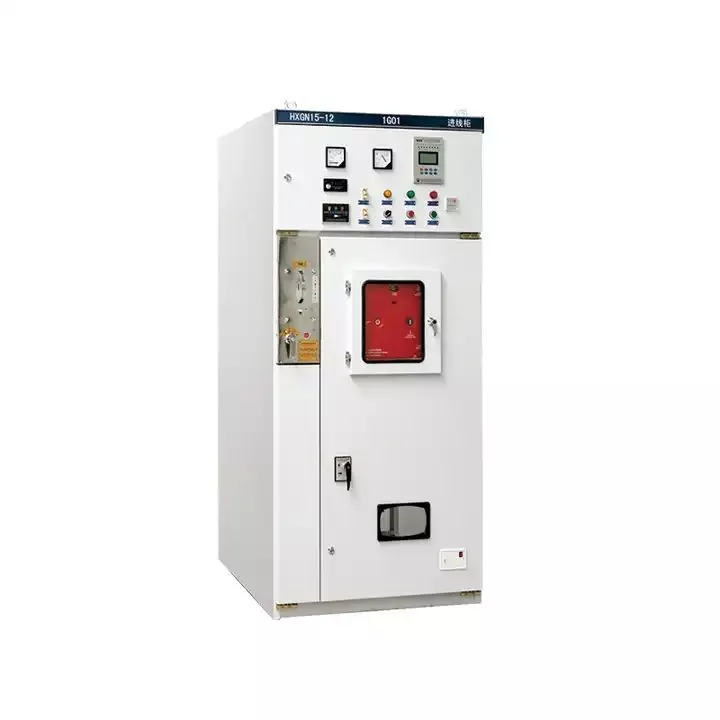
A well-designed Ring Main Unit is not just another switchgear cabinet. It is a compact medium voltage distribution solution that helps control, protect, and isolate electrical circuits in a safer and more organized way. For buyers, contractors, and project engineers, the real value lies in reducing outage risk, simplifying site work, and making the power network easier to expand when future demand grows.
Why Does a Ring Main Unit Matter So Much in Modern Distribution Networks?
In many projects, the biggest problem is not whether electricity can be delivered. The harder question is whether the system can continue working safely when a fault, maintenance task, or load change appears. Traditional distribution layouts may take more space, require more manual checks, and create higher interruption risks. A compact RMU design helps solve these issues by placing key switching, protection, and isolation functions into one coordinated structure.
From my experience, the buyers who need this product usually face several practical concerns:
- Limited space in urban substations, factories, basements, or compact transformer rooms
- High expectations for power continuity in hospitals, malls, data centers, and public facilities
- Strict safety requirements for operators and maintenance teams
- Harsh environments with humidity, dust, corrosion, or unstable outdoor conditions
- Project schedules that require faster installation and easier commissioning
- Future load growth that may require modular expansion
A dependable Ring Main Unit responds to these concerns by offering a sealed, compact, and flexible distribution layout. Instead of forcing the user to manage separate parts with complicated coordination, it brings the main operating functions into a clearer system.
What Should I Check Before Choosing a Ring Main Unit?
I never recommend choosing an RMU only because it looks compact or because the price is attractive. Medium voltage equipment has to match the electrical design, site conditions, operating habits, and long-term safety expectations of the project. A lower initial price can become expensive if the cabinet is hard to maintain, difficult to expand, or unsuitable for the local environment.
| Selection Point | Why It Matters | What I Usually Look For |
|---|---|---|
| Rated voltage and current | The RMU must match the project’s medium voltage network and load demand. | Common options such as 12kV, 24kV, 33kV, or 36kV systems depending on project design. |
| Insulation type | Insulation affects cabinet size, safety, reliability, and environmental resistance. | SF6 gas insulation, vacuum insulation, or other suitable configurations based on site needs. |
| Protection method | Protection design determines how the system reacts to overload, short circuit, and faults. | Load switches, fuses, vacuum circuit breakers, grounding switches, and interlocking devices. |
| Cabinet structure | A strong cabinet improves service life and protects internal components. | Durable metal enclosure, sealed live parts, pressure relief design, and stable internal layout. |
| Expansion flexibility | Many projects need extra feeders or configuration changes later. | Modular design that supports practical project expansion without major reconstruction. |
| Manufacturer support | Technical communication affects installation, drawings, delivery, and after-sales service. | Clear customization ability, stable production process, and responsive engineering support. |
These details may seem basic, but they often decide whether the Ring Main Unit will work smoothly after installation. A good supplier should be able to discuss these points clearly rather than only sending a general quotation.
How Does a Ring Main Unit Help Reduce Downtime?
Downtime is one of the most expensive problems in power distribution. A short interruption in a factory can stop production lines. A fault in a commercial complex can affect elevators, lighting, security systems, and tenants. In public infrastructure, power failure can create safety risks and service complaints.
The value of a Ring Main Unit is that it helps operators isolate faulty sections and restore power flow more efficiently. In a ring network, power can often be supplied from another direction when one section needs maintenance or fault handling. This does not mean every project will be interruption-free in every situation, but it gives engineers a more flexible way to manage the network.
- Faulty cable sections can be isolated more clearly.
- Maintenance work can be arranged with better control over affected areas.
- Operators can identify switch positions more easily through visible indicators.
- Interlocking systems help reduce the risk of incorrect operation.
- Compact layouts can shorten on-site cable connection and inspection time.
For buyers, this means the product is not only an electrical cabinet. It is part of the project’s reliability strategy.
Which Features Make a Ring Main Unit More Suitable for Harsh Sites?
Many distribution projects are not installed in perfect indoor conditions. I have seen buyers worry about humidity, dust, high temperature, coastal corrosion, limited ventilation, and restricted maintenance access. In these cases, a sealed and well-protected RMU can be a better choice than a more exposed switchgear arrangement.
A practical Ring Main Unit should be designed with long-term site conditions in mind. Features such as sealed insulation compartments, reliable grounding, corrosion-resistant cabinet materials, pressure relief channels, and safe operating mechanisms all help the equipment perform more steadily in demanding environments.
| Site Challenge | Possible Risk | Helpful RMU Design Feature |
|---|---|---|
| High humidity | Insulation performance may be affected over time. | Sealed insulation system and protected live parts. |
| Dusty industrial area | Dust accumulation can increase maintenance pressure. | Compact enclosed cabinet with reduced exposure of internal components. |
| Limited installation space | Traditional equipment may not fit or may be difficult to operate. | Small footprint, front operation, and modular cabinet arrangement. |
| Frequent load changes | The original design may become insufficient later. | Expandable configuration and flexible feeder options. |
| Operator safety concerns | Wrong switching actions may create serious hazards. | Mechanical interlocking, clear position indication, and grounding protection. |
Is a Ring Main Unit a Good Choice for Industrial and Commercial Projects?
In my view, yes, especially when the project needs safe medium voltage distribution in a compact space. Industrial and commercial users usually care about stability, predictable operation, and easy maintenance. They may not want equipment that demands frequent cleaning, complicated inspection, or large installation rooms.
A Ring Main Unit is commonly considered for:
- Manufacturing plants and industrial parks
- Commercial complexes and office buildings
- Residential communities and public buildings
- Hospitals, schools, and municipal facilities
- Railway, airport, and transportation infrastructure
- Solar farms, wind power stations, and renewable energy projects
- Compact substations and distribution transformer rooms
These projects often share the same concern. They need equipment that can protect the network without taking too much space or creating unnecessary operation difficulty. This is where a compact RMU design becomes valuable.
How Do I Compare SF6 Gas Insulated and Vacuum Type Ring Main Units?
Buyers often ask which insulation or switching technology is better. I would not answer that with a simple “this one is always better.” The right choice depends on the project voltage level, environmental condition, protection design, budget, maintenance habits, and local technical requirements.
| Type | Common Advantage | Typical Project Fit |
|---|---|---|
| SF6 gas insulated RMU | Compact structure, strong insulation performance, and good resistance to external conditions. | Urban grids, compact substations, humid areas, infrastructure projects, and limited-space installations. |
| Vacuum switching RMU | Reliable arc interruption and stable switching performance. | Industrial power distribution, feeder protection, and projects that need dependable circuit breaking. |
| Expandable RMU | Allows future feeder extension and configuration adjustment. | Projects with planned expansion, industrial parks, and growing commercial loads. |
| Fixed type RMU | Simple structure and practical cost control for fixed distribution schemes. | Standard transformer rooms, small substations, and stable-load applications. |
When I help evaluate options, I focus on the real project condition first. If the site is compact, humid, or maintenance access is limited, a sealed design may bring clear advantages. If the project requires certain protection functions, the breaker and relay configuration should be reviewed carefully before ordering.
Why Should Buyers Pay Attention to Customization?
Medium voltage projects rarely follow one single template. Cable entry direction, feeder quantity, protection scheme, cabinet arrangement, local standards, transformer capacity, and installation environment can all change from project to project. That is why customization is not a luxury. It is often necessary for proper system matching.
A professional RMU supplier should be able to discuss details such as:
- Rated voltage and rated current
- Number of incoming and outgoing feeders
- Load switch or circuit breaker configuration
- Fuse combination or relay protection design
- Cable connection method and cable compartment layout
- Grounding switch and interlocking requirements
- Live display, indicator, auxiliary contact, and monitoring options
- Cabinet size, internal arrangement, and expansion plan
This is one reason I would consider Lugao Power Co.,Ltd in procurement discussions. A buyer does not only need a cabinet. The buyer needs a manufacturer that can understand the project drawing, offer a workable configuration, and help reduce mistakes before production begins.
What Product Advantages Should I Expect from a Reliable Ring Main Unit?
A reliable Ring Main Unit should not depend on one selling point. Its value should come from the combination of safety, compactness, protection performance, easy operation, and long-term stability. When these advantages work together, the product becomes more useful for real distribution projects.
| Advantage | Practical Meaning for Buyers |
|---|---|
| Compact cabinet design | Helps save installation space in transformer rooms, substations, and urban power facilities. |
| Sealed live components | Reduces exposure to dust, moisture, and external contamination. |
| Clear switching and grounding structure | Makes daily operation easier and helps maintenance teams work more safely. |
| Interlocking protection | Helps prevent incorrect operation and improves operator safety. |
| Flexible configuration | Allows the RMU to match different feeder schemes and project requirements. |
| Lower maintenance pressure | Supports long-term operation with fewer routine maintenance demands. |
| Project customization | Helps EPC contractors, distributors, and end users obtain equipment that fits real site needs. |
How Can a Ring Main Unit Support Safer Operation for Maintenance Teams?
Electrical safety is not only about the product passing tests. It is also about whether the operator can use the equipment correctly under real working pressure. Good RMU design should make switching status clear, grounding reliable, and operation steps logical.
I usually pay attention to these safety-related details:
- Whether the switch position can be checked clearly
- Whether the grounding switch is easy to operate and verify
- Whether the cabinet has reliable mechanical interlocking
- Whether the cable compartment allows safe installation and inspection
- Whether the pressure relief design is considered for fault conditions
- Whether the internal layout separates functional areas properly
A mature Ring Main Unit should help reduce human error instead of relying completely on the operator’s experience. This is especially important in projects where maintenance teams may change over time or where equipment is installed in multiple locations.
Do Procurement Teams Really Save Money with the Right Ring Main Unit?
The cheapest cabinet is not always the lowest-cost solution. In medium voltage distribution, total cost includes installation time, maintenance frequency, outage loss, spare parts, service support, and future modification. A poor match can create hidden costs long after the order is completed.
A well-selected RMU may help reduce cost in several ways:
- Less floor space required for installation
- Faster site assembly and cable connection
- Lower routine maintenance workload
- Reduced downtime risk during faults or maintenance
- Better adaptability when the power network expands
- Fewer operational mistakes through safer mechanical design
For EPC contractors and distributors, this also helps improve project delivery. A properly configured RMU can reduce communication problems during installation and make the final handover easier.
Why Would I Consider Lugao Power Co.,Ltd for a Ring Main Unit Project?
When choosing a medium voltage equipment supplier, I want more than a product list. I want a manufacturer that understands power distribution applications, can provide different RMU configurations, and can communicate clearly during the selection process. Lugao Power Co.,Ltd offers RMU solutions for medium voltage distribution needs, including compact gas insulated and vacuum-related configurations for industrial, commercial, residential, infrastructure, and utility applications.
What makes this especially useful for buyers is the combination of product range and project adaptability. Instead of treating every customer as the same, the equipment can be discussed according to voltage level, feeder design, installation space, protection requirements, and usage environment. That matters because a good Ring Main Unit should fit the project before it arrives on site.
For international buyers, OEM customers, electrical contractors, and power distribution project teams, this kind of practical matching can make the purchasing process smoother. It also helps reduce the risk of ordering a cabinet that looks suitable on paper but becomes difficult to install or operate later.
How Should I Start a Ring Main Unit Inquiry?
Before sending an inquiry, I suggest preparing a few key details. This helps the supplier respond faster and offer a more accurate recommendation.
- Project country and application field
- Rated voltage and frequency
- Rated current and short-time withstand current requirement
- Single-line diagram if available
- Number of incoming and outgoing feeders
- Preferred insulation or switching type
- Indoor or outdoor installation condition
- Any local standards, certificates, or documentation requirements
- Expected delivery schedule and quantity
With this information, the supplier can better understand whether the project needs a standard configuration, an expandable cabinet, a specific protection scheme, or a customized internal layout.
What Is the Smarter Way to Choose a Ring Main Unit?
The smarter way is to look beyond the cabinet name and check whether the solution truly supports safety, reliability, installation efficiency, and future operation. A Ring Main Unit should help the power distribution system become easier to control, safer to maintain, and more stable under real working conditions.
If you are planning a medium voltage distribution project and need a compact, reliable, and customizable RMU solution, I recommend discussing your technical requirements with Lugao Power Co.,Ltd. Share your project drawings, voltage level, feeder arrangement, and installation conditions, and the team can help you review a suitable configuration. For pricing, specifications, customization options, or project support, please leave an inquiry today and contact us to get a practical Ring Main Unit solution for your power distribution needs.