

Efficient water management is essential for modern agriculture, greenhouse cultivation, and large-scale landscaping. However, traditional irrigation methods often rely on manual operation and fixed watering schedules, resulting in water waste, uneven irrigation, and unnecessary labor costs. A Smart Irrigation Control Box offers a more intelligent approach by integrating automated scheduling, pump management, sensor monitoring, and remote operation. With advanced automation technology, farmers can optimize water distribution, improve irrigation accuracy, and maintain more stable growing conditions.
What Makes a Smart Irrigation Control Box Important?
Water requirements vary according to soil conditions, crop varieties, weather, and different growth stages. Traditional irrigation systems cannot always respond quickly to these changing conditions. An intelligent control solution helps address these challenges through automated decision-making and coordinated equipment operation.
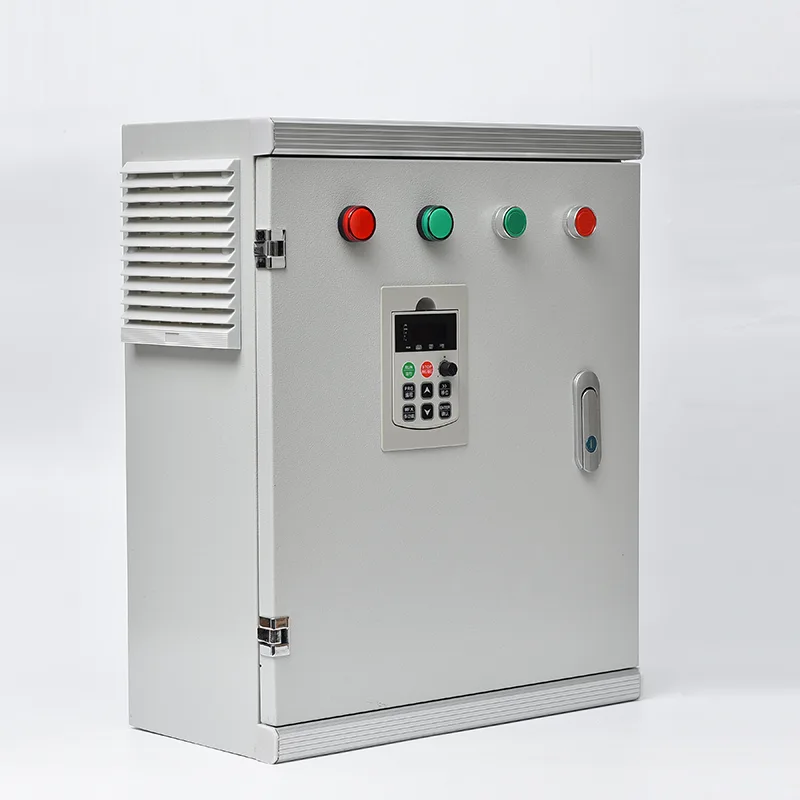
A Smart Irrigation Control Box integrates electrical components and control technologies into one system. Depending on its configuration, it can connect with soil moisture sensors, rain gauges, flow meters, pressure transmitters, pumps, and irrigation valves.
- Water Conservation: Adjusts irrigation schedules according to soil moisture and environmental conditions.
- Labor Reduction: Automates repetitive watering operations and reduces manual intervention.
- Equipment Protection: Coordinates pump and valve operations to minimize abnormal running conditions.
- Centralized Management: Supports monitoring and adjustment of multiple irrigation zones.
- Operational Efficiency: Helps distribute water and nutrients more accurately.
How Does a Smart Irrigation Control Box Work?
The system operates through coordinated control between sensors, a programmable controller, and field equipment. After receiving environmental and operational data, the controller executes predefined irrigation instructions.
- Data Collection: Sensors collect soil moisture, rainfall, water pressure, and flow information.
- Intelligent Processing: The controller evaluates the collected data against preset irrigation parameters.
- Automatic Irrigation: Pumps and solenoid valves are activated according to the programmed sequence.
- System Monitoring: Communication modules transmit operating information for remote monitoring when configured.
- Performance Adjustment: Irrigation schedules can be modified according to changing crop and environmental requirements.
This coordinated process makes irrigation more flexible than conventional timer-based systems while helping maintain consistent water delivery.
Key Features and Practical Applications
A well-configured Smart Irrigation Control Box can support different agricultural and commercial water management requirements.
| Key Feature | Practical Function | Expected Benefit |
|---|---|---|
| PLC Control | Automated irrigation scheduling | More precise operation |
| Sensor Integration | Monitors soil and environmental conditions | Reduced unnecessary watering |
| Pump Management | Coordinates pump starting and stopping | Improved equipment protection |
| Remote Connectivity | Monitors system status remotely | Convenient management |
| Fertigation Control | Coordinates fertilizer injection | More controlled nutrient delivery |
These functions make the system suitable for agricultural fields, orchards, greenhouses, nurseries, municipal landscaping, and solar-powered irrigation projects. Configurations can be adjusted according to the number of irrigation zones, pump capacity, power supply, and communication requirements.
What Results Can Intelligent Irrigation Bring?
Replacing manual irrigation with automated control can improve daily agricultural operations in several ways.
1. More Efficient Water Utilization
Sensor-based irrigation helps prevent unnecessary watering by responding to actual soil moisture conditions. This is particularly useful in areas where water resources are limited.
2. Lower Labor and Operating Costs
Automated pump and valve control reduces the need for workers to operate individual irrigation stations manually. Remote monitoring also makes managing multiple locations more convenient.
3. More Consistent Crop Management
Different irrigation zones can follow independent schedules based on crop requirements, helping provide more consistent growing conditions.
4. Better Equipment Reliability
Coordinated pump and valve sequencing, together with optional flow and pressure monitoring, helps reduce operational risks and supports preventive maintenance.
Why Choose Zhejiang Csivei Automation Co., Ltd.?
Choosing an irrigation control solution requires more than selecting a functional electrical cabinet. Manufacturing experience, engineering capabilities, product quality, and technical support are equally important.
Zhejiang Csivei Automation Co., Ltd. is a high-tech enterprise specializing in industrial automation and energy-efficient control solutions. Its product portfolio includes Variable Frequency Drives (VFDs), Solar Pump Inverters, EV Chargers, and customized Control Panels.
With an established manufacturing facility in Zhejiang, China, Csivei operates automated SMT production lines, CNC laser cutting equipment, high-temperature aging facilities, and motor testing platforms. The company emphasizes strict quality control, from raw material inspection to finished-product testing.
Its automation and power management expertise provides a solid foundation for developing solutions involving agricultural pumping, intelligent control, and energy-efficient water management. The company also offers customized engineering support, international product certifications, and after-sales technical assistance to serve customers in different markets.
How to Select the Right Smart Irrigation Control Box?
Before purchasing, buyers should evaluate several technical factors to ensure the selected configuration matches their project requirements.
- Control Capacity: Determine the required number of pumps, valves, and irrigation zones.
- Power Supply: Confirm whether the project requires AC power or a solar-powered configuration.
- Sensor Compatibility: Check support for moisture, rainfall, pressure, and flow monitoring devices.
- Communication Options: Consider 4G, Wi-Fi, LoRa, or other connectivity requirements.
- Environmental Protection: Select an appropriate enclosure protection rating for outdoor conditions.
- Customization: Confirm whether the manufacturer can adjust electrical components and control functions for your application.
Conclusion: Make Irrigation Smarter and More Efficient
A Smart Irrigation Control Box is an important component of modern agricultural automation. By combining intelligent scheduling, sensor integration, pump coordination, and optional remote monitoring, it helps improve water management while reducing unnecessary labor and operating costs.
For agricultural equipment distributors, irrigation system integrators, and project contractors, selecting a reliable manufacturing partner is essential for long-term project performance. Zhejiang Csivei Automation Co., Ltd. is committed to delivering practical automation and energy-efficient control solutions tailored to different application requirements.
Looking for a customized Smart Irrigation Control Box for your next project? Contact us today! Get in touch with Zhejiang Csivei Automation Co., Ltd. to discuss your technical requirements, explore suitable configurations, and obtain professional product support.