

How Can High Voltage Switchgear Reduce Downtime and Make Power Distribution Safer?
2026-05-06
When I evaluate power distribution equipment for demanding projects, I do not look only at voltage ratings or cabinet dimensions. I look at how the system behaves under pressure, how quickly faults can be isolated, how much maintenance my team will realistically need to handle, and how confidently I can keep operations running. That is exactly why I pay close attention to High Voltage Switchgear. As I learned more about the solutions developed by Lugao Power Co.,Ltd, I found it easier to explain to buyers, contractors, and plant operators why the right switchgear decision affects far more than a technical drawing. It directly affects safety, continuity, operating cost, and long-term reliability.
In many projects, the real problem is not whether power can be distributed. The real problem is whether the system can stay stable in harsh environments, isolate faults fast enough, protect people on site, and remain manageable over years of operation. A well-designed High Voltage Switchgear solution helps solve those problems in a practical way, especially when a project needs dependable protection, structured installation, and easier maintenance planning.
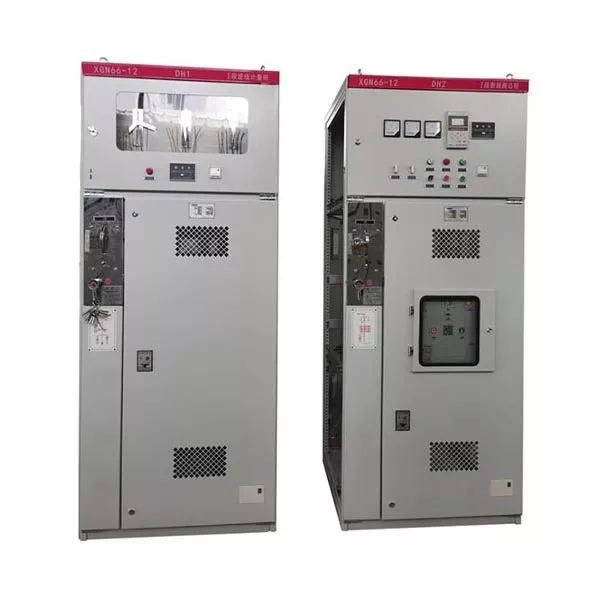
What Do Buyers Usually Worry About Before Choosing High Voltage Switchgear?
I often see the same concerns appear again and again during procurement discussions. Buyers may phrase them differently, but the core issues are very similar.
- Will the equipment protect the network quickly enough during a fault?
- Will the installation take up too much space in the electrical room?
- Will maintenance become difficult or expensive after commissioning?
- Will the switchgear remain reliable in dust, humidity, altitude, or temperature variation?
- Will operators feel safe using it every day?
- Will the supplier support customization for real project conditions instead of offering a generic cabinet only?
These concerns are reasonable. A switchgear purchase is not just about ordering metal-enclosed equipment. It is about protecting an electrical system that may power production lines, substations, commercial facilities, utility infrastructure, or public buildings.
Why Does High Voltage Switchgear Matter So Much in Real Projects?
I think the simplest answer is this: the right switchgear helps me control risk before risk becomes downtime. In a real-world network, electrical faults do not wait for convenient timing. If a short circuit or abnormal condition occurs, response speed matters. Isolation reliability matters. Mechanical interlocking matters. The design of the enclosure matters. Even the way maintenance access is arranged can affect how quickly a team restores stable operation.
That is why I view High Voltage Switchgear as a system-level protection decision rather than a single product purchase. It supports switching, protection, isolation, and operational safety in one structured assembly, which makes it especially valuable in projects where uninterrupted power is closely tied to revenue, safety, or public service continuity.
Which Product Advantages Actually Make a Difference Instead of Just Looking Good on Paper?
I prefer to judge equipment by the advantages that can be understood in operating terms. The table below shows how I usually connect technical value to buyer concerns.
| Buyer Concern | What I Look For | Why It Matters in Practice |
| Fault isolation speed | Stable interruption and protection coordination | Helps reduce equipment damage and shortens outage impact |
| Limited installation space | Compact and modular cabinet layout | Improves room utilization and simplifies project planning |
| Operator safety | Reliable interlocks and enclosed structure | Reduces operational error risk and improves on-site confidence |
| Harsh environment | Durable enclosure and adaptable configuration | Supports more stable performance in challenging conditions |
| Maintenance burden | Accessible design and predictable inspection routine | Helps teams manage servicing without excessive downtime |
| Project-specific requirements | Customizable electrical and structural options | Allows better fit for industrial, utility, and infrastructure needs |
For me, these are the product strengths that genuinely matter. They are not decorative selling points. They directly shape how the equipment performs after installation.
How Does a Better Switchgear Design Help Me Control Safety Risks?
Safety is usually the first topic in any serious power distribution conversation, and rightly so. I do not want operators relying on luck, memory, or workarounds. I want the equipment itself to support correct behavior.
A strong High Voltage Switchgear design helps by combining enclosure protection, switching control, isolation capability, and interlocking logic into one coordinated structure. That means the equipment is not only performing an electrical function. It is also helping the operator follow a safer operating sequence.
- I value interlocking systems because they reduce the chance of incorrect operation.
- I value enclosed conductive parts because they improve protection in daily use.
- I value clear status indication because it helps maintenance teams work with better visibility.
- I value structured grounding arrangements because they support safer inspection and servicing.
When buyers ask me why safety-focused design matters so much, my answer is simple. The cost of unsafe operation is always higher than the cost of choosing the right equipment at the beginning.
What Makes Space Saving So Important in Modern Electrical Rooms?
Many buyers underestimate this point at first. Then the installation phase begins, and suddenly every meter matters. In industrial plants, substations, commercial developments, and utility expansions, usable space is rarely unlimited. A bulky arrangement may complicate cable routing, limit future expansion, or make maintenance access more difficult than expected.
That is why I appreciate compact and modular High Voltage Switchgear. A more efficient footprint can make layout planning easier, reduce congestion in the electrical room, and leave more flexibility for future system changes. This is especially useful in retrofit work, where I may need to upgrade distribution performance without rebuilding the entire space.
How Can I Judge Whether Maintenance Will Become a Problem Later?
I never want maintenance to become an afterthought. A product may look attractive during quotation review, but if inspection is inconvenient or servicing becomes time-consuming, the long-term operating cost rises quickly.
When I assess switchgear, I usually ask these maintenance-focused questions.
- Can the operating mechanism be inspected without unnecessary complexity?
- Are the internal components arranged for practical access?
- Is the inspection cycle predictable for the type of environment involved?
- Will the design help my team identify wear, looseness, or contamination before they turn into serious faults?
I find that well-planned High Voltage Switchgear supports a more organized inspection routine. That matters because good maintenance is not only about repair. It is about preserving system confidence over the life of the equipment.
| Maintenance Area | What I Usually Check | Expected Benefit |
| Operating mechanism | Movement condition, wear, and smooth operation | More reliable switching performance |
| Contacts and conductive connections | Condition, tightness, oxidation, and heat signs | Reduced risk of connection failure |
| Interlock system | Functional reliability and mechanical coordination | Safer daily operation |
| Grounding path | Continuity and integrity of grounding connections | Improved electrical safety |
| Insulation area | Cleanliness, dryness, and visible surface condition | More stable insulation performance |
Which Applications Benefit Most from High Voltage Switchgear?
In my experience, the best applications are the ones where power continuity, operating discipline, and equipment protection all matter at the same time. That covers more sectors than many buyers first expect.
- Industrial manufacturing plants that need stable power for production equipment
- Commercial buildings and business complexes that require dependable distribution control
- Utility and substation projects where network protection is a priority
- Infrastructure upgrades where compact layout and reliability both matter
- Hospitals, schools, and public facilities where operational safety is essential
- Export and EPC projects that need adaptable solutions for different working conditions
In all of these settings, High Voltage Switchgear is not simply installed to complete a checklist. It is installed because the electrical system needs controlled switching, isolation, and protection that can support real operational demands.
What Should I Compare Before Choosing a Supplier Instead of Only Comparing Prices?
I understand why price gets attention first, but I never think price alone tells the full story. A low initial quote can become expensive if the equipment does not fit the project, lacks dependable support, or increases long-term maintenance pressure.
Here is the comparison method I prefer.
| Comparison Point | Why I Care About It |
| Product structure and protection concept | It affects fault response, safety, and operating confidence |
| Customization ability | It determines whether the equipment really matches the project conditions |
| Manufacturing consistency | It influences long-term quality and delivery reliability |
| Technical support | It helps solve specification and installation questions early |
| Maintenance practicality | It affects future operating workload and service planning |
| Total lifecycle value | It gives a more honest picture than purchase price alone |
This is where a supplier relationship becomes important. I do not want to buy from a company that simply lists products. I want to work with a team that understands how switchgear is selected, configured, shipped, installed, and maintained in real projects.
Why Do I Think a Practical Supplier Approach Matters as Much as the Product Itself?
Because the equipment decision does not end when the cabinet leaves the factory. I may still need help with model selection, configuration alignment, technical communication, application matching, or delivery coordination. A supplier that understands those steps creates value beyond the hardware.
That is one reason companies such as Lugao Power Co.,Ltd are worth paying attention to in this field. When a manufacturer is focused on switchgear and related power distribution equipment, it becomes easier for buyers like me to discuss application fit instead of staying stuck in a generic catalog conversation.
For projects involving High Voltage Switchgear, I want that kind of communication from the start. It reduces specification mistakes, helps align expectations, and gives the project a stronger technical foundation before procurement moves too far forward.
How Do I Know When It Is Time to Upgrade My Existing System?
In my view, the signs are usually visible before failure happens, but they are often ignored for too long.
- Frequent maintenance interruptions are becoming normal
- The current layout no longer fits operational needs
- Safety procedures rely too much on manual caution
- The environment has become more demanding than the old equipment was designed for
- The system needs better reliability to support expanding loads or upgraded facilities
When I see those signs, I start reviewing whether a modern High Voltage Switchgear solution could provide better protection, more manageable maintenance, and stronger long-term stability.
What Is My Final Advice If I Want Better Reliability Without Making Procurement More Complicated?
If I had to give one practical recommendation, I would say this: focus on the problems the equipment must solve, not just the line items on the quotation. When I do that, the right choice becomes clearer. I look for safety, fault control, space efficiency, maintenance practicality, and supplier support that fits the real application.
A dependable High Voltage Switchgear solution should help me protect assets, reduce avoidable downtime, simplify operation, and build more confidence into the power system from day one. That is the real value behind the purchase.
If you are evaluating switchgear for an industrial facility, utility project, commercial building, or infrastructure upgrade, this is a good time to compare your options carefully and discuss the right configuration for your application. Contact us today to learn more about suitable solutions from Lugao Power Co.,Ltd, request product details, or send your project requirements for a faster recommendation. If you are ready to improve safety, reliability, and long-term operating value, contact us now and leave your inquiry.