

How Can Sf6 Gas Insulated Switchgear Deliver Compact, Reliable Power Control for Marine Applications?
2026-09-11
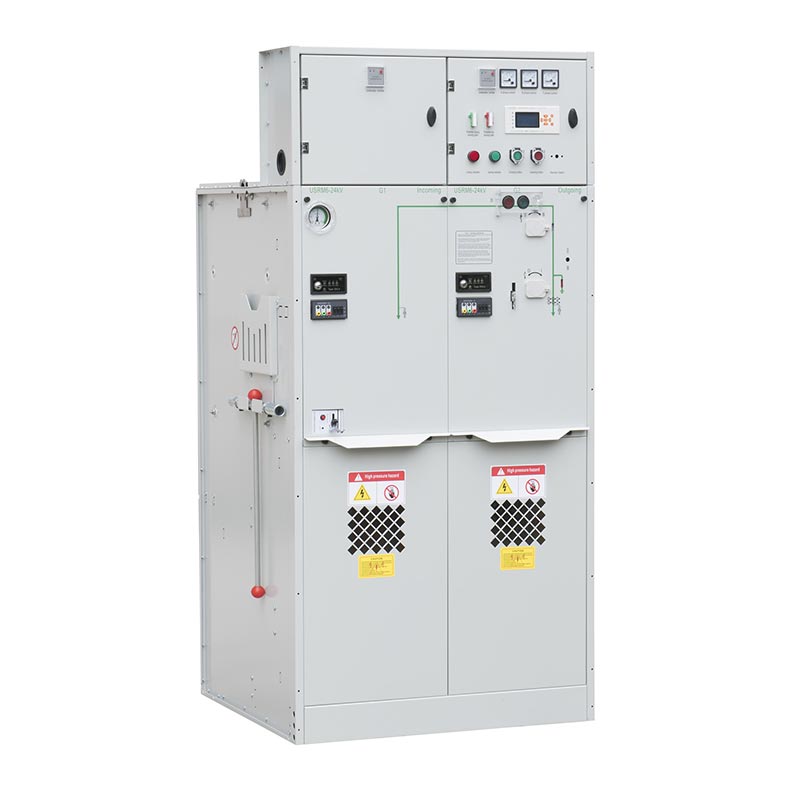
As modern power systems become more demanding, switchgear must provide reliable electrical protection while fitting into increasingly constrained installation environments. Sf6 Gas Insulated Switchgear addresses this challenge by placing key switching and protection components inside sealed, metal-enclosed compartments filled with sulfur hexafluoride (SF₆). Its high dielectric strength enables compact equipment construction, while the enclosed design helps protect internal components from moisture, dust, pollution, and other external influences.
For industrial facilities, substations, offshore platforms, and marine electrical systems, the combination of compactness, insulation performance, and operational reliability can be particularly valuable. Zhejiang Usune Electric Co., Ltd. focuses on providing electrical equipment solutions that can be adapted to different project requirements, including customized ship-type configurations for customers with specialized marine installation needs.
What Makes Sf6 Gas Insulated Switchgear Different?
The fundamental principle of GIS is to integrate major electrical components into a sealed enclosure. Depending on the system configuration, these components may include circuit breakers, disconnectors, earthing switches, busbars, current transformers, voltage transformers, and surge protection devices.
SF₆ has traditionally been used because of its strong dielectric properties and arc-quenching performance. Compared with conventional air insulation, it allows electrical clearances to be reduced substantially, making GIS much more compact. IEEE notes that GIS substations can occupy roughly 10–20% of the footprint of equivalent air-insulated systems in suitable applications.
Key Functional Advantages
- Compact structure: Reduces the space required for electrical equipment.
- Reliable insulation: Provides stable dielectric performance within an enclosed system.
- Environmental protection: Sealed compartments reduce exposure to humidity, dust, pollution, and corrosive environments.
- Reduced maintenance: Enclosed primary components are less exposed to external contamination.
- Integrated protection: Switching, isolation, measurement, grounding, and protection functions can be incorporated into one compact system.
These characteristics make Sf6 Gas Insulated Switchgear especially attractive where installation space, environmental resistance, and system availability are important.
Why Is Compactness Important for Marine and Offshore Systems?
Marine electrical installations create a different set of challenges from conventional land-based substations. Available space may be restricted, equipment may need to withstand vibration and humid or corrosive surroundings, and maintenance access can be difficult.
For offshore applications, industry guidance emphasizes reliability, resistance to corrosive atmospheres, and minimal maintenance as important considerations when selecting GIS.
This is where compact GIS technology can create practical value. A smaller switchgear footprint can help engineers optimize equipment rooms and allocate more space to other essential systems.
For shipbuilders and marine electrical integrators, however, standard equipment is not always enough. The switchgear may need to correspond to the vessel's electrical architecture, available installation area, cable direction, compartment arrangement, and project-specific operating conditions.
How Does Ship-Type Customization Improve Project Flexibility?
One of the important advantages offered by Zhejiang Usune Electric Co., Ltd. is its ability to support ship-type customized Sf6 Gas Insulated Switchgear solutions.
Rather than treating customization as a simple external modification, ship-oriented switchgear should be considered from the beginning of the engineering process. Equipment dimensions, component arrangement, connection interfaces, operation mechanisms, and installation orientation can all influence how effectively the switchgear integrates with a vessel's electrical system.
Ship-Type Customization Can Address:
| Requirement | Customization Focus |
|---|---|
| Limited installation space | Compact structural arrangement |
| Vessel-specific layout | Customized dimensions and configuration |
| Cable routing | Flexible connection and terminal arrangement |
| Marine electrical systems | Application-oriented design |
| Equipment-room integration | Adapted installation orientation |
| Project-specific requirements | Configurable technical specifications |
This flexibility can be particularly useful for shipyards, marine engineering companies, offshore platforms, and system integrators that cannot simply install a standard land-based switchgear cabinet.
The ability to provide ship-type customization gives Zhejiang Usune Electric Co., Ltd. an important opportunity to serve projects where conventional standardized equipment may not fully match the installation environment.
What Results Can Users Expect From a Properly Designed GIS Solution?
The value of Sf6 Gas Insulated Switchgear is not limited to its physical size. A properly engineered GIS solution can help improve the overall usability and reliability of a power distribution system.
1. Better Space Utilization
Compact GIS construction can help reduce the footprint of electrical installations. This is particularly meaningful on ships, offshore platforms, urban substations, and industrial facilities where every square meter has practical value.
2. Greater Environmental Protection
Because primary components are enclosed inside a sealed metallic structure, the equipment is less directly exposed to external contaminants. This can help maintain stable operation in environments where moisture, dust, salt, or industrial pollution could otherwise create electrical problems.
3. Simplified Maintenance Requirements
The enclosed structure can reduce the exposure of critical components to environmental contamination. As a result, GIS can offer long maintenance intervals and lower routine maintenance requirements compared with some conventional arrangements.
4. Improved System Integration
A GIS configuration can integrate multiple electrical functions into a coordinated system, helping engineers develop a more organized power distribution architecture.
Sf6 Gas Insulated Switchgear vs. Traditional Air-Insulated Switchgear
Both GIS and AIS can perform essential switching and protection functions, but their structural approaches are different.
| Feature | Sf6 Gas Insulated Switchgear | Air-Insulated Switchgear |
|---|---|---|
| Insulation medium | SF₆ gas | Air |
| Installation footprint | Compact | Generally larger |
| Environmental exposure | Highly enclosed | More exposed |
| Space efficiency | Excellent | Moderate |
| Marine application potential | Strong | Depends on project |
| Customization potential | Suitable for specialized configurations | Also configurable |
| Maintenance access | Specialized procedures | Generally more accessible |
The best choice ultimately depends on voltage level, installation conditions, project standards, maintenance strategy, environmental requirements, and lifecycle considerations.
Why Is Engineering Quality Still Essential?
The benefits of GIS depend heavily on proper engineering, manufacturing, sealing, gas management, testing, and installation. SF₆ systems also require responsible handling because SF₆ is a highly potent greenhouse gas, and the electrical industry is increasingly developing and adopting SF₆-free alternatives for suitable applications.
Therefore, customers should evaluate not only the equipment's rated electrical performance but also its structural design, monitoring arrangements, manufacturing quality, customization capability, and applicable environmental requirements.
For specialized marine projects, early communication between the switchgear manufacturer, shipyard, electrical designer, and system integrator is particularly important.
Choosing the Right Supplier for Customized Marine GIS
For customers looking for a Sf6 Gas Insulated Switchgear manufacturer capable of handling specialized project requirements, product flexibility can be just as important as basic electrical specifications.
Zhejiang Usune Electric Co., Ltd. can position its solution around several customer priorities:
- Compact GIS engineering
- Project-specific configuration
- Marine and offshore application support
- Ship-type customized switchgear
- Flexible equipment integration
- Professional electrical engineering
- Application-oriented technical communication
This approach helps transform GIS from a standardized electrical product into a project-specific power distribution solution.
Conclusion
Sf6 Gas Insulated Switchgear combines compact construction, enclosed insulation, reliable switching functions, and strong environmental adaptability, making it a valuable option for demanding electrical applications. Its compact architecture is particularly relevant where installation space is limited, while its enclosed structure can provide additional protection against challenging external conditions.
For marine and offshore projects, however, the ability to adapt the equipment to the vessel can be equally important. Ship-type customization enables switchgear configurations to better match vessel layouts, electrical architectures, connection requirements, and available installation space.
With its focus on customized electrical solutions, Zhejiang Usune Electric Co., Ltd. can provide a practical choice for customers seeking compact and application-oriented GIS equipment. If you are planning a marine, offshore, industrial, or specialized power distribution project and require a customized Sf6 Gas Insulated Switchgear solution, contact us to discuss your technical requirements and develop a configuration suited to your application.