

How Can Siemens PLC Solutions Improve Customized Ship Automation?
2026-08-24
In modern marine automation, reliable control, flexible configuration, and easy system integration are essential for keeping vessels safe, efficient, and operational. A Siemens PLC solution can serve as a powerful control core for marine equipment, production machinery, monitoring systems, and customized vessel automation. Siemens' S7-1200 and S7-1500 families provide scalable controller options, while TIA Portal supports integrated engineering and standardized programming. For shipbuilders and marine equipment integrators, however, choosing the controller is only part of the challenge. The real value comes from matching PLC hardware, I/O configuration, communication, control logic, and HMI functions to the specific vessel design.
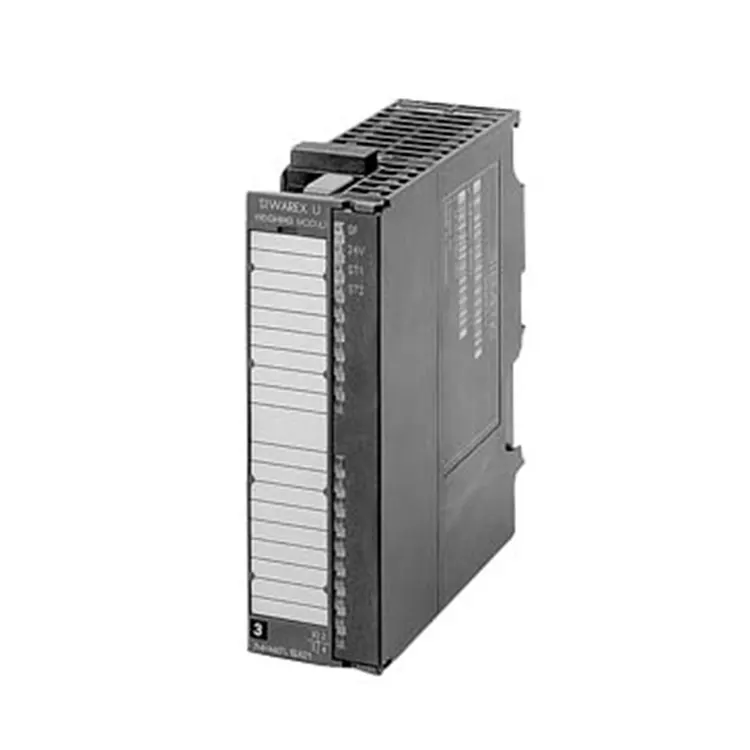
What Makes a Siemens PLC Valuable for Marine Automation?
A PLC acts as the control center that receives signals from sensors, processes programmed logic, and sends commands to connected equipment. In a vessel environment, this may include pumps, fans, valves, motors, alarms, lighting systems, power-management equipment, and auxiliary machinery.
The S7-1200 is positioned for compact automation applications, while the S7-1500 is designed for more demanding automation tasks with higher performance requirements. This scalability makes a Siemens PLC suitable for projects ranging from relatively compact marine systems to more complex customized automation architectures.
Key advantages include:
-
Reliable industrial control for continuous operation
-
Flexible I/O configuration according to equipment requirements
-
Integrated engineering through TIA Portal
-
Expandable system architecture for future modifications
-
Communication capabilities for connecting different automation devices
-
Diagnostic functions that can simplify troubleshooting and maintenance
-
Application flexibility for different vessel types and operating conditions
Why Is Customization Important for Different Vessel Types?
Not every vessel has the same machinery, dimensions, operating profile, or automation requirements. A workboat may prioritize compact machinery control, while a passenger vessel may require more extensive monitoring, alarms, ventilation, and auxiliary-system management. Offshore vessels can have their own requirements for equipment coordination and remote monitoring.
This is why support for ship-type customization should be a major consideration when selecting an automation supplier.
Floating Light Automation Trade Co.,Ltd. focuses on adapting Siemens PLC solutions around the customer's actual vessel requirements rather than forcing every project into a fixed configuration. The control architecture can be planned according to the ship's equipment layout, I/O points, control functions, communication requirements, and expansion needs.
Siemens also provides configuration-control functions for S7-1200 and S7-1500 systems, allowing different hardware configurations or options to be handled from a master project when supported by the selected CPU and modules. This concept can be particularly useful when developing automation solutions for vessel series with different equipment arrangements.
Typical Customization Considerations
| Customization Area | Marine Application |
|---|---|
| PLC Selection | Choose controller capacity according to system complexity |
| I/O Configuration | Match digital and analog points to vessel equipment |
| Communication | Connect PLCs, HMIs, drives, sensors, and other systems |
| Control Logic | Develop functions according to vessel operation |
| HMI | Customize monitoring and operator interfaces |
| Alarm Management | Configure equipment status and abnormal-condition alerts |
| Expansion | Reserve capacity for future vessel modifications |
How Does It Improve the Overall System?
A properly engineered Siemens PLC system can improve the consistency of equipment control and make complex automation easier to manage. With an organized programming structure, engineers can develop reusable functions and standardized solutions. Siemens' programming guidance for S7-1200 and S7-1500 emphasizes clear program structures, reusable blocks, and standardized programming practices.
For marine projects, this can translate into practical benefits such as:
1. Better operational efficiency
Automated control can coordinate multiple pieces of equipment according to predefined operating conditions, reducing unnecessary manual intervention.
2. Easier monitoring
PLC data can be integrated with HMI or other supervisory interfaces, allowing operators to understand equipment status more efficiently.
3. Faster troubleshooting
A structured control program and diagnostic information can help maintenance personnel identify abnormal conditions more quickly.
4. Easier system expansion
A scalable architecture makes it easier to add I/O modules, equipment, or control functions when the vessel design changes.
5. More consistent vessel customization
A reusable PLC architecture can provide a standardized foundation while still allowing individual ship models to receive different control functions.
What Is the Role of Communication in Ship Automation?
Modern vessels often contain numerous electrical and automation devices. The PLC therefore needs to communicate with HMIs, variable-frequency drives, remote I/O, sensors, and other control equipment.
For example, Siemens documentation confirms communication between S7-1200 and S7-1500 CPUs through Modbus/TCP using their communication functions. Depending on the project architecture and selected equipment, communication design can therefore become an important part of the overall customization process.
Floating Light Automation Trade Co.,Ltd. can consider the communication requirements during system planning instead of treating connectivity as an afterthought. This approach helps ensure that the selected PLC, I/O modules, HMI, and related components work together as a coordinated automation system.
Which Factors Should Buyers Consider?
Before purchasing a Siemens PLC-based marine automation solution, buyers should evaluate more than CPU specifications.
1. Vessel Type
Clearly define whether the project involves a cargo vessel, workboat, passenger vessel, offshore vessel, service vessel, or another specialized ship type.
2. Number of Control Points
Estimate digital inputs, digital outputs, analog signals, and potential future I/O requirements.
3. Control Complexity
Simple equipment control may require a compact controller, while large integrated systems can demand higher processing capacity and more extensive architecture.
4. Communication Requirements
Identify the devices and systems that must exchange data with the PLC and confirm the required communication interfaces.
5. Future Expansion
A project should leave reasonable room for additional equipment and future modifications.
6. Custom Engineering Capability
Most importantly, select a supplier that can adapt the automation system to the actual vessel rather than simply supplying standard hardware.
What Can Customized PLC Solutions Achieve?
The biggest advantage of a customized Siemens PLC solution is not simply the PLC itself. It is the combination of hardware selection, system architecture, programming, communication, HMI integration, and vessel-specific engineering.
For example, two vessels may use similar pumps and motors but require completely different control sequences because of differences in machinery layout, operational procedures, or equipment quantities. A customized system allows the control strategy to follow the vessel design.
This is particularly relevant in the marine sector because shipbuilding is inherently customized. Siemens itself describes marine engineering and shipbuilding as an industry in which customized vessel designs and connected engineering, manufacturing, and operations are increasingly important.
How Does Floating Light Automation Trade Co.,Ltd. Add Value?
Floating Light Automation Trade Co.,Ltd. combines Siemens PLC technology with project-oriented automation support. Instead of treating every customer as a standard hardware order, the company can focus on the actual application and vessel configuration.
Its key value proposition includes:
-
Siemens PLC-based automation solutions
-
Vessel-specific control-system configuration
-
Support for customized solutions according to different ship types
-
Flexible I/O planning
-
PLC and HMI system integration
-
Communication-system planning
-
Customized control logic
-
Project-oriented technical support
-
Scalable solutions for different automation requirements
For shipbuilders, marine equipment manufacturers, system integrators, and engineering companies, this customized approach can make it easier to develop a control system that fits the actual project.
Conclusion
A Siemens PLC can provide a strong foundation for reliable and scalable marine automation, but successful vessel automation depends on how effectively the PLC system is engineered around the application. S7-1200 and S7-1500 platforms provide different levels of controller capability, while TIA Portal offers an integrated environment for engineering and programming.
For marine customers, the ability to customize solutions for different ship types is especially important. Floating Light Automation Trade Co.,Ltd. aims to combine established Siemens PLC technology with flexible engineering and vessel-specific customization, helping customers build automation systems that better match their equipment, control requirements, and vessel configuration.
If you are looking for a reliable Siemens PLC solution with ship-type customization, contact Floating Light Automation Trade Co.,Ltd. today. Contact us to discuss your vessel type, control requirements, I/O configuration, and automation project, and let our team help you develop a practical PLC solution tailored to your marine application.
