

How Can the Right EV Automotive and EVSE Fuse Reduce Charging Risk and Improve System Reliability?
2026-05-06
When I look at today’s electric mobility market, I do not just see faster chargers and larger battery packs. I also see a growing need for safer current protection in real operating conditions. That is where Zhejiang Galaxy Fuse Co., Ltd. gradually comes into view for me, especially when I evaluate how a well-designed EV Automotive and EVSE Fuse can help protect both vehicles and charging equipment from costly electrical faults. In real projects, the issue is rarely about adding one more component for the sake of it. The real issue is whether that component can interrupt dangerous overcurrent quickly, work reliably in demanding DC environments, and support stable performance over time without creating unnecessary maintenance trouble.
I have noticed that many buyers, engineers, and sourcing teams run into the same frustration. They know protection matters, but they are not always sure what separates an ordinary fuse from one that is truly suitable for EV platforms and EV charging infrastructure. In my experience, the answer usually comes down to application fit, DC breaking capability, thermal behavior, installation practicality, and long-term consistency. A dependable EV Automotive and EVSE Fuse is not just a spare part in the bill of materials. It is part of the system’s safety logic, service continuity, and brand reputation.
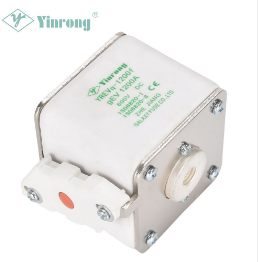
What Problems Usually Appear When EV Protection Is Treated Too Simply?
I often see teams focus heavily on battery performance, charging speed, connector design, or enclosure layout, while current protection receives less attention until later in the process. That can become expensive. Once a protection device is mismatched to the application, several problems tend to appear at once.
- I may see nuisance failures caused by poor coordination between current load and fuse characteristics.
- I may find that DC fault interruption was not considered deeply enough during early selection.
- I may discover that compact installation requirements were underestimated.
- I may run into thermal stress issues in enclosed charging systems or vehicle-side power circuits.
- I may notice inconsistent product quality creating uncertainty for large-volume procurement.
These problems do not stay isolated. They affect charging uptime, maintenance frequency, field safety, and eventually customer confidence. In fast-growing EV programs, one weak protection decision can ripple through validation, deployment, and after-sales support.
Why Does DC Protection Matter So Much in EV and EVSE Applications?
I think this is where many purchasing decisions become clearer. AC protection and DC protection do not behave in the same way. In EV battery systems and charging equipment, the current environment can be more demanding, especially when high power density, rapid switching, and fault energy are involved. A proper EV Automotive and EVSE Fuse is expected to respond to overcurrent conditions in a way that protects critical components before damage spreads to connectors, busbars, semiconductors, cables, contactors, or battery-related assemblies.
From a practical standpoint, I care about whether the fuse can support safe interruption in real EV and EVSE operating conditions, whether it can integrate into the system without awkward redesign, and whether it helps reduce the chance of cascading failures. In charging stations and vehicle electrical systems alike, protection is not only about stopping current. It is about stopping risk before that risk becomes downtime, heat damage, warranty exposure, or safety incidents.
Which Product Features Actually Make a Better EV Automotive and EVSE Fuse?
When I compare options, I do not focus on marketing language first. I focus on whether the design logic matches real-world use. A stronger EV Automotive and EVSE Fuse usually stands out because it supports the application rather than forcing the application to work around it.
| Selection Factor | Why I Pay Attention to It | How It Helps the User |
| DC application suitability | EV and EVSE systems operate in demanding DC environments | Helps control fault energy more effectively |
| Fast overcurrent response | Faults can escalate quickly in high-energy systems | Reduces the chance of damage spreading to expensive components |
| Reliable material and construction quality | Protection devices need consistent performance across batches | Supports stable procurement and predictable field behavior |
| Compact and practical mounting design | Space is often limited in chargers and vehicle platforms | Makes integration easier and cleaner |
| Thermal and operational stability | Charging equipment and vehicle systems can run under repeated load stress | Improves long-term reliability and service life expectations |
| Clear application matching | A fuse should fit the actual system profile, not just a general category | Helps buyers avoid under-specification or over-specification |
When a supplier understands these points, I can usually tell that the product was developed with real electrical protection needs in mind rather than treated as a generic catalog item.
How Do I Judge Whether a Fuse Supplier Understands EV and EVSE Reality?
I do not want to buy from a supplier that only knows part numbers. I want to work with one that understands application context. That means the supplier should appreciate that EV platforms and EV charging systems are not static, low-stress environments. They are growing more demanding, more integrated, and more sensitive to component reliability.
This is one reason I pay attention when a manufacturer like Zhejiang Galaxy Fuse Co., Ltd. is associated with dedicated EV fuse product positioning instead of presenting everything as a one-size-fits-all solution. For me, that suggests a more application-aware approach. I still evaluate carefully, of course, but I prefer suppliers that show they recognize the difference between general-purpose protection and a purpose-oriented EV Automotive and EVSE Fuse.
- I look for product focus rather than vague category overlap.
- I value a supplier that can speak clearly about application logic.
- I trust manufacturers more when their product offering reflects specific use scenarios.
- I prefer suppliers that help reduce selection uncertainty for engineering and sourcing teams.
What Pain Points Can the Right Fuse Help Me Solve During Procurement?
Procurement teams are under pressure from every direction. They need quality, lead-time control, pricing balance, specification clarity, and fewer after-sales issues. In that environment, the right fuse choice can solve more than one problem at once.
First, it can reduce uncertainty during technical evaluation. If I am choosing a dedicated EV Automotive and EVSE Fuse instead of trying to adapt a less suitable option, I usually spend less time debating whether the protection strategy is strong enough for the target scenario.
Second, it can support product consistency across repeat orders. That matters a lot for projects that move from pilot quantity to scaled deployment.
Third, it can lower hidden cost. The cheapest protection component is not always the most economical once rework, failure risk, service visits, and customer complaints are counted.
Fourth, it can simplify communication between engineering and purchasing. A product that is clearly intended for EV and EVSE use makes internal approval easier than a loosely matched alternative.
| Buyer Pain Point | What Usually Causes It | How the Right Fuse Choice Helps |
| Unclear selection criteria | Generic protection products with weak application targeting | Improves specification confidence |
| Unexpected maintenance issues | Poor fit for operating stress and fault conditions | Reduces service disruption risk |
| Higher lifetime cost | Short-term price focus without long-term reliability thinking | Supports better cost-performance balance |
| Cross-team communication delays | Engineering and procurement use different decision standards | Makes application intent easier to align |
| Brand reputation concerns | Protection weakness appears in field use | Helps protect product credibility |
How Can I Think More Clearly About Vehicle Side and Charging Side Protection?
I find it useful to remember that EV systems and EVSE systems may be connected in operation, but their protection needs are not always identical in detail. On the vehicle side, I may care more about battery-associated circuits, onboard electrical protection paths, packaging limitations, and vibration-aware design considerations. On the charging side, I may focus more on operational continuity, infrastructure safety, service intervals, and repeated use conditions.
That is why I prefer to evaluate a EV Automotive and EVSE Fuse as part of an application map rather than as a single isolated purchase. I ask where the fuse sits, what kind of fault it may face, how quickly it needs to act, what surrounding components it protects, and what failure consequences look like if coordination is poor. That line of thinking usually leads to better product selection and fewer surprises later.
Which Signs Tell Me a Product Advantage Is Real Rather Than Just Promotional?
I have learned to look for practical value. If a fuse offering is genuinely useful, its advantages should make sense without exaggerated wording. I pay attention to whether the benefits are tied to customer pain points that actually exist in EV and EVSE projects.
- I trust products more when the value is explained through protection outcomes, not empty superlatives.
- I respond better when the product story addresses system safety, service life, and integration efficiency.
- I take the supplier more seriously when the application scope is communicated with discipline.
- I prefer language that helps me make a decision rather than language that only tries to impress me.
For that reason, when I write or review industrial content, I try to keep the discussion grounded. A reliable EV Automotive and EVSE Fuse should be presented as a solution to real electrical risk, selection complexity, and operational reliability demands. That is already strong enough. It does not need inflated language.
What Should I Ask Before I Choose an EV Automotive and EVSE Fuse Supplier?
Before moving forward, I like to ask a few simple but revealing questions.
- Does this product appear to be developed for EV and EVSE use rather than adapted loosely from another category?
- Will the supplier help me narrow the product choice based on my actual application conditions?
- Is the product positioning clear enough to reduce confusion during sourcing and approval?
- Can I reasonably expect consistency if the project expands from trial order to volume demand?
- Does the supplier communicate in a way that supports technical decisions, not just sales activity?
These questions matter because protection components are often small in size but large in consequence. When a fault happens, the fuse becomes one of the most important parts in the system. I would rather evaluate that carefully at the sourcing stage than regret it after deployment.
Why Is This the Right Time to Improve My EV Protection Strategy?
The EV industry is moving too quickly for outdated protection thinking. As charging infrastructure expands and electric vehicle systems become more advanced, the cost of choosing the wrong protection solution becomes more visible. I believe this is the right time to review whether the current fuse strategy truly matches today’s operating demands.
If you are comparing options for a safer and more dependable EV Automotive and EVSE Fuse, it makes sense to work with a manufacturer that is already active in this product direction and can support more informed discussions around application fit. If you want to explore suitable protection options with Zhejiang Galaxy Fuse Co., Ltd., now is a good moment to take the next step. Please contact us to discuss your project, request product details, or send an inquiry so we can help you find a more practical solution for EV and EVSE protection.