
How Can Wastewater Concentration Equipment Transform Industrial Water Management?
2026-01-09
Summary: Industrial wastewater contains complex chemicals, heavy metals, and organic compounds that make treatment challenging. Wastewater concentration equipment offers a sustainable solution to reduce costs, improve effluent quality, and promote water recycling. This article explores the technology, applications, advantages, and practical considerations of wastewater concentration equipment for various industries.
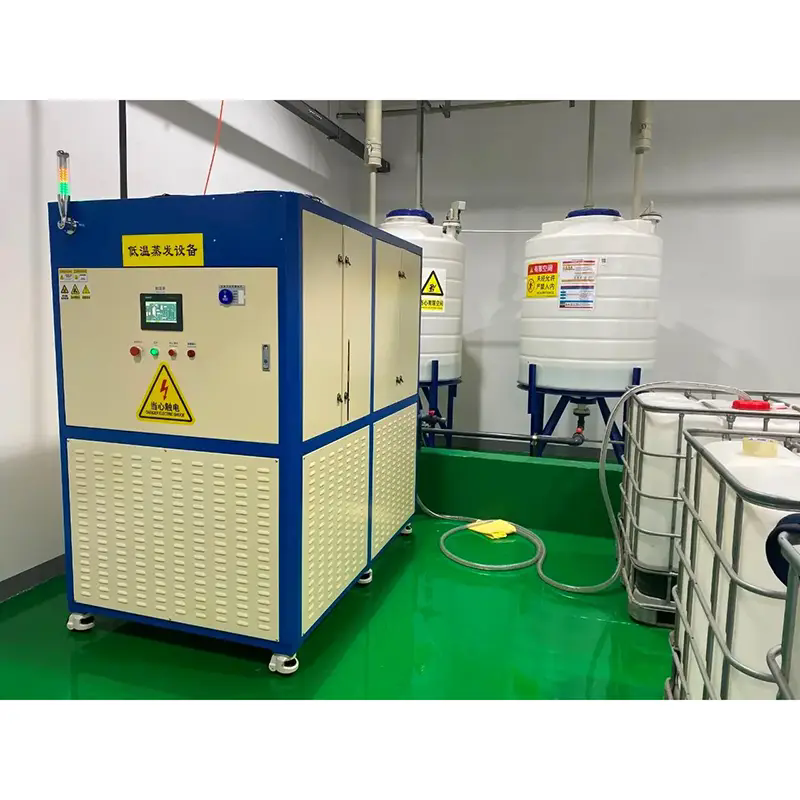
Table of Contents
- Introduction to Wastewater Concentration Equipment
- Challenges in Industrial Wastewater Treatment
- Types and Components of Wastewater Concentration Equipment
- Key Advantages of Wastewater Concentration Equipment
- Applications Across Industries
- Operation and Maintenance Considerations
- Frequently Asked Questions
- Conclusion
Introduction to Wastewater Concentration Equipment
Wastewater concentration equipment is essential for treating industrial wastewater while maximizing water resource recycling. These systems use physical separation and evaporation technologies to reduce wastewater volume, lower treatment costs, and ensure compliance with environmental discharge standards. Modern equipment integrates advanced energy recycling and remote monitoring, offering efficient and low-maintenance solutions for businesses.
Challenges in Industrial Wastewater Treatment
Industrial wastewater treatment faces several key difficulties:
- Complex Composition: Wastewater may contain heavy metals, organic matter, and salts, making treatment unpredictable.
- High Cost: Multi-stage processes, chemical addition, and energy consumption increase operational expenses.
- Poor Effluent Quality: Conventional treatment often fails to meet discharge or reuse standards.
- Maintenance and Labor: High operating costs and manual monitoring requirements add to the burden.
- Space Requirements: Traditional treatment systems occupy large areas.
Types and Components of Wastewater Concentration Equipment
Wastewater concentration equipment typically includes the following technologies:
| Type | Main Components | Function |
|---|---|---|
| Low-Temperature Heat Pump Evaporator | Evaporator chamber, heat pump, condenser | Evaporates water at low temperatures to prevent scaling and separate impurities efficiently. |
| Remote-Controlled Integrated Systems | Sensors, automated control unit, pumps | Enables independent operation, reduces manual intervention, and allows remote monitoring. |
| Energy-Recycling Evaporation Units | Heat exchangers, water vapor recovery systems | Recycles energy during evaporation to reduce operating costs and enhance sustainability. |
Key Advantages of Wastewater Concentration Equipment
Modern wastewater concentration equipment offers numerous benefits for industrial operators:
- No chemical additives required for treatment.
- Effective even with varying wastewater quality levels.
- Minimizes waste generation and environmental impact.
- Operates at low temperatures to prevent scaling and maintain effluent quality.
- Energy-efficient, utilizing heat recovery and circulation technologies.
- Low maintenance costs and minimal consumables required.
- Highly integrated systems that save space and simplify installation.
- Remote operation capabilities, eliminating the need for constant on-site supervision.
Applications Across Industries
Wastewater concentration equipment is versatile and suitable for multiple industries, including:
- Lithium battery wastewater treatment
- Semiconductor and electronic wastewater management
- Photovoltaic wastewater recycling
- Automotive parts cleaning wastewater
- Chemical and pharmaceutical wastewater treatment
- Electroplating and metal surface treatment effluent processing
These systems reduce wastewater volume, lower disposal costs, and help industries comply with environmental regulations.
Operation and Maintenance Considerations
Proper operation ensures longevity and efficiency of wastewater concentration equipment. Key considerations include:
- Monitoring evaporation temperatures to prevent scaling.
- Regular inspection of heat pumps and condensers.
- Ensuring automated systems are calibrated for optimal performance.
- Periodic cleaning of water vapor recovery units to maintain efficiency.
- Implementing remote monitoring for early detection of operational issues.
Frequently Asked Questions
- What is the typical processing capacity?
- Equipment can process from 200 liters up to 30 tons per unit per day, depending on system specifications.
- Does it require chemical additives?
- No, modern wastewater concentration equipment uses physical methods for separation, avoiding chemical usage.
- Can it operate without on-site personnel?
- Yes, systems with remote monitoring and automated controls can run independently, reducing labor costs.
- Is it suitable for all wastewater types?
- The equipment is designed for complex industrial wastewater, including heavy metals and organic compounds.
Conclusion
Wastewater concentration equipment provides a practical and cost-effective solution for industries seeking to reduce wastewater volume, recycle water, and maintain high effluent quality. With advanced features like low-temperature evaporation, energy recycling, and remote operation, it addresses common pain points in wastewater management. Companies looking for reliable and innovative solutions can explore offerings from Fred—Tech for tailored wastewater concentration equipment solutions. Contact us today to improve your industrial water management efficiency.