

How Do Aluminum Junction Boxes Support Safer and Scalable Electrical Installations?
2026-01-07
Abstract
Aluminum junction boxes play a foundational role in modern electrical and industrial systems by providing structured containment and connection points for wiring, terminals, and control components. This article examines how aluminum junction boxes are designed, specified, and deployed across industrial, commercial, and infrastructure environments. The discussion focuses on structural characteristics, material parameters, protection ratings, and compliance frameworks, while addressing common technical questions encountered during selection and installation. The objective is to provide a technically grounded, search-optimized reference that aligns with professional engineering and procurement requirements.
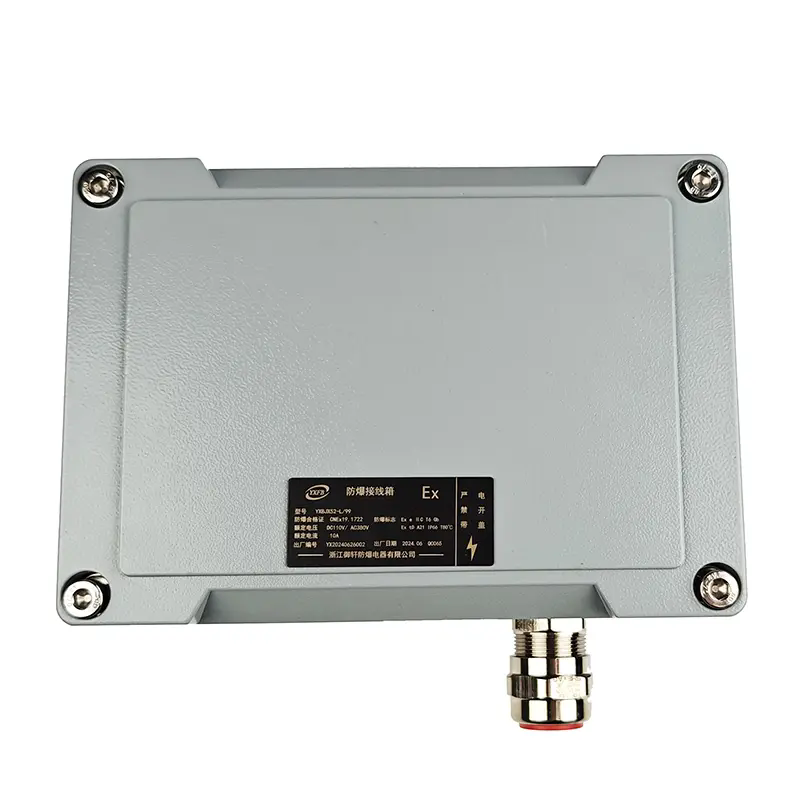
Table of Contents
- How Is an Aluminum Junction Box Defined in Electrical Systems?
- How Are Aluminum Junction Box Parameters Specified and Evaluated?
- How Do Aluminum Junction Boxes Perform Across Application Scenarios?
- How Will Aluminum Junction Boxes Evolve With Future Electrical Demands?
Outline
- Definition and functional positioning of aluminum junction boxes
- Technical parameters and enclosure specifications
- Application-based performance and compliance considerations
- Industry development direction and manufacturer perspective
How Is an Aluminum Junction Box Defined in Electrical Systems?
An aluminum junction box is a rigid enclosure manufactured primarily from aluminum alloy, designed to house electrical connections, terminals, and auxiliary components. Its primary function is to provide a controlled environment for wiring intersections, protecting conductors from mechanical stress, environmental exposure, and unauthorized access. Within electrical architectures, the junction box serves as a fixed node that enables system expansion, maintenance access, and circuit segmentation.
Unlike plastic or steel alternatives, aluminum junction boxes are frequently specified where structural stability, thermal conductivity, and corrosion resistance are required simultaneously. These enclosures are commonly deployed in industrial automation, renewable energy systems, transportation infrastructure, and commercial building installations. The enclosure geometry, wall thickness, and surface treatment are engineered to support long-term operation under variable load and ambient conditions.
From a system-design perspective, aluminum junction boxes function as passive infrastructure components. Their value lies not in active electrical behavior, but in their capacity to maintain insulation distances, protect connection integrity, and ensure compliance with electrical safety standards. This makes them integral to both low-voltage control circuits and higher-capacity distribution networks.
How Are Aluminum Junction Box Parameters Specified and Evaluated?
The technical specification of an aluminum junction box is typically governed by a combination of mechanical, environmental, and electrical parameters. These parameters are documented in product datasheets and evaluated during design approval, procurement, and inspection phases. Proper interpretation of these specifications is critical to ensuring compatibility with the intended application.
Below is a consolidated representation of common aluminum junction box parameters used across industrial standards:
| Parameter | Typical Range | Technical Significance |
|---|---|---|
| Material Grade | ADC12 / A356 / 6061 | Determines mechanical strength and corrosion resistance |
| Wall Thickness | 2.5 mm – 6.0 mm | Affects impact resistance and enclosure rigidity |
| Ingress Protection | IP65 – IP67 | Defines resistance to dust and water intrusion |
| Surface Treatment | Powder Coating / Anodizing | Enhances environmental durability and insulation |
| Operating Temperature | -40°C to +120°C | Ensures performance stability in harsh environments |
In addition to physical parameters, aluminum junction boxes are assessed for compliance with regional and international standards. Common references include IEC 60529 for ingress protection, UL 508A for industrial control panels, and EN 62208 for empty enclosures. These standards define test methods, labeling requirements, and permissible tolerances.
Thermal behavior is another evaluation factor. Aluminum’s inherent thermal conductivity allows junction boxes to dissipate internal heat generated by terminals and connectors more efficiently than non-metallic enclosures. This characteristic can influence enclosure sizing decisions and internal layout design.
Aluminum Junction Box Common Questions and Answers
Q: How does aluminum material affect electrical safety inside a junction box?
A: Aluminum enclosures are electrically conductive but are designed to function as grounded housings. When properly grounded, they provide a controlled path for fault currents while maintaining insulation clearances for internal conductors, thereby supporting system safety requirements.
Q: How is ingress protection verified for aluminum junction boxes?
A: Ingress protection ratings are verified through standardized laboratory testing, where enclosures are exposed to controlled dust and water conditions. Compliance is determined based on the enclosure’s ability to prevent penetration under defined test durations and pressures.
Q: How are cable entries typically managed in aluminum junction boxes?
A: Cable entries are managed using threaded openings, knockouts, or machined ports, often combined with certified cable glands. This approach maintains enclosure integrity while allowing flexible wiring configurations.
How Do Aluminum Junction Boxes Perform Across Application Scenarios?
Aluminum junction boxes are utilized across a wide spectrum of application scenarios, each presenting distinct environmental and operational demands. In industrial automation, these enclosures support distributed control architectures by housing terminal blocks, relays, and signal converters. Their mechanical robustness allows installation near machinery where vibration and incidental impact may occur.
In outdoor infrastructure, such as traffic systems or photovoltaic installations, aluminum junction boxes are selected for their resistance to moisture, ultraviolet exposure, and temperature fluctuation. Surface treatments such as anodizing or polyester powder coating further extend service life in corrosive or coastal environments.
Commercial building systems employ aluminum junction boxes to organize power distribution and low-voltage control wiring. Their standardized form factors and mounting options enable integration into walls, ceilings, or equipment frames. The consistency of enclosure dimensions simplifies maintenance planning and system upgrades.
From an engineering management perspective, aluminum junction boxes contribute to lifecycle efficiency. Their durability reduces replacement frequency, while their reusability supports system reconfiguration without compromising enclosure integrity. This performance consistency aligns with long-term infrastructure investment strategies.
How Will Aluminum Junction Boxes Evolve With Future Electrical Demands?
As electrical systems become more decentralized and data-integrated, aluminum junction boxes are expected to adapt in both form and function. Increased integration of sensors, monitoring devices, and communication modules will drive demand for enclosures that support higher internal density without compromising thermal stability.
Manufacturing processes are also evolving. Precision casting, CNC machining, and modular enclosure design enable tighter tolerances and customizable configurations. These developments allow aluminum junction boxes to align more closely with application-specific requirements while maintaining standard compliance.
Sustainability considerations are influencing material selection and surface treatment processes. Aluminum’s recyclability positions it favorably within environmentally conscious procurement frameworks. Future enclosure designs are likely to emphasize material efficiency and extended service life.
Within this context, manufacturers such as YXFB continue to focus on developing aluminum junction box solutions that align with evolving electrical standards and global application demands. By maintaining strict parameter control and quality validation, YXFB supports system designers and integrators seeking reliable enclosure infrastructure.
For project-specific requirements, technical consultation, or customized aluminum junction box configurations, interested parties are encouraged to contact us to discuss application details and specification alignment.