

How Do High Voltage Insulators Withstand Lightning and Switching Surges
2026-10-14
High Voltage Insulators are the first line of defense for transmission and distribution networks against transient overvoltages, and Huixing has spent decades engineering ceramic and composite insulators that survive these extreme events. Lightning strikes and switching operations generate voltage spikes that can reach several times the normal operating level, yet a well-designed High Voltage Insulator must remain a reliable barrier between live conductors and grounded structures. Understanding the physics and material science behind this capability helps utilities select the right products for their networks.
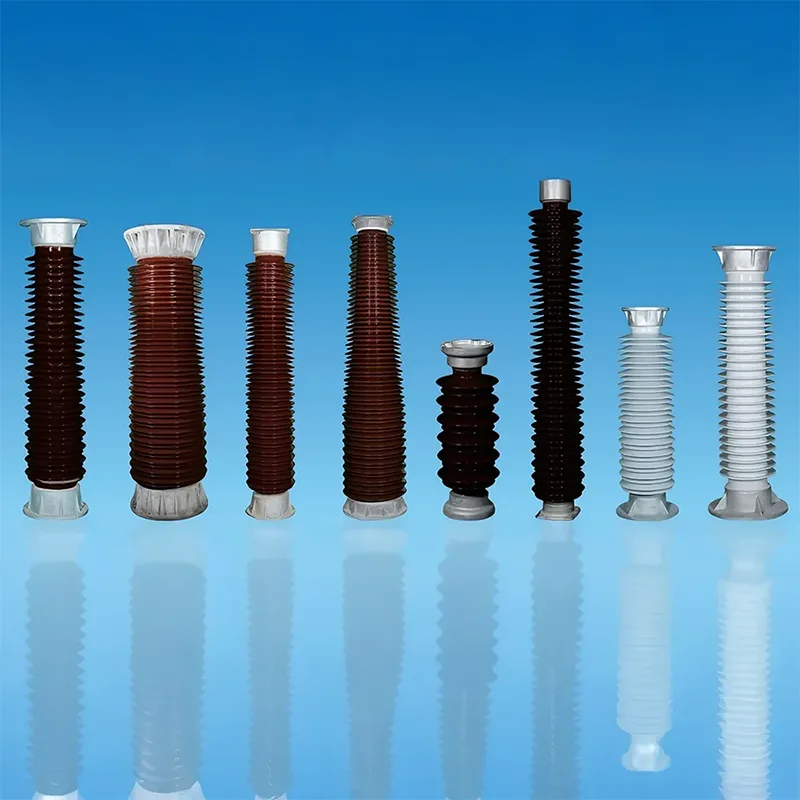
The Nature of the Two Surge Types
Lightning surges are impulse events with rise times measured in microseconds and peak currents that can exceed 100 kA. Switching surges are slower, with front times in the millisecond range, but they can still reach 2.5 to 3.0 per unit of system voltage. Both stress the insulator's dielectric strength and mechanical integrity in different ways.
Key Withstand Mechanisms
-
Voltage grading through shed geometry: The profile of sheds and creepage distance determines how electric fields distribute along the surface. Huixing optimizes shed spacing and inclination to prevent flashover under wet and polluted conditions.
-
Material dielectric strength: Porcelain, glass, and silicone rubber each have different permittivity and breakdown characteristics. Composite insulators with silicone housings resist surface tracking and erosion.
-
Impulse voltage distribution: Capacitance between the insulator and ground, as well as within the stack, controls how impulse voltages divide across units in a string.
-
Arc protection fittings: Grading rings and arcing horns divert flashover arcs away from the insulator surface, protecting the shed material from thermal damage.
Comparison of Insulator Types Under Surge Conditions
| Insulator Type | Lightning Impulse Withstand | Switching Impulse Withstand | Key Advantage | Key Limitation |
|---|---|---|---|---|
| Porcelain | High | High | Excellent mechanical strength | Heavy, susceptible to vandalism |
| Glass | High | High | Visual detection of damage | Shatters under severe impact |
| Composite (Silicone) | High | Very High | Hydrophobicity, light weight | Organic aging over time |
Huixing manufactures all three types and tests each design according to IEC 60060 and IEC 61109, ensuring that lightning impulse and switching impulse withstand voltages meet or exceed specified levels.
Design and Testing Standards
Routine tests include power frequency withstand, dry lightning impulse, and wet switching impulse. Type tests add pollution flashover and mechanical load tests. High Voltage Insulators from Huixing undergo strict quality control at every stage, from raw material selection to final assembly.
Frequently Asked Questions
What is the difference between lightning impulse and switching impulse withstand voltage?
Lightning impulse withstand voltage is tested with a 1.2/50 microsecond wave and reflects the insulator's ability to survive fast, high-current transients, while switching impulse withstand voltage uses a 250/2500 microsecond wave and represents slower overvoltages caused by breaker operations or fault clearing.
How does pollution affect a High Voltage Insulator's ability to withstand surges?
Pollution deposits create a conductive layer on the insulator surface that reduces effective creepage distance, which can lower flashover voltage by 20% to 50%, so utilities must select insulators with adequate creepage or apply hydrophobic coatings such as RTV silicone.
Can a High Voltage Insulator be repaired after lightning damage?
Minor surface damage on composite insulators may be cleaned and coated, but any puncture, shed tear, or cracked porcelain unit must be replaced immediately because repaired insulators cannot guarantee the original impulse withstand strength.
Conclusion
Selecting High Voltage Insulators that withstand lightning and switching surges requires attention to material, geometry, and verified test data. Huixing provides full technical documentation and custom designs for high-surge environments. Contact us today to discuss your transmission line requirements and request a quotation for High Voltage Insulators tailored to your project.
