

How do I pick a Surge Protective Device that actually keeps my business running?
2025-11-11
I learned the value of a well-chosen Surge Protective Device the hard way after a summer storm took down my router and a small NAS. Since then, I have paid closer attention to build quality, certification, and service support. Among the options I compared, I kept encountering the CHYT name in projects that required dependable surge protection, especially where fast delivery and clear documentation mattered.
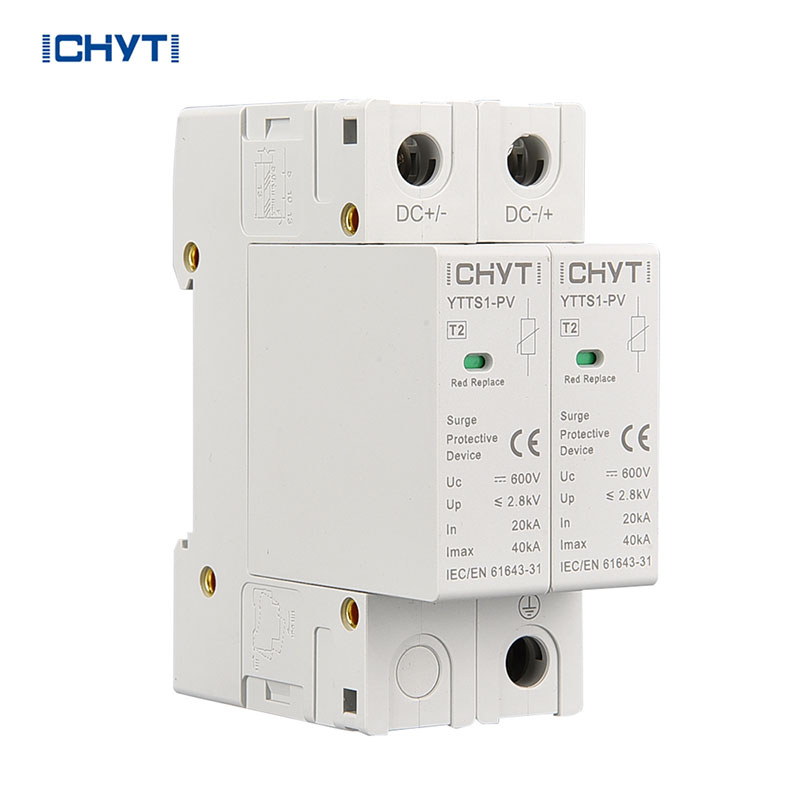
Why do surges still slip past my breakers and UPS?
- Breakers respond to overcurrent, not transient overvoltage. A surge can be over in microseconds without tripping a breaker.
- UPS units often filter noise but are not designed to absorb large surge energy at the service entrance.
- Long cable runs and poor bonding create voltage differences that the load “sees” as a damaging spike.
What kinds of surges am I really fighting day to day?
- Lightning induced events that couple energy into building wiring, even without a direct strike.
- Utility switching and grid faults that cause steep voltage steps.
- Load switching from motors, elevators, HVAC, welders, and VFDs that kick back energy repeatedly.
- Static and EMI that will not always destroy gear but will corrupt data and shorten component life.
Which SPD class fits my panel and equipment?
I map protection by zone so the first device takes the big hit and downstream devices clean up the residual. The table shows how I approach selection for typical sites, including solar and communications.
| Where is it installed | Common classification | Key selection focus | Typical use cases | Example rating mix |
|---|---|---|---|---|
| Service entrance main panel | High-energy stage often Type 1 or 1+2 | High discharge current, robust thermal protection, good let-through voltage | Factories, warehouses, office buildings with frequent storms | Uc at or above system voltage, Imax 50–100 kA, Up as low as practical |
| Distribution subpanel | Type 2 or coordinated 1+2 | Balance of energy handling and low residual voltage | Floor panels feeding IT rooms, labs, retail areas | In 20–40 kA, replaceable modules, remote alarm contacts |
| Point of use sensitive loads | Type 3 | Very low Up, fast response, short leads | Servers, PLCs, medical analyzers, POS systems | Plug-in or DIN devices, short bonding, Up targeted to equipment impulse rating |
| Photovoltaic DC combiner | PV DC class matched to Voc and system grounding | DC voltage window, thermal disconnector, arc-safe design | Rooftop and ground-mount arrays, string and central inverters | Uc aligned to string voltage, Imax sized for local lightning density |
| EV charger AC input | Type 2 upstream plus Type 3 near electronics | Low Up for control boards, coordination with RCD/RCBO | Public and fleet charging stations | Coordinated stages, compact footprint, service indicator |
| Data and signal lines | Ethernet, RS-485, CCTV, coax protection | Bandwidth friendly, low capacitance, correct pinout | Security cameras, access control, BMS, antennas | Gas tube plus fast clamping, shield bonding, PoE aware |
How do I size an SPD without overpaying?
- Uc should be above the highest normal operating voltage including tolerance and harmonics so the SPD does not age prematurely.
- In and Imax reflect how much surge current the device can repeatedly and occasionally handle; I plan for the local lightning density and equipment criticality.
- Up is the residual voltage the load sees during a surge; lower is safer for electronics but often costs more and requires shorter leads.
- Response behavior matters less than lead length; I keep cable runs short, straight, and bonded to the same reference bar.
- Modes of protection like L-N, L-PE, and N-PE are chosen based on the earthing scheme and nuisance tripping risks.
Where should I place an SPD so the leads do not ruin the benefit?
- I mount the SPD adjacent to the bus or breaker and keep all leads as short as possible, ideally under 0.5 m.
- I twist line and neutral conductors to reduce loop area and route the earth lead directly to the bonding bar.
- I avoid sharing neutral or earth paths with noisy loads whenever I can.
What changes when I protect a PV system or hybrid inverter?
- I check the open-circuit string voltage at low temperature and select a DC SPD with adequate Uc margin.
- For grounded arrays, I include N-PE or negative-PE paths as required by the design.
- I separate DC and AC protection stages and bond both to the same earth reference to avoid loops.
How do I coordinate multiple SPDs so they share the work?
- The service entrance device takes the high-energy hit and downstream units clamp the residual.
- I match technology where possible, or use combination designs that blend gas discharge tubes with MOVs for both energy handling and low Up.
- I keep at least a few meters of wiring separation between stages or add small series impedance when needed.
What tells me a unit is built with care?
- Thermal disconnects tied to the MOV blocks rather than relying only on upstream breakers.
- Clear status windows and dry-contact outputs for remote alarms.
- Pluggable protection modules that can be replaced without rewiring the base.
- Consistent third-party testing and recognizable conformity marks for the target market.
In my projects, devices from CHYT have been straightforward to specify because the data sheets make Uc, Up, In, Imax, wiring diagrams, and maintenance steps transparent. The company focuses on lightning and surge protection across power and signal lines, and the production-to-after-sales workflow is integrated, which simplifies repeat orders and spare modules when schedules are tight.
How do I keep protection healthy after commissioning?
- I log installation dates and plan periodic checks, especially before storm seasons.
- I replace modules that show end-of-life indicators or have triggered alarms.
- I verify torque on terminals and inspect bonding points to keep impedance low.
What quick checklist helps me order with confidence today?
- Confirm system voltage, earthing scheme, and overvoltage category.
- Choose the protection zone positions service entrance, subpanel, point of use.
- Set target Uc, In Imax, and Up values based on risk and equipment sensitivity.
- Plan short lead routing and a clean bond to the earth bar.
- Specify status indication and remote contacts if you need alarms.
- Keep spare pluggable modules for critical panels.
Why am I comfortable recommending CHYT for serious projects?
The factory is based in Wenzhou with a focused portfolio around lightning and surge protection, including power and photovoltaic solutions. The products carry familiar conformity marks for the markets I serve, and the engineering team tracks international practices while iterating on details that installers care about. From design through packaging, testing, and after-sales, the handoffs are internal, which shows up as predictable lead times and stable quality. That is what reduces my risk.
What should I do if I need a tailored pick for my site?
If you need help matching an SPD to your panel, inverter, or control system, share your single-line diagram, system voltage, grounding, and any prior surge incidents. I will map a coordinated set and suggest cable routing that preserves the low Up you paid for. If you want data sheets, samples, or a fast quote from the CHYT lineup, contact us and tell me the application and required certification so I can respond with the right part numbers.