

How Do Operating Mechanisms Influence the Mechanical Performance of SF6 Circuit Breakers?
2026-11-12
Two Outdoor SF6 Circuit Breaker units are installed at the same substation. One opens in 38 milliseconds with a pole-to-pole variation of 1.5 milliseconds. The other opens in 52 milliseconds with a variation of 4 milliseconds. The SF6 gas pressure, the contact gap, and the arc quenching design are identical. The difference is the operating mechanism. The first unit uses a spring mechanism with a tuned damping system. The second unit uses a hydraulic mechanism with a slow-acting valve. The mechanism is not a peripheral component. It determines the opening speed, the pole synchronism, the mechanical life, and the low-temperature behavior of the breaker. This guide explains how the three common mechanism types influence the mechanical performance of outdoor SF6 circuit breakers.
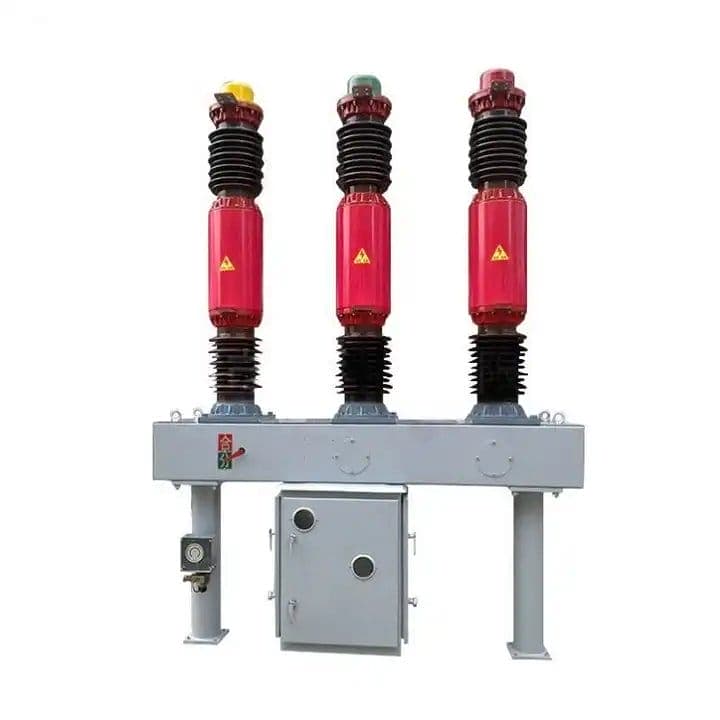
1. Why Does the Mechanism Type Determine the Opening Energy and Speed?
The opening operation requires energy to separate the contacts against the SF6 gas pressure and the contact spring force. The energy is stored in the mechanism and released when the trip coil is energized. A spring mechanism stores the energy in a compressed coil spring. A hydraulic mechanism stores the energy in a pressurized accumulator. A pneumatic mechanism stores the energy in a compressed air tank. The table below shows the typical opening energy and speed for the three types.
| Mechanism type | Energy storage | Typical opening time | Typical closing time | Energy density |
| Spring | Compressed coil spring | 35 – 50 ms | 60 – 90 ms | Moderate |
| Hydraulic | Nitrogen accumulator | 30 – 45 ms | 50 – 80 ms | High |
| Pneumatic | Compressed air tank | 40 – 60 ms | 70 – 100 ms | Low |
The spring mechanism is the most common for medium-voltage outdoor SF6 circuit breakers because it is simple, reliable, and does not require a hydraulic pump or a compressed air supply. The hydraulic mechanism provides the highest energy density and the fastest opening time, which is important for high-voltage breakers with large contact gaps. The pneumatic mechanism is less common in modern SF6 breakers because the compressed air supply is bulky and the opening energy is lower. In our factory, we produce all three mechanism types and we select the type based on the voltage class and the operating temperature. Lugao Power Co.,Ltd. has been manufacturing Outdoor SF6 Circuit Breaker units for over 15 years.
2. How Does the Mechanism Affect Pole Synchronism and Contact Travel?
The three poles of a circuit breaker must open within a few milliseconds of each other. If one pole opens later than the others, the fault current flows through that pole for a longer time, and the arc energy in that pole is higher. The pole synchronism depends on the mechanism's ability to deliver the same energy to all three poles. A spring mechanism uses a common spring and a linkage that transmits the force to all three poles. The linkage must be rigid and the bearings must be tight. A hydraulic mechanism uses a common accumulator and separate valves for each pole. The valves must be matched and the oil flow must be balanced. The table below shows the typical pole synchronism for the three types.
| Mechanism type | Typical pole synchronism | Typical contact travel variation | Adjustment method |
| Spring | 1 – 2 ms | 1 – 2 mm | Linkage adjustment |
| Hydraulic | 1 – 3 ms | 1 – 3 mm | Valve trim and oil flow balance |
| Pneumatic | 2 – 4 ms | 2 – 4 mm | Air flow and pressure balance |
Switchgear engineer's note: The pole synchronism is not a fixed property. It changes as the mechanism wears and as the bearings loosen. The synchronism must be checked at every major maintenance interval. In our factory, we measure the synchronism on a travel analyzer and we set the linkage or the valve trim to achieve a variation of less than 2 milliseconds. Lugao Power Co.,Ltd. provides the synchronism test report with each breaker and recommends a re-test every 5 years.
3. Why Does the Mechanism Determine the Mechanical Life and the Maintenance Interval?
The mechanical life of an Outdoor SF6 Circuit Breaker is the number of open-close operations it can perform without major overhaul. The life is limited by the wear of the mechanism components: the bearings, the latches, the valves, and the seals. A spring mechanism has a small number of moving parts, and the main wear item is the latch and the bearing. A hydraulic mechanism has more moving parts, including the pump, the valves, and the accumulator, and the seals are the main wear item. A pneumatic mechanism has a compressor and a valve system, and the air dryer is the main wear item. The table below shows the typical mechanical life and the main wear items.
| Mechanism type | Typical mechanical life | Main wear items | Maintenance interval |
| Spring | 10,000 – 30,000 operations | Latch, bearings, spring | 5 – 10 years |
| Hydraulic | 5,000 – 15,000 operations | Seals, valves, pump | 3 – 5 years |
| Pneumatic | 5,000 – 10,000 operations | Compressor, air dryer, valves | 2 – 4 years |
In our factory, we perform a 10,000 operation endurance test on a sample of each spring mechanism and a 5,000 operation test on each hydraulic mechanism. We measure the opening time and the synchronism at the beginning and at the end of the test. A mechanism that exceeds the specified wear limit is redesigned. Lugao provides the endurance test report with each mechanism type.
4. Why Does Low Temperature Expose the Weaknesses of Each Mechanism?
At low temperature, the hydraulic oil becomes viscous, the pneumatic air may contain moisture that freezes, and the spring material may become brittle. A hydraulic Outdoor SF6 Circuit Breaker installed in a cold climate must use a low-temperature hydraulic oil and a heater for the accumulator. A pneumatic breaker must use a refrigerated air dryer to remove the moisture before it freezes in the valve. A spring breaker must use a spring material that retains its toughness at low temperature. The table below shows the low-temperature limits and the required measures for each mechanism.
| Mechanism type | Standard low-temperature limit | Extended limit with measures | Required measure |
| Spring | -30°C | -40°C | Low-temperature spring steel; heater in control cabinet |
| Hydraulic | -20°C | -35°C | Low-temperature oil; accumulator heater; pump heater |
| Pneumatic | -15°C | -25°C | Refrigerated air dryer; air line heater |
In our factory, we test every mechanism in a climate chamber at the specified low-temperature limit. The breaker must complete an open-close-open cycle within the specified time at the limit temperature. Lugao Power Co.,Ltd. provides the low-temperature test report with each breaker that is ordered for a cold climate site.
5. How Should Engineers Specify and Verify the Operating Mechanism for an Outdoor SF6 Circuit Breaker?
The specification should include five items. The first is the voltage class and the required opening time. The second is the operating temperature range. The third is the mechanism type and the energy storage method. The fourth is the pole synchronism requirement. The fifth is the mechanical life requirement. The verification should include four tests. The first is the travel curve test, which measures the opening time, the closing time, and the contact travel. The second is the synchronism test, which measures the pole-to-pole variation. The third is the low-temperature test, which verifies the operation at the minimum site temperature. The fourth is the endurance test, which verifies the mechanical life on a sample basis. In our factory, we perform these tests on every breaker and we provide the test report with the shipment. Lugao also offers a site acceptance test with the customer's relay protection settings.
We recommend that the engineer specify the mechanism type based on the voltage class and the site temperature, not on the price alone. A spring mechanism is the most economical for medium voltage and moderate climate. A hydraulic mechanism is the better choice for high voltage and for sites that require the fastest opening time. A pneumatic mechanism is rarely the best choice for a new SF6 breaker, but it may be the only option for a retrofit in a plant that already has a compressed air system.
Frequently Asked Questions About Operating Mechanisms in Outdoor SF6 Circuit Breakers
Summary for Switchgear Engineers and Maintenance Planners
The operating mechanism influences the mechanical performance of an Outdoor SF6 Circuit Breaker through the opening energy, the opening speed, the pole synchronism, the mechanical life, and the low-temperature behavior. The spring mechanism is simple, reliable, and economical for medium voltage. The hydraulic mechanism offers the highest energy density and the fastest opening for high voltage. The pneumatic mechanism is less common in modern SF6 breakers. The mechanism must be selected based on the voltage class, the site temperature, and the required mechanical life, and it must be verified with travel curve, synchronism, low-temperature, and endurance tests. Lugao Power Co.,Ltd. has been manufacturing Outdoor SF6 Circuit Breaker units for over 15 years and provides full mechanism selection and verification support for our customers.