

How Do Rural Grids Use an Outdoor Vacuum Circuit Breaker?
2026-10-12
A rural grid operations engineer receives a call at 2:00 AM. A 10 kV feeder in a mountainous area has tripped. The feeder supplies 12 villages and three irrigation pump stations. The engineer checks the SCADA system and sees that the Outdoor Vacuum Circuit Breaker at the feeder head has opened. The fault is on a branch line 8 km from the substation. Without the recloser at the branch point, the entire feeder is de-energized. The engineer dispatches a crew to patrol the line. It takes 4 hours to find the fault and restore power. If the branch had been equipped with its own Outdoor Vacuum Circuit Breaker with reclosing capability, the fault would have been isolated, and the rest of the feeder would have remained energized. This guide explains how rural grids use these breakers to improve reliability.
1. Why Are Outdoor Vacuum Circuit Breakers Critical for Rural Distribution?
Rural distribution networks have different characteristics than urban networks. The lines are longer, the load density is lower, and the exposure to environmental faults is higher. Trees, animals, lightning, and windblown debris cause temporary faults that can be cleared by reclosing. If the entire feeder trips for every temporary fault, the outage time is long because the fault must be located and repaired before power can be restored. An Outdoor Vacuum Circuit Breaker installed at strategic points along the feeder can isolate the faulted section and restore power to the healthy sections. The table below shows the reliability improvement from adding breakers to a rural feeder.
| Configuration | Average outage duration (hours) | Affected customers per fault | SAIDI improvement |
| Substation breaker only | 4.5 | 2,400 | Baseline |
| + 1 mid-feeder breaker | 2.8 | 1,200 | 38% reduction |
| + 2 mid-feeder breakers | 1.9 | 600 | 58% reduction |
| + 3 mid-feeder breakers | 1.2 | 300 | 73% reduction |
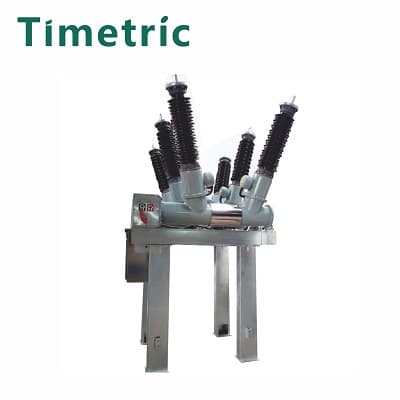
In our factory, we manufacture Outdoor Vacuum Circuit Breaker units that are designed for rural distribution. The breakers are rated for 12 kV, 24 kV, and 36 kV, with rated currents from 630 A to 1250 A. They are equipped with CTs and relays for overcurrent and earth fault protection. Wenzhou Shuyi Import and Export Co., Ltd. has been supplying these breakers for over 15 years.
2. How Does Reclosing Strategy Differ for Rural Grids?
Reclosing is the practice of automatically re-energizing a line after a trip. The majority of faults on overhead rural lines are temporary. A tree branch touches the line and falls away. A bird bridges two phases and flies off. A lightning surge causes a flashover that extinguishes. If the breaker recloses after a short delay, the fault is cleared, and power is restored. If the fault is permanent, the breaker trips again and locks out. The reclosing strategy must be coordinated with the protection settings and the load characteristics. The table below shows the recommended reclosing sequence for rural distribution.
| Reclose attempt | Delay after trip | Purpose | Typical success rate |
| First reclose | 0.5 – 1.0 seconds | Clear temporary faults | 70 – 80% |
| Second reclose | 15 – 30 seconds | Allow branch to fall clear | 10 – 15% |
| Third reclose | 60 – 120 seconds | Allow conductor to cool | 5 – 10% |
| Lockout | N/A | Permanent fault; dispatch crew | N/A |
The reclosing sequence must be coordinated with the breaker at the substation. If both the substation breaker and the mid-feeder breaker reclose at the same time, the fault may be re-energized before it is cleared. The coordination is achieved by setting different reclose delays for each breaker. In our factory, we supply Outdoor Vacuum Circuit Breaker units with programmable reclosing relays. The relay allows the utility to set the number of reclose attempts, the delay times, and the reset time. Wenzhou Shuyi Import and Export Co., Ltd. provides coordination studies for our customers.
3. How Does the Breaker Withstand Harsh Rural Environments?
Rural breakers are exposed to temperature extremes, humidity, dust, and wildlife. The breaker must be sealed to prevent moisture and dust from entering the mechanism box. The external insulation must resist pollution and UV radiation. The operating mechanism must function reliably at temperatures from -40°C to +55°C. The table below shows the environmental specifications for our outdoor breakers.
| Parameter | Specification | Test standard |
| Ambient temperature range | -40°C to +55°C | IEC 62271-1 |
| Humidity | Up to 100% condensing | IEC 60068-2-30 |
| Ingress protection | IP54 (mechanism box) | IEC 60529 |
| Pollution level | Class IV (very heavy) | IEC 60815 |
| Seismic resistance | 0.3g (horizontal) | IEC 62271-1 |
| Altitude | Up to 3,000 m | IEC 62271-1 |
Field experience: In our factory, we have tested Outdoor Vacuum Circuit Breaker units in a climate chamber at -40°C for 100 operating cycles. The operating time increased by less than 10 percent, and the mechanism did not stall. We have also tested the breakers in a salt spray chamber for 500 hours. The external insulation showed no tracking or erosion. Wenzhou Shuyi Import and Export Co., Ltd. provides test reports for all of our breakers.
4. How Are Breakers Installed and Maintained in Remote Locations?
The installation of an Outdoor Vacuum Circuit Breaker in a rural area requires a concrete pad, a steel structure, and a connection to the overhead line. The breaker is delivered assembled and tested. The installation takes 1 to 2 days. Maintenance is minimal because the vacuum interrupter does not require contact inspection. The mechanism requires lubrication every 5 years. The relay and CTs require calibration every 5 years. The table below shows the maintenance schedule for our outdoor breakers.
| Maintenance task | Interval | Typical time required |
| Visual inspection | Every 12 months | 30 minutes |
| Mechanism lubrication | Every 5 years | 2 hours |
| Relay calibration | Every 5 years | 4 hours |
| Contact resistance measurement | Every 5 years | 1 hour |
| Vacuum integrity test | Every 8 years | 2 hours |
In our factory, we provide a maintenance kit with every Outdoor Vacuum Circuit Breaker. The kit includes the lubricant, the calibration procedure, and the contact resistance limits. We also offer remote monitoring options that allow the utility to view the breaker status, the fault current, and the battery voltage from the control center. Wenzhou Shuyi Import and Export Co., Ltd. has a service team that can travel to remote sites for commissioning and training.
Frequently Asked Questions About Outdoor Vacuum Circuit Breakers in Rural Grids
Summary for Grid Operations Engineers
Outdoor Vacuum Circuit Breaker units are essential for rural distribution grids because they allow fault isolation, reclosing, and sectionalizing. The correct placement and coordination of these breakers can reduce the average outage duration by 50 to 70 percent. The breakers must withstand harsh environmental conditions and operate reliably for decades. The reclosing strategy must be coordinated with the substation breaker and the load characteristics. Wenzhou Shuyi Import and Export Co., Ltd. has been supplying Outdoor Vacuum Circuit Breaker units for over 15 years and provides full application support for rural grid projects.
Wenzhou Shuyi Import and Export Co., Ltd. manufactures Outdoor Vacuum Circuit Breaker units for 12 kV, 24 kV, and 36 kV systems, with rated currents from 630 A to 1250 A. We provide coordination studies, maintenance kits, and remote monitoring options.
