

How Do You Choose the Right 35 kV Voltage Transformer for Your Application
2026-11-12
Selecting a 35 kV Voltage Transformer is a decision that directly affects measurement accuracy, protection reliability, and long-term substation safety. At Youbian, engineers regularly support utilities and industrial clients through this selection process, and the same structured approach applies whether you are specifying a new unit or replacing an aging device.
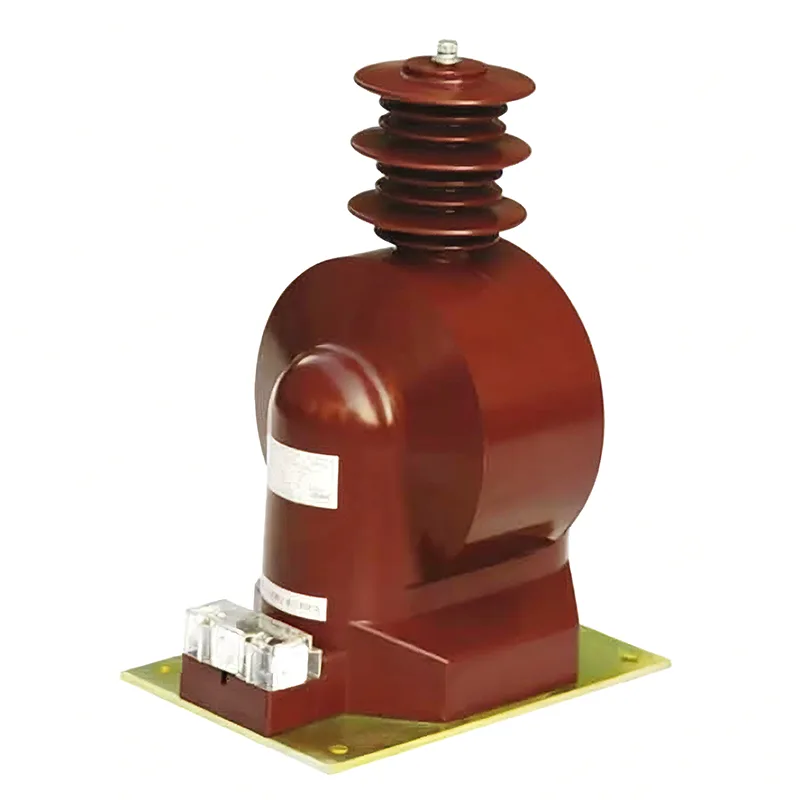
Start With the Application Requirements
Before comparing models, define what the transformer must do. Metering and protection duties impose different accuracy demands, and the answer shapes nearly every later choice.
| Application | Typical Accuracy Class | Key Priority |
|---|---|---|
| Revenue metering | 0.2 or 0.5 | Accuracy and stability |
| Protection relaying | 3P or 6P | Transient performance |
| Voltage indication | 1.0 or 3.0 | Cost efficiency |
| SCADA / monitoring | 0.5 or 1.0 | Long-term reliability |
Match the Ratio and Burden
The primary voltage is fixed by the system, but the secondary output and burden must suit your connected devices. Confirm the rated burden in VA against the total consumption of meters, relays, and cables. An undersized burden causes voltage drop and measurement error; an oversized one adds unnecessary cost.
Review Insulation and Environmental Ratings
A 35 kV Voltage Transformer may be installed indoors, outdoors, or in a coastal or high-pollution area. Check:
-
Rated insulation level (e.g., 36/95/200 kV)
-
Creepage distance for pollution class
-
IP rating and temperature range
-
Altitude correction factor
Compare Technology Options
| Type | Advantages | Limitations |
|---|---|---|
| Electromagnetic (inductive) | Proven, wide burden range | Ferroresonance risk |
| Capacitive (CVT) | Suitable for high voltage, carries communication signal | More complex |
| Cast-resin dry type | Maintenance-free, compact | Sensitive to overvoltage |
| Oil-immersed | Good heat dissipation | Periodic oil checks |
Verify Standards and Testing
Confirm compliance with IEC 61869 or IEEE C57.13, and request type test reports covering accuracy, dielectric, and temperature rise. Youbian supplies units with full routine and type test documentation, which shortens commissioning and satisfies auditors.
Check Secondary Wiring and Safety
Ensure the secondary circuit includes adequate fusing, earthing of one terminal, and shorting facilities. For protection cores, verify the voltage factor (e.g., 1.9 for 8 hours) meets system earth-fault conditions.
Frequently Asked Questions
What accuracy class should I choose for a 35 kV Voltage Transformer used in billing metering? For revenue metering, select class 0.2 or 0.5, and confirm the burden matches the connected meters so accuracy is maintained across the load range.
Can a 35 kV Voltage Transformer be used for both metering and protection? Yes, provided the unit has separate cores with the appropriate accuracy class and voltage factor for each function; dedicated cores prevent protection events from disturbing metering accuracy.
How do I prevent ferroresonance with a 35 kV Voltage Transformer? Choose a transformer with controlled saturation characteristics, avoid unnecessary capacitance in the secondary circuit, and apply damping or suppression devices where the system configuration indicates risk.
Conclusion
Choosing the right 35 kV Voltage Transformer comes down to matching accuracy, burden, insulation, and technology to your actual operating conditions, then verifying standards and test evidence. Youbian provides selection support, test documentation, and after-sales service for utilities and industrial projects. Contact us today with your system parameters and our engineers will recommend the correct 35 kV Voltage Transformer for your application.