
How Do You Maintain and Test a 17.5kV Fixed Type Indoor Circuit Breaker Safely
2026-11-17
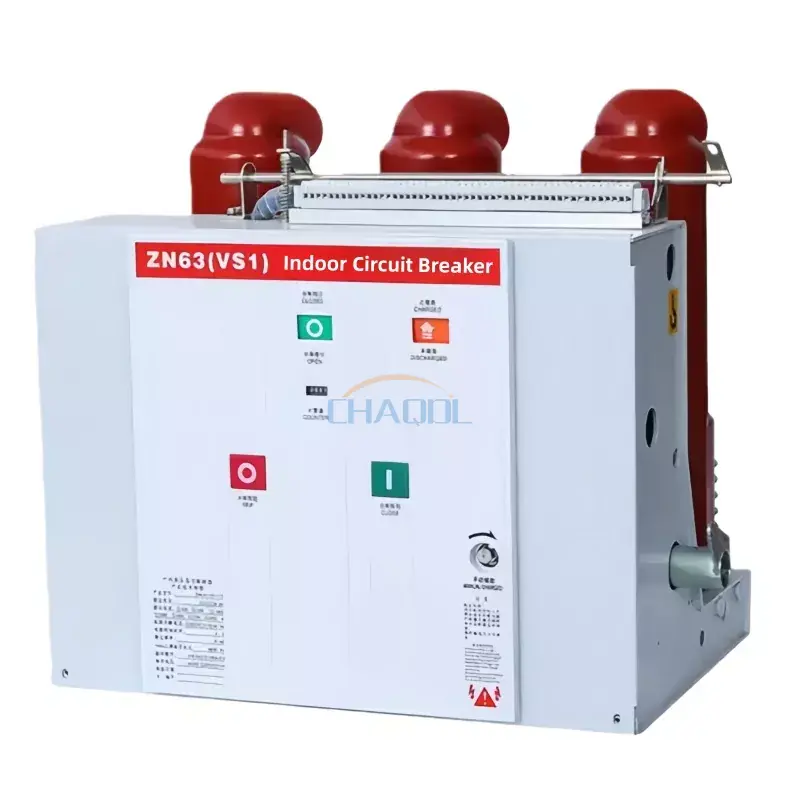
Regular maintenance and testing are the foundation of reliable medium-voltage protection, and Anqiang has supported utilities and industrial users with practical service guidance for 17.5KV Fixed Type Indoor Circuit Breaker assets for years. A structured program combines visual inspection, insulation checks, contact resistance measurement, and mechanical operation tests to confirm the breaker remains ready to clear faults. The sections below outline a safe, repeatable workflow suitable for switchgear teams working on fixed-pattern indoor units.
Safety Prerequisites Before Any Work
Isolation and verification come first. Confirm the circuit is de-energized, apply lockout/tagout, discharge stored energy in the spring mechanism, and ground the relevant conductors. Anqiang recommends a written switching program reviewed by a second authorized person before opening the 17.5KV Fixed Type Indoor Circuit Breaker compartment.
Recommended Maintenance and Test Schedule
| Interval | Activity | Acceptance Criterion |
|---|---|---|
| Monthly | Visual inspection, arc chute check, indicator status | No cracks, discoloration, or loose hardware |
| Every 6 months | Contact resistance test (micro-ohm meter) | Within manufacturer baseline, typically under 50 µΩ |
| Annually | Insulation resistance (2.5 kV megger) | ≥ 1,000 MΩ at ambient conditions |
| Annually | Mechanical operation, close/trip timing | Timing within nameplate tolerance |
| Every 3–5 years | Primary injection and protective relay coordination | Trip characteristics match settings |
Step-by-Step Test Procedure
-
Record nameplate data and previous test values for trend comparison.
-
Perform insulation resistance tests phase-to-phase and phase-to-ground.
-
Measure contact resistance across each pole and compare with baseline.
-
Verify mechanical operation manually and electrically, checking spring charging and trip latch behavior.
-
Inspect arc chutes, contacts, and insulating barriers for erosion or tracking.
-
Document results and flag deviations for corrective action.
Anqiang service teams recommend trending data rather than relying on single readings, since gradual changes in contact resistance often signal contact wear before failure occurs in a 17.5KV Fixed Type Indoor Circuit Breaker.
Frequently Asked Questions
How often should a 17.5KV Fixed Type Indoor Circuit Breaker be tested? Annual insulation and mechanical tests are standard practice, with contact resistance checks every six months in high-duty installations.
What insulation resistance value indicates a healthy 17.5KV Fixed Type Indoor Circuit Breaker? Readings of 1,000 MΩ or higher at ambient temperature generally indicate sound insulation, though values should be compared against the unit's historical baseline.
Can contact resistance testing detect wear inside a 17.5KV Fixed Type Indoor Circuit Breaker? Yes, rising micro-ohm values typically reveal contact erosion or poor clamping pressure, allowing replacement before overheating develops.
When should a 17.5KV Fixed Type Indoor Circuit Breaker be replaced rather than serviced? Replacement is advised when contact erosion exceeds limits, insulation shows tracking, or repeated mechanical failures persist after overhaul.
Conclusion
A disciplined maintenance and testing routine protects personnel and extends equipment life. Anqiang supplies 17.5KV Fixed Type Indoor Circuit Breaker solutions backed by documented test protocols and responsive technical support. Contact us today to request a customized maintenance schedule, spare parts list, or on-site commissioning support for your switchgear.