

How Do You Select the Right Vacuum Circuit Breaker for a Specific Application
2026-01-08
Selecting the correct Vacuum Circuit Breaker is critical for the safety, reliability, and efficiency of any electrical distribution system. A poor choice can lead to operational failures and increased costs. As a leader in electrical protection technology, Wzonpa understands that the right choice hinges on a detailed analysis of your application’s unique requirements.
Choosing the ideal breaker involves evaluating several key technical and operational parameters. Follow this structured approach to ensure optimal selection.
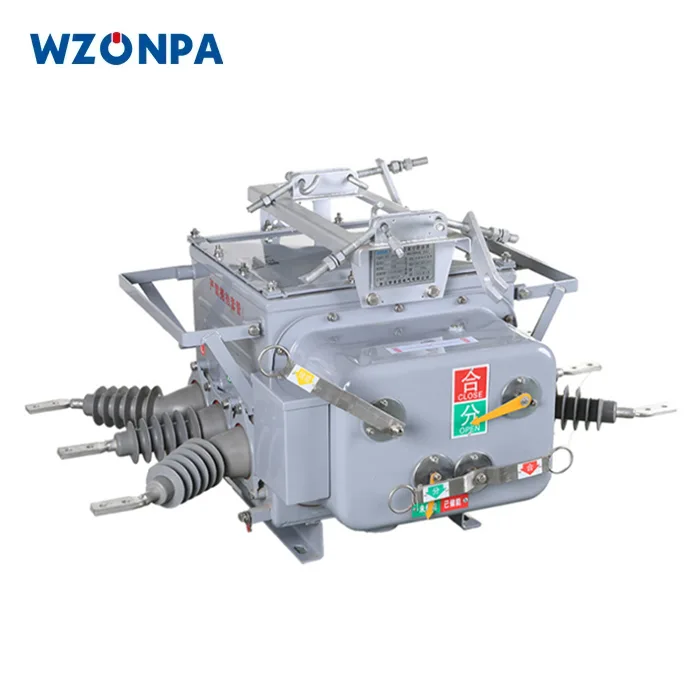
Key Factors for Selection:
-
Rated Voltage & Current: The breaker must match or exceed the system’s operating voltage and the maximum continuous load current.
-
Short-Circuit Breaking Capacity: This is the maximum fault current the Vacuum Circuit Breaker can safely interrupt. It must be higher than the calculated prospective short-circuit current at its installation point.
-
Application Environment: Consider indoor vs. outdoor installation, ambient temperature, altitude, and exposure to humidity or corrosive elements.
-
Standards & Certifications: Ensure the breaker complies with relevant international (IEC, IEEE) and local standards for your region.
-
Operational Duty & Life: Evaluate the required mechanical and electrical lifespan, along with the frequency of operations (e.g., for capacitor switching or frequent motor starts).
To simplify the comparison of core specifications, use the following guideline table:
| Selection Parameter | What to Evaluate | Why It Matters |
|---|---|---|
| Voltage Rating | System nominal voltage and insulation level. | Prevents dielectric failure and ensures safety. |
| Current Rating | Normal load current and potential future load increases. | Avoids overheating during continuous operation. |
| Breaking Capacity | Prospective short-circuit current from system studies. | Guarantees safe interruption of worst-case faults. |
| Operating Mechanism | Spring, magnetic, or hydraulic operation; manual/auto. | Affects reliability, speed, and control integration. |
Vacuum Circuit Breakers FAQ
Q: What are the primary advantages of Vacuum Circuit Breakers from a maintenance perspective?
A: They offer significant maintenance benefits due to their hermetically sealed interrupters. The vacuum arc quenching medium does not degrade, eliminating the need for gas or oil replacement and reducing contact erosion checks compared to other technologies.
Q: Can Vacuum Circuit Breakers be used for both switching and protection?
A: Absolutely. Modern Wzonpa Vacuum Circuit Breakers are designed for dual roles. They provide reliable load switching for routine operations and offer fast, precise protection by instantly interrupting fault currents to prevent equipment damage.
Q: How does the interrupting technology in a Vacuum Circuit Breaker differ from SF6?
A: While SF6 breakers use a gas to extinguish the arc, Vacuum Circuit Breakers utilize a high-vacuum envelope. When contacts part, the arc is extinguished at the first current zero because the vacuum prevents the re-establishment of an arc path, offering faster clearing and being environmentally friendly.
Selecting the right Vacuum Circuit Breaker is a technical decision that impacts your system’s total cost of ownership and uptime. By meticulously assessing your specifications against the factors above, you ensure a secure and reliable installation. For expert guidance tailored to your specific project’s voltage, current, and duty cycle requirements, trust the engineers at Wzonpa.
Contact us today for a professional consultation and let our specialists help you specify the optimal protection solution.