
How Does a 110 kV Pt Voltage Transformer Improve High-Voltage Measurement and Protection?
2026-09-28
In modern power transmission systems, accurate voltage measurement is essential for safe operation, reliable protection, and effective energy management. A 110 kV Pt Voltage Transformer is designed to convert high-voltage electrical signals into standardized low-voltage signals that can be safely used by measuring instruments, protection relays, monitoring systems, and control equipment. By providing electrical isolation and accurate voltage transformation, it creates an important connection between high-voltage primary equipment and low-voltage secondary systems. For power grid projects, substations, industrial facilities, and transmission networks, selecting a suitable voltage transformer can directly influence measurement reliability and system protection.
What Is a 110 kV Pt Voltage Transformer?
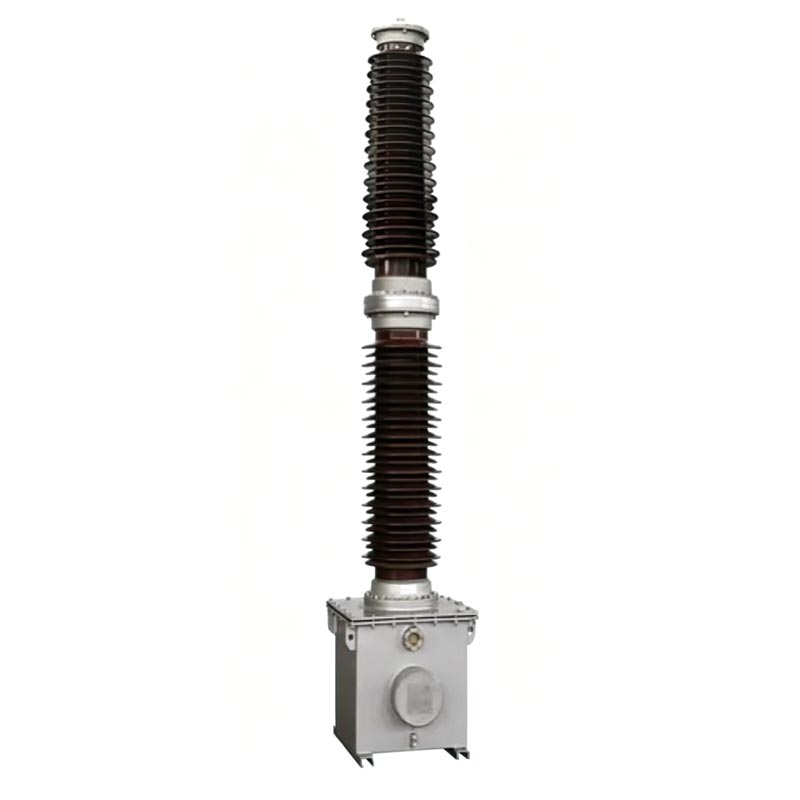
A 110 kV Pt Voltage Transformer, also known as a potential transformer (PT) or voltage transformer (VT), is a high-voltage instrument transformer used to measure and monitor voltage in 110 kV power systems.
The primary side is connected to the high-voltage circuit, while the secondary side provides a much lower standardized voltage for electrical equipment. This configuration allows operators and protection devices to obtain voltage information without directly connecting sensitive instruments to the high-voltage network.
Depending on the project design, a 110 kV voltage transformer can support functions such as:
-
High-voltage measurement
-
Power and energy metering
-
Relay protection
-
Voltage monitoring
-
Synchronization and control
-
Fault detection
-
Power system automation
-
Power line carrier communication in applicable designs
For example, Usune's TYD series 110 kV PT is designed as an outdoor single-phase oil-immersed high-voltage product and can transform 110 kV primary voltage into standardized secondary voltage signals for measurement, protection, and related applications.
Why Is a 110 kV Pt Voltage Transformer Important?
The voltage level in a 110 kV transmission system is far beyond the safe operating range of conventional measuring instruments. Directly connecting meters or protection devices to the primary circuit would create serious technical and safety challenges.
A voltage transformer solves this problem by providing a controlled transformation ratio and electrical isolation.
1. Safer Voltage Measurement
The primary purpose of a PT is to reduce high voltage to a manageable secondary voltage. This enables meters and monitoring equipment to obtain useful electrical information while remaining isolated from the high-voltage circuit.
2. Reliable Protection
Protection relays depend on accurate electrical signals to identify abnormal operating conditions. A properly selected 110 kV Pt Voltage Transformer can provide the voltage information required for protection functions and help the system respond appropriately when faults or abnormal conditions occur.
3. Accurate Energy Management
Voltage measurement is an important part of power and energy measurement. Stable and accurate secondary signals help support electricity metering, system analysis, and operational management.
4. Better System Monitoring
Modern substations increasingly depend on real-time monitoring. Voltage transformers provide electrical signals that can be integrated into control and monitoring systems, helping operators understand the condition of the power network.
What Effects Can the Right PT Bring to a Power System?
The performance of a voltage transformer is not only related to voltage conversion. Its accuracy, insulation performance, environmental adaptability, and construction quality can influence the reliability of the entire measurement and protection chain.
A suitable 110 kV Pt Voltage Transformer can provide several practical benefits:
| Performance Area | Practical Effect |
|---|---|
| Voltage transformation | Converts high voltage into usable secondary signals |
| Measurement accuracy | Supports reliable voltage and energy measurement |
| Electrical isolation | Separates measurement equipment from high-voltage circuits |
| Protection support | Provides voltage signals for protection systems |
| Outdoor operation | Suitable designs can operate in demanding outdoor environments |
| System monitoring | Supports monitoring and automation equipment |
| Long-term stability | Reduces the risk of measurement-related operational problems |
The actual performance depends on the selected design, accuracy class, burden, insulation level, environmental conditions, and applicable technical standards.
How Does a 110 kV Pt Voltage Transformer Work?
The operating principle is based on electromagnetic or capacitive voltage transformation, depending on the transformer design.
In a conventional electromagnetic PT, the primary winding is connected to the high-voltage system. Through electromagnetic induction, the primary voltage is transformed to a lower secondary voltage according to the designed transformation ratio.
The simplified process can be understood as:
110 kV primary voltage → voltage transformation → standardized secondary voltage → measurement/protection/control equipment
This arrangement allows high-voltage information to be transferred into a form that secondary equipment can process.
In practical power projects, different secondary windings may be assigned to different functions. One circuit can be used for measurement while another supports protection, depending on the project requirements.
110 kV PT vs. Conventional Low-Voltage Voltage Transformer
Although both devices are used for voltage measurement, their operating environments and technical requirements can be significantly different.
| Item | 110 kV Pt Voltage Transformer | Conventional Low-Voltage VT |
|---|---|---|
| Application | High-voltage transmission and substations | Low-voltage distribution systems |
| Primary voltage | 110 kV class | Much lower voltage levels |
| Insulation requirements | High | Comparatively lower |
| Installation | Commonly outdoor substation applications | Indoor or low-voltage installations |
| Protection role | Important for high-voltage protection systems | Usually related to lower-voltage monitoring |
| Environmental requirements | Often designed for demanding outdoor conditions | Depends on installation environment |
Therefore, a PT should not be selected simply according to its nominal voltage. The complete electrical and environmental conditions of the project need to be considered.
Which Factors Matter When Selecting a 110 kV Pt Voltage Transformer?
Choosing the right transformer requires more than checking whether the product is rated at 110 kV. Engineers and purchasing teams should evaluate the complete technical specification.
Rated Voltage
The rated primary voltage must correspond to the actual power system. The highest system voltage and insulation requirements should also be considered during project design.
Transformation Ratio
The voltage ratio determines how the high-voltage primary signal is converted into the required secondary signal. The secondary voltage must be compatible with connected meters, relays, and control equipment.
Accuracy Class
Accuracy is particularly important for metering and protection. Different secondary circuits may require different accuracy characteristics depending on their intended application.
Rated Burden
The transformer needs to provide sufficient output capacity for the connected secondary devices. The total burden of meters, relays, cables, and other equipment should therefore be considered.
Insulation Performance
For 110 kV applications, insulation coordination is a critical consideration. Power-frequency withstand voltage, lightning impulse withstand capability, creepage distance, and other insulation parameters need to match the project environment and applicable standards.
Installation Environment
Outdoor substations can expose equipment to rain, humidity, temperature changes, pollution, and other environmental stresses. The selected product should therefore be appropriate for its actual operating conditions.
Maintenance Requirements
A practical design should also consider inspection, installation, maintenance, and long-term operating requirements. Equipment that integrates reliable construction with appropriate maintenance arrangements can help reduce operational complexity.
Where Can 110 kV Pt Voltage Transformers Be Used?
A 110 kV Pt Voltage Transformer can be applied across various power infrastructure scenarios, including:
-
110 kV substations
-
Transmission and distribution networks
-
Utility power grids
-
Industrial substations
-
Power generation facilities
-
High-voltage switching stations
-
Grid monitoring systems
-
Relay protection systems
-
Electricity metering systems
For large infrastructure projects, the transformer may operate as one component within a broader system that includes circuit breakers, current transformers, disconnectors, protection relays, busbars, control panels, and monitoring equipment.
How Does Zhejiang Usune Electric Support 110 kV PT Applications?
For buyers sourcing high-voltage electrical equipment, product performance is only one consideration. Engineering support, manufacturing capability, customization, quality control, and communication throughout the procurement process are also important.
Zhejiang Usune Electric Co., Ltd. focuses on the research, development, manufacturing, and supply of voltage transformers and other high-voltage electrical equipment. Its voltage transformer portfolio covers applications for power grids, industrial power systems, measurement, protection, and monitoring.
For 110 kV applications, Usune provides the TYD series 110 kV PT solution for outdoor high-voltage applications. The product is designed to provide high-voltage-to-low-voltage transformation for measurement, protection, synchronization-related applications, and other power system requirements.
For international buyers, the ability to discuss voltage ratio, accuracy requirements, secondary winding configuration, installation conditions, and project-specific specifications before ordering can be particularly valuable.
What Should Buyers Prepare Before Ordering?
To make the selection process more efficient, buyers can prepare the following information:
-
System voltage: Confirm the rated and highest system voltage.
-
Frequency: Identify whether the project operates at 50 Hz or 60 Hz.
-
Voltage ratio: Confirm the required primary and secondary voltage.
-
Accuracy requirements: Specify metering and protection accuracy requirements.
-
Rated burden: Provide the expected secondary load.
-
Installation environment: Explain whether the transformer will be installed indoors or outdoors.
-
Insulation requirements: Confirm the required insulation and withstand levels.
-
Secondary configuration: Identify the number and purpose of secondary windings.
-
Applicable standards: Confirm the standards required by the project or local grid.
-
Project conditions: Provide environmental, installation, and application information.
Providing these details at the beginning can help manufacturers recommend a configuration that better matches the actual application.
Conclusion
A 110 kV Pt Voltage Transformer is much more than a device for reducing voltage. It serves as an important interface between high-voltage power systems and secondary measurement, protection, monitoring, and control equipment. Accurate voltage transformation, reliable insulation, suitable accuracy, and environmental adaptability all contribute to stable power system operation.
For substations and transmission projects, the right PT configuration should be selected according to voltage level, transformation ratio, accuracy, burden, insulation requirements, installation conditions, and project standards.
With its focus on high-voltage electrical equipment, Zhejiang Usune Electric Co., Ltd. can provide 110 kV PT solutions for different power system applications and assist buyers in evaluating suitable technical configurations.
If you are looking for a reliable 110 kV Pt Voltage Transformer for a substation, transmission project, industrial power system, or customized electrical application, contact us to discuss your voltage ratio, accuracy, installation conditions, and project requirements. Zhejiang Usune Electric can help you explore a suitable voltage transformer solution for your application.