

How Does a 12kV/24kV Eco-Friendly Air Insulated Vacuum Load Break Switch Improve Medium-Voltage Power Distribution?
2026-11-10
Modern electrical distribution networks require switching equipment that combines operational reliability, personnel safety, and environmental responsibility. A 12kV/24kV Eco-Friendly Air Insulated Vacuum Load Break Switch offers a practical solution by combining air insulation with vacuum arc interruption technology. This design avoids the use of SF6 insulating gas and insulating oil while supporting routine load switching and electrical isolation in medium-voltage applications.
This article explains how the equipment works, its main technical characteristics, installation considerations, industrial applications, and selection criteria. It also explores how power utilities, industrial facilities, renewable energy projects, and electrical contractors can evaluate this switching technology for their distribution systems.
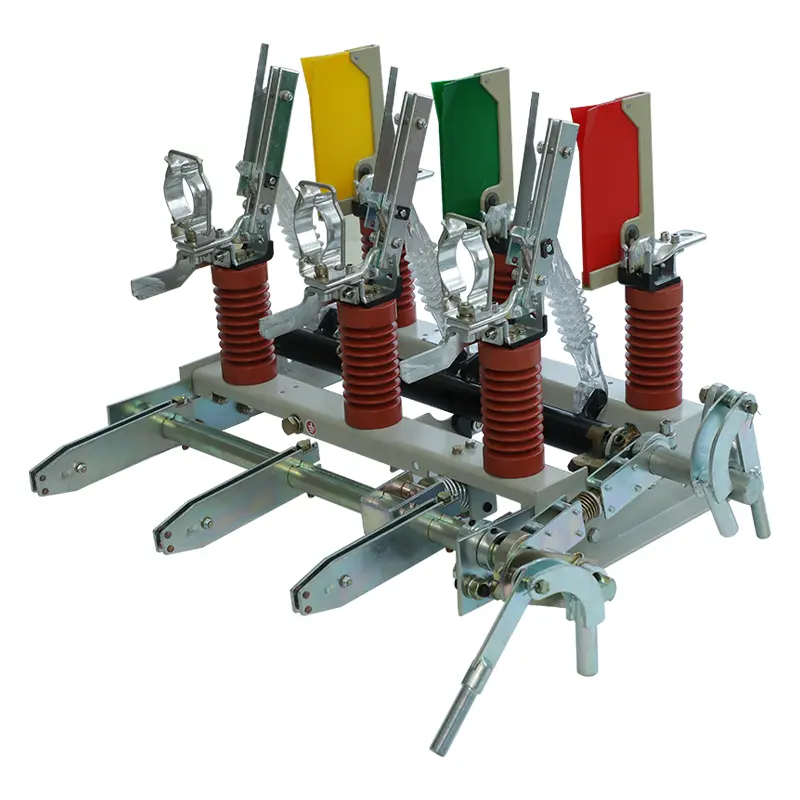
1. Understanding the 12kV/24kV Eco-Friendly Air Insulated Vacuum Load Break Switch
A load break switch is an important switching device in medium-voltage electrical distribution systems. It is designed to connect and disconnect electrical circuits under specified normal load conditions. It also provides a defined switching position that helps operators isolate sections of a distribution network for inspection, maintenance, or operational adjustments.
The 12kV/24kV Eco-Friendly Air Insulated Vacuum Load Break Switch combines two important technologies: air insulation and vacuum arc interruption. Air serves as the primary insulating medium around the energized components, while the vacuum interrupter controls the electrical arc generated when switching contacts separate.
This distinction is important because insulation and arc interruption perform different functions. The air-insulated structure supports electrical separation between live components and surrounding grounded structures. The vacuum interrupter provides an effective environment for interrupting the current during the switching process.
Air insulation and vacuum interruption work together to provide an SF6-free switching solution. The design eliminates the need for SF6 gas and insulating oil as the primary insulation media, making equipment handling and environmental management more straightforward.
Designed for medium-voltage distribution networks, this type of equipment can be considered for utility distribution, industrial substations, infrastructure projects, and other electrical installations operating within the specified 12kV or 24kV voltage class.
What Problems Can This Equipment Address?
- Environmental concerns: Avoids the use of SF6 gas, which requires careful management because of its high global warming potential.
- Routine switching requirements: Supports controlled connection and disconnection of electrical loads within its rated operating conditions.
- Maintenance accessibility: An air-insulated arrangement can facilitate visual inspection of accessible components.
- Operational safety: Mechanical interlocking and clear switching-position indication help reduce the risk of incorrect operation.
- Equipment management: A practical mechanical structure can simplify routine inspection and maintenance planning.
2. How Does the Switching Technology Work?
Understanding the operating sequence helps electrical engineers and procurement professionals evaluate whether a load break switch meets their project requirements. The switching process involves the operating mechanism, moving and fixed contacts, vacuum interrupter, and associated insulation structure.
Step 1: Normal Current-Carrying Operation
During normal operation, the main contacts remain closed, allowing electrical current to flow through the conductive path. The equipment maintains the connection between the incoming and outgoing sections of the distribution circuit.
The insulation structure maintains the required electrical separation between energized components and grounded parts, helping prevent unintended current paths.
Step 2: Initiating a Switching Operation
When an operator needs to disconnect a circuit under an approved operating condition, the operating mechanism is activated. Depending on the selected configuration, the mechanism may use manual or other specified operating arrangements.
The mechanical linkage transfers the operating force to the moving contacts, initiating contact separation according to the equipment's designed operating sequence.
Step 3: Vacuum Arc Interruption
When electrical contacts separate while carrying current, an arc may form between them. The vacuum interrupter provides a controlled environment in which the arc can be extinguished.
In a vacuum interrupter, the metal vapor generated from the contact surfaces during arcing supports the arc for a short period. At the natural current zero of an alternating-current waveform, the arc is extinguished, and the contact gap recovers its dielectric strength.
This process helps interrupt the specified load current without relying on SF6 gas or insulating oil as the arc-interruption medium.
Step 4: Establishing the Required Switching Position
Once the contacts reach their intended open position, the operating mechanism maintains the designed switching state. Position indicators help operators identify whether the equipment is open or closed.
Where provided, mechanical interlocking features help prevent certain incorrect switching sequences. Before maintenance begins, personnel must follow the approved isolation, earthing, and verification procedures.
A load break switch should not automatically be treated as a substitute for a circuit breaker. Its fault-current interruption capability depends on the specific design and ratings. Short-circuit protection must be provided by appropriately rated protective equipment or an approved switch-fuse arrangement.
3. Key Components and Their Functions
The performance of a medium-voltage load break switch depends on the coordination of its electrical, mechanical, and insulation components. Understanding these components makes it easier to assess product quality and identify important requirements during procurement.
| Component | Main Function | Why It Matters |
|---|---|---|
| Vacuum Interrupter | Interrupts the specified current during contact separation. | Supports controlled arc extinction and switching reliability. |
| Insulating Structure | Maintains electrical insulation between live components and grounded parts. | Helps achieve the required dielectric performance. |
| Operating Mechanism | Transfers operating force to the switching contacts. | Determines the consistency and stability of switching operations. |
| Main Contacts | Carry current during normal operation. | Influence electrical conductivity and contact performance. |
| Mechanical Interlock | Restricts specified incorrect operating sequences. | Helps improve operational safety. |
| Position Indicator | Displays the switching state. | Helps operators identify equipment status. |
| Supporting Frame | Provides structural support and component alignment. | Contributes to mechanical stability and installation reliability. |
When evaluating a supplier, buyers should pay attention to the quality of the vacuum interrupter, contact materials, mechanical transmission system, insulation components, and assembly consistency. These factors influence long-term performance under the specified electrical and environmental conditions.
4. Why Is Air Insulation Combined with Vacuum Interruption?
Medium-voltage electrical equipment must balance insulation performance, switching capability, operating safety, and environmental requirements. Combining air insulation with vacuum interruption addresses these needs through two complementary technologies.
Avoiding SF6 gas eliminates the need for SF6 filling, gas leakage monitoring, and gas recovery procedures associated with SF6-insulated equipment.
Vacuum interruption provides reliable switching performance when the device operates within its specified electrical ratings.
Air insulation allows accessible structural and mechanical components to be inspected without the need to manage a sealed SF6 insulation chamber.
The absence of insulating oil and SF6 gas simplifies certain equipment maintenance and environmental management tasks.
Comparison with Different Medium-Voltage Switching Solutions
Different switching technologies are designed for different installation environments and operating requirements. The following comparison provides a general overview rather than a direct performance ranking.
| Comparison Factor | Air-Insulated Vacuum Load Break Switch | SF6-Insulated Load Break Switch | Vacuum Circuit Breaker |
|---|---|---|---|
| Insulation Medium | Air | SF6 gas | Depends on the overall equipment design |
| Interruption Medium | Vacuum | SF6 gas | Vacuum in common designs |
| SF6 Gas Requirement | No | Yes | Not required in vacuum designs |
| Primary Function | Specified load switching and isolation | Specified load switching and isolation | Normal switching and rated fault-current interruption |
| Maintenance Focus | Contacts, mechanism, insulation and connections | Contacts, mechanism and gas system | Contacts, interrupter and operating mechanism |
| Typical Consideration | Environmental requirements and straightforward structure | Compact installation and gas management | Comprehensive circuit protection requirements |
The most suitable solution depends on rated voltage, load characteristics, available installation space, protection coordination, environmental conditions, and project specifications. Buyers should compare complete equipment configurations rather than evaluating insulation technology alone.
5. Major Technical Characteristics and Specifications
Technical specifications are essential when selecting a 12kV or 24kV load break switch. A product that appears suitable based on voltage class alone may not meet the project's continuous current, insulation, short-time withstand, or operating requirements.
The following table summarizes the main characteristics to review when evaluating this equipment.
| Technical Parameter | Specification / Description |
|---|---|
| Product Name | 12kV/24kV Eco-Friendly Air Insulated Vacuum Load Break Switch |
| Voltage Class | 12kV / 24kV |
| Application | Medium-voltage power distribution systems |
| Insulation Medium | Air |
| Arc Interruption Medium | Vacuum |
| SF6 Gas | Not required |
| Insulating Oil | Not required |
| Operating Mechanism | Mechanical operating mechanism; configuration to be confirmed |
| Operating Mode | Manual or other available configurations according to the selected model |
| Safety Features | Mechanical interlocking and switching-position indication |
| Installation | Indoor or outdoor configurations subject to the selected model |
Electrical Parameters Buyers Should Confirm
Beyond the basic product description, engineers should request the manufacturer's official technical datasheet to verify the following parameters:
- Rated voltage: The equipment must match the nominal voltage and system requirements.
- Rated frequency: Confirm compatibility with the local power system, such as 50Hz or 60Hz.
- Rated continuous current: Ensure the switch can carry the required operating current without exceeding its temperature-rise limits.
- Rated load-breaking current: Verify the current levels and switching duties the device is designed to interrupt.
- Rated short-time withstand current: Confirm that the equipment can withstand the specified short-circuit current for the required duration.
- Power-frequency withstand voltage: Check the insulation performance under the specified test conditions.
- Lightning impulse withstand voltage: Evaluate insulation coordination against transient overvoltage conditions.
- Mechanical endurance: Review the specified number of operating cycles and applicable endurance classification.
6. Industrial and Infrastructure Applications
Medium-voltage switching equipment is used across a wide range of electrical distribution environments. The 12kV/24kV air-insulated vacuum load break switch can be considered for projects that require reliable load switching, network sectionalizing, and defined isolation points.
6.1 Utility Power Distribution Networks
Electrical utilities need dependable switching devices to manage distribution feeders, isolate network sections, and support maintenance operations. Load break switches can be incorporated into appropriate distribution configurations to improve operational flexibility.
An SF6-free design may also support utility strategies to reduce dependence on equipment containing high-global-warming-potential insulating gases.
6.2 Industrial Manufacturing Facilities
Manufacturing plants rely on stable electrical distribution to operate production lines, motors, processing systems, and automated machinery. Switching devices help operators manage different electrical sections and coordinate planned maintenance activities.
Suitable equipment selection should consider the facility's load profile, switching frequency, protection scheme, and available installation space.
6.3 Renewable Energy Projects
Solar farms, wind power facilities, and associated substations require medium-voltage equipment to connect and manage electrical distribution circuits. Air-insulated vacuum switching technology can be considered for suitable applications where its rated characteristics meet the project requirements.
6.4 Commercial Buildings and Infrastructure
Large commercial buildings, transportation facilities, water treatment plants, and public infrastructure often depend on medium-voltage distribution systems. Load break switches can support circuit management and maintenance isolation within appropriately designed electrical installations.
6.5 Industrial and Mining Substations
Mining and heavy industrial operations require electrical equipment that can withstand demanding service conditions. Selection should account for ambient temperature, dust, humidity, altitude, enclosure protection, and the expected operating environment.
Do not select equipment based solely on the industry name. Confirm the electrical load, switching duty, installation environment, protection coordination, and applicable project standards before finalizing the model.
7. How to Select the Right Load Break Switch
Selecting medium-voltage switching equipment requires more than comparing product prices or nominal voltage ratings. A structured selection process helps reduce compatibility problems, unnecessary maintenance costs, and commissioning delays.
Step 1: Identify the System Voltage
Determine whether the application requires 12kV or 24kV equipment. Check the system's highest voltage for equipment and required insulation levels rather than relying only on the nominal operating voltage.
Step 2: Define the Load Requirements
Calculate or obtain the expected operating current and identify the types of loads being switched. Transformer, cable, motor, and loop-network applications may involve different switching duties.
Step 3: Review Short-Circuit Conditions
Obtain the system short-circuit study and determine the required short-time withstand and peak withstand ratings. Confirm the protection arrangement because a standard load break switch is not necessarily designed to interrupt fault current.
Step 4: Evaluate the Installation Environment
Consider whether the equipment will be installed indoors or outdoors. Review ambient temperature, humidity, altitude, pollution level, dust exposure, and enclosure requirements.
Step 5: Check Operating and Interlocking Requirements
Confirm the required operating mechanism, switching sequence, mechanical interlocks, position indication, and any electrical or remote-control accessories needed by the project.
Step 6: Verify Standards and Test Documentation
Request relevant type-test reports, routine-test records, technical drawings, and installation instructions. IEC 62271-103 is an important reference for AC switches and switch-disconnectors with rated voltages above 1kV up to and including 52kV.
The applicable standards for the complete switchgear assembly and associated components should also be reviewed according to the project design and local regulations.
Step 7: Compare the Total Project Value
Evaluate the complete solution, including initial purchase price, installation requirements, maintenance accessibility, spare parts, technical support, and expected service conditions.
- System rated voltage and frequency confirmed
- Rated continuous current verified
- Load-breaking capacity matched to the application
- Short-time withstand requirements checked
- Indoor or outdoor configuration confirmed
- Operating mechanism and interlocking requirements defined
- Installation dimensions and connection arrangements reviewed
- Applicable standards and test reports requested
- Technical documentation and after-sales support confirmed
8. Installation and Maintenance Considerations
Correct installation and regular maintenance are essential for maintaining the reliability of medium-voltage switching equipment. Even a well-designed product may experience premature problems if it is installed incorrectly or operated outside its specified conditions.
Before Installation
- Review the approved electrical drawings and equipment installation manual.
- Check the foundation, mounting arrangement, and required installation clearances.
- Inspect the equipment for transportation damage, loose components, or visible defects.
- Verify that the product model and ratings match the approved project specifications.
- Confirm the compatibility of cable connections, busbars, and supporting structures.
During Commissioning
Qualified electrical personnel should conduct commissioning according to the manufacturer's instructions and applicable safety procedures. Inspection should include mechanical operation, interlocking functions, contact condition where accessible, electrical connections, insulation performance, and control arrangements where applicable.
During Routine Maintenance
Maintenance intervals should be based on the manufacturer's recommendations, operating conditions, switching frequency, and applicable maintenance standards.
- Inspect accessible insulating surfaces for contamination, cracks, or damage.
- Check mechanical linkages and operating mechanisms for abnormal wear.
- Verify that position indicators and interlocking devices operate correctly.
- Inspect electrical connections for signs of overheating or deterioration.
- Review operating records and investigate abnormal switching behavior.
- Replace damaged or worn components using approved replacement parts.
All maintenance must be performed by qualified personnel after the equipment has been properly isolated, de-energized, and earthed in accordance with the applicable safety procedures. A visible open position alone does not establish that an electrical circuit is safe to work on.
9. Common Selection and Operation Mistakes
Several common mistakes can affect the performance and safety of medium-voltage switching installations. Recognizing these issues early can help project teams avoid unnecessary costs and operational problems.
Mistake 1: Treating a Load Break Switch as a Circuit Breaker
A load break switch and a circuit breaker have different switching and protection duties. Buyers should not assume that a load break switch can interrupt every type of short-circuit current. The protection scheme must be designed around the equipment's actual ratings.
Mistake 2: Choosing Equipment Based Only on Voltage
Two devices with the same nominal voltage class may have different rated currents, withstand capabilities, insulation levels, and mechanical arrangements. Complete technical specifications should be compared before purchasing.
Mistake 3: Ignoring Environmental Conditions
High humidity, conductive dust, pollution, extreme temperatures, and excessive altitude can influence insulation and operating performance. Installation conditions must be included in the equipment selection process.
Mistake 4: Overlooking Mechanical Interlocking
Interlocking requirements should be considered during system design, not after installation. The equipment must support the intended switching sequence and operating safety requirements.
Mistake 5: Purchasing Without Reviewing Technical Documentation
Product descriptions alone are insufficient for engineering approval. Buyers should request detailed datasheets, drawings, test reports, and operating instructions to confirm suitability for their projects.
10. Frequently Asked Questions
Q1. What is a 12kV/24kV Eco-Friendly Air Insulated Vacuum Load Break Switch?
It is a medium-voltage switching device designed to connect and disconnect electrical loads under specified operating conditions. It uses air as the insulation medium and a vacuum interrupter for arc interruption, avoiding the need for SF6 gas and insulating oil.
Q2. Why does this load break switch use vacuum technology?
Vacuum technology provides an effective environment for arc interruption. When the switching contacts separate, the arc is extinguished at the natural current zero of the AC waveform, and the contact gap recovers its dielectric strength.
Q3. Is an air-insulated vacuum load break switch completely SF6-free?
The described product configuration does not require SF6 gas as its insulation or arc-interruption medium. Buyers should still confirm the complete equipment configuration and auxiliary components with the manufacturer.
Q4. What is the difference between air insulation and vacuum interruption?
Air insulation maintains electrical separation between energized components and grounded structures. Vacuum interruption controls the arc produced when switching contacts separate. They perform different but complementary functions within the equipment.
Q5. Can a load break switch interrupt short-circuit current?
A conventional load break switch is primarily designed for specified load-switching duties, not general short-circuit interruption. Its fault-related capabilities depend on the specific model and rated functions. Appropriate circuit breakers, fuses, or other protective devices must be incorporated into the system design.
Q6. Can this equipment be installed outdoors?
Outdoor installation depends on the specific product configuration. Buyers should confirm the enclosure design, ingress protection, insulation requirements, ambient temperature range, and environmental suitability before selecting an outdoor model.
Q7. Which industries commonly use 12kV and 24kV load break switches?
Typical applications include utility distribution networks, industrial manufacturing, renewable energy facilities, mining operations, commercial buildings, transportation infrastructure, and substations where the equipment ratings match the project requirements.
Q8. What technical documents should buyers request?
Buyers should request the product datasheet, general arrangement drawings, wiring diagrams where applicable, relevant type-test reports, routine-test documentation, installation instructions, and maintenance manuals. These documents help verify electrical compatibility and installation requirements.
Q9. Which standard is relevant to medium-voltage load break switches?
IEC 62271-103 covers AC switches and switch-disconnectors for rated voltages above 1kV up to and including 52kV. Additional standards may apply to the complete switchgear assembly and associated components depending on the equipment configuration.
Q10. How can buyers choose a reliable load break switch manufacturer?
Evaluate the manufacturer's engineering capabilities, production quality control, relevant product testing, technical documentation, customization capabilities, delivery arrangements, and after-sales service. A reliable supplier should be able to explain the product's ratings and provide documentation that supports the proposed application.
Conclusion: Building More Sustainable and Reliable Distribution Networks
The development of medium-voltage electrical distribution systems increasingly emphasizes operational reliability, personnel safety, equipment maintainability, and environmental responsibility. A 12kV/24kV Eco-Friendly Air Insulated Vacuum Load Break Switch addresses these requirements through a combination of air insulation and vacuum arc interruption technology.
By eliminating the need for SF6 gas and insulating oil, this switching solution can simplify certain environmental management and maintenance requirements. Its practical mechanical structure, switching-position indication, and interlocking features also support routine operation in appropriately designed distribution networks.
However, successful application depends on selecting the correct electrical ratings, verifying protection coordination, considering installation conditions, and following the manufacturer's technical instructions. Careful engineering evaluation is essential to achieving reliable long-term performance.
Looking for a Reliable 12kV/24kV Load Break Switch Manufacturer?
Zhejiang SanGao Electric Co., Ltd. specializes in high-voltage power transmission and distribution equipment, integrating research and development, product design, manufacturing, and sales.
Whether you are sourcing medium-voltage switching equipment for utility networks, industrial substations, renewable energy projects, or infrastructure applications, our team can help you evaluate suitable product configurations and technical requirements.
Contact us today to discuss your project specifications, request technical documentation, and explore a suitable switching solution for your power distribution system.
Contact Us