

How Does a 25m Electric Lockable Spindle Telescopic Mast Improve High-Level Equipment Deployment?
2026-09-29
When equipment needs to be positioned at considerable height, a mast must provide more than simple vertical extension. It needs to combine height, stability, controlled movement, secure positioning, and convenient operation. A 25m electric lockable spindle telescopic mast is designed around these requirements, offering a practical solution for applications where elevated equipment must be deployed and retracted efficiently. By combining an electric drive system, telescopic structure, spindle-based movement, and locking capability, this type of mast can support equipment deployment while helping simplify operation and maintenance. For professional buyers, system integrators, and project contractors, Homall Industry Limited provides mast solutions designed to meet different application and configuration requirements.
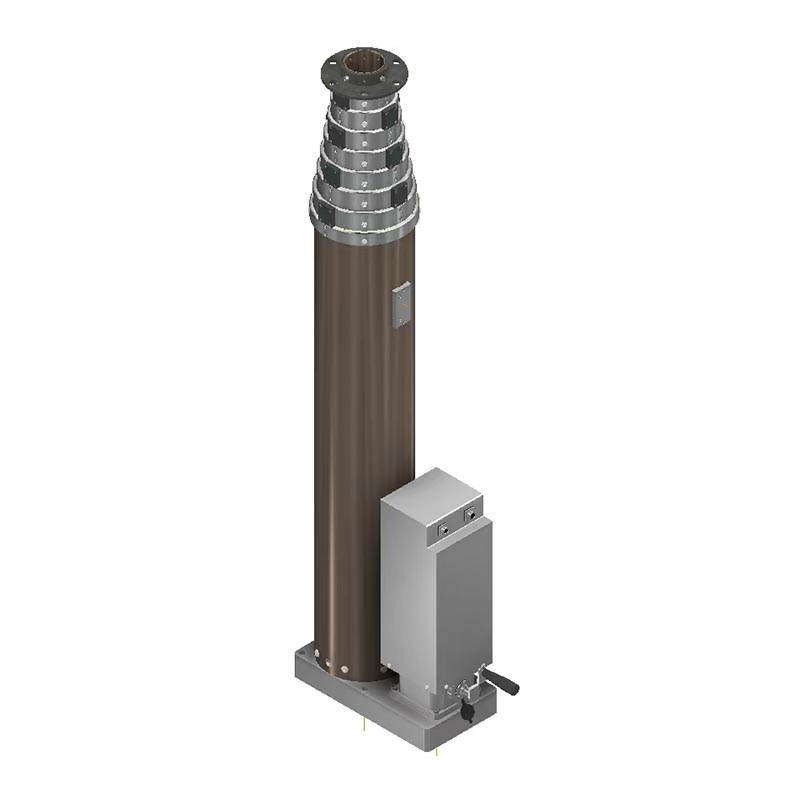
What Is a 25m Electric Lockable Spindle Telescopic Mast?
A 25m electric lockable spindle telescopic mast is a multi-section mast capable of extending to approximately 25 meters while using an electric mechanism to control telescopic movement. Unlike a simple fixed pole, its sections can be extended and retracted according to operational requirements.
The main components generally include:
-
Telescopic mast sections for vertical extension
-
Electric drive system for powered deployment
-
Spindle mechanism for controlled linear movement
-
Locking mechanism for maintaining the required position
-
Mounting interface for antennas, sensors, lighting equipment, cameras, communication devices, or other payloads
-
Base and structural components for installation and stability
The exact configuration should be selected according to payload weight, wind conditions, extension requirements, installation environment, and other project parameters.
Why Is Electric Telescopic Operation Important?
Manual mast operation can become inconvenient when the mast is tall, frequently adjusted, or carrying relatively heavy equipment. Electric operation allows extension and retraction to be controlled with significantly less physical effort.
For example, a powered mast can be integrated into an operating procedure in which the mast is lowered for equipment inspection and extended again when the equipment needs to operate at height.
The benefits include:
-
Reduced manual intervention
Operators do not need to manually raise or lower multiple mast sections. -
More convenient deployment
Electric movement makes repeated extension and retraction easier to manage. -
Better operational consistency
A controlled drive system can provide predictable mast movement when properly configured. -
Simplified maintenance access
Lowering the mast can make equipment inspection and servicing more convenient. -
Flexible installation options
The mast can be configured for different equipment and project environments.
How Does the Lockable Spindle Mechanism Improve Stability?
The locking function is particularly important for applications where equipment needs to remain at a specific operating height.
During deployment, the spindle mechanism converts motor-driven rotation into controlled linear movement. Once the mast reaches its intended position, the locking system helps prevent unintended movement of the telescopic sections.
This combination provides several practical advantages:
-
Controlled extension and retraction
-
Secure positioning at the required height
-
Reduced risk of unwanted section movement
-
Improved convenience during equipment operation
-
Easier coordination between mast movement and payload requirements
For professional applications, however, the locking system should always be designed and selected according to the actual load, wind pressure, operating frequency, and applicable engineering requirements rather than relying on height alone.
What Applications Can Use a 25m Telescopic Mast?
A 25-meter mast can provide a substantial elevation advantage where equipment needs an unobstructed or elevated position. Depending on the payload and configuration, potential applications include communication, surveillance, lighting, sensing, monitoring, and specialized field equipment.
| Application | Potential Function |
|---|---|
| Communication | Elevate antennas and communication equipment |
| Surveillance | Raise cameras and monitoring devices |
| Lighting | Position lighting equipment at elevated locations |
| Environmental monitoring | Support sensors and measurement devices |
| Industrial projects | Provide temporary or adjustable equipment elevation |
| Special projects | Support customized equipment and deployment systems |
The final mast configuration should be determined by the equipment being mounted and the environmental conditions of the installation site.
How Does a 25m Mast Improve Operational Efficiency?
The major advantage is not simply reaching 25 meters. It is the ability to combine height with controlled deployment.
For permanent installations, the mast can provide an elevated platform while allowing equipment to be lowered when maintenance is required. For projects involving periodic deployment, electric operation can reduce the time and labor associated with repeated setup procedures.
This can be particularly useful when the equipment installed on top of the mast is sensitive, expensive, or difficult to access manually.
A well-designed system can therefore contribute to:
-
Faster equipment deployment
-
Easier inspection and servicing
-
Reduced manual handling
-
More flexible equipment positioning
-
Better utilization of elevated installation space
What Should Buyers Consider Before Selecting the Mast?
Choosing a 25m electric lockable spindle telescopic mast requires more than checking the maximum extension height. Buyers should evaluate the complete operating environment.
1. Payload Capacity
The weight and dimensions of the equipment directly affect the mast structure and drive system. Larger payloads may require reinforced structural components and a different operating mechanism.
2. Wind Conditions
At 25 meters, wind loading becomes an important engineering consideration. The mast should be evaluated according to the expected wind environment, payload configuration, and installation conditions.
3. Extension and Retraction Frequency
A mast used several times per day may have different drive and durability requirements from one that is extended only occasionally.
4. Installation Space
The base structure, mounting arrangement, overall dimensions, and required clearance should be considered before installation.
5. Electrical Configuration
Voltage, control method, motor capacity, operating speed, and control interfaces should match the project's electrical system.
6. Environmental Conditions
Outdoor applications may expose the mast to rain, dust, humidity, temperature changes, and corrosion. Material selection and surface protection should therefore correspond to the intended environment.
Why Choose Customized Mast Solutions?
Different projects rarely have exactly the same requirements. A communication mast may prioritize antenna mounting and stability, while a surveillance application may focus on camera payloads and frequent lowering for maintenance.
For this reason, customization can be important when selecting a professional telescopic mast.
Homall Industry Limited can provide solutions based on project-specific requirements, including mast dimensions, mounting configuration, payload requirements, operating conditions, and application scenarios. This enables buyers to develop a mast system around the equipment and environment rather than attempting to adapt a standard configuration to an unsuitable project.
What Makes the 25m Electric Lockable Spindle Telescopic Mast a Practical Choice?
The value of this type of mast comes from the combination of several functions. A 25-meter extension provides significant elevation, electric operation reduces manual effort, the spindle mechanism enables controlled movement, and the locking system supports secure positioning.
For projects that require equipment to be elevated during operation but accessible during maintenance, this combination can provide a practical balance between height, accessibility, and operational convenience.
Rather than treating the mast simply as a supporting pole, project designers can view it as an integrated equipment deployment platform.
Conclusion
A 25m electric lockable spindle telescopic mast can provide an efficient solution for applications requiring reliable vertical equipment deployment, controlled extension, and secure positioning. Its electric drive system can simplify operation, while the telescopic structure allows equipment to be raised or lowered according to operational needs. The locking mechanism further supports stable positioning once the required height is reached.
For buyers looking for a professional mast solution, selecting the right structure requires careful consideration of payload, wind loading, operating frequency, installation conditions, electrical requirements, and equipment compatibility. With project-oriented customization and professional manufacturing support, Homall Industry Limited can help customers develop a suitable mast configuration for different applications.
Looking for a customized 25m electric lockable spindle telescopic mast for your next project? Contact us to discuss your application requirements, payload specifications, installation environment, and desired configuration with Homall Industry Limited.