

How Does a 2P 4P Electronic Type RCBO Improve Electrical Safety and Circuit Protection?
2026-10-12
In modern electrical systems, reliable circuit protection is essential for residential buildings, commercial facilities, industrial equipment, and electrical distribution networks. A 2P 4P Electronic Type RCBO combines residual current protection with overcurrent protection to help reduce electrical hazards and improve system reliability. By detecting leakage currents, overloads, and short circuits, this protective device helps protect people, electrical equipment, and wiring from potential damage. Choosing the appropriate pole configuration is equally important, as different applications require different electrical arrangements. Shanghai DaDa Electric Co., Ltd. provides electrical protection solutions designed to meet diverse distribution requirements, helping buyers select suitable RCBO products for their projects.
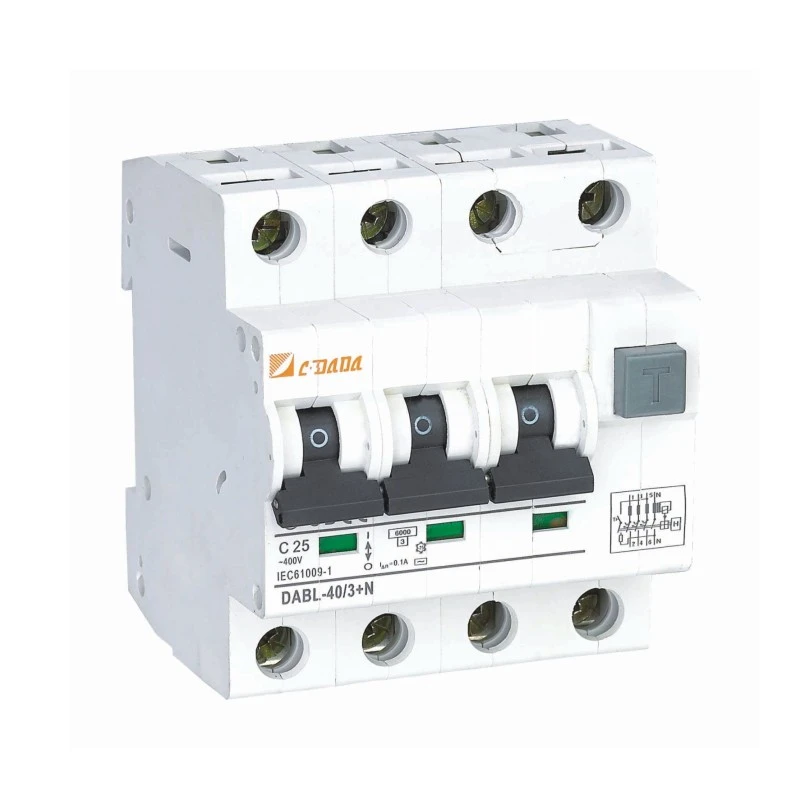
What Is a 2P 4P Electronic Type RCBO?
An RCBO, or Residual Current Circuit Breaker with Overcurrent Protection, integrates two essential protection functions into one compact device. It detects residual current caused by insulation failure or unintended current leakage while also responding to overloads and short circuits.
The electronic type uses an electronic detection and processing circuit to evaluate residual current signals and initiate a trip when the specified operating conditions are met. Its performance depends on the device design, rated parameters, and applicable product standards.
Understanding the Difference Between 2P and 4P RCBOs
The main difference between 2-pole and 4-pole RCBOs is their pole configuration and the electrical systems for which they are designed.
| Feature | 2P Electronic RCBO | 4P Electronic RCBO |
|---|---|---|
| Pole configuration | Two poles | Four poles |
| Typical application | Single-phase circuits | Three-phase, four-wire circuits |
| Common installations | Residential and small commercial distribution | Commercial and industrial distribution |
| Protection purpose | Leakage, overload, and short-circuit protection | Leakage, overload, and short-circuit protection, according to the model specification |
| Selection considerations | Rated voltage, current, and circuit configuration | Phase arrangement, neutral requirements, and rated parameters |
The appropriate model depends on the electrical system, neutral switching requirements, and the manufacturer's specifications. Buyers should verify the product's actual protection functions rather than assuming that every pole provides identical overcurrent protection.
Why Is a 2P 4P Electronic Type RCBO Important?
Electrical faults can develop unexpectedly, creating risks for people, equipment, and entire distribution systems. A properly selected RCBO helps address several important safety concerns.
1. Protection Against Electrical Leakage
Residual current protection detects an imbalance between the currents flowing through the relevant conductors. Such an imbalance may indicate current leakage caused by damaged insulation, faulty equipment, or unintended contact with conductive parts.
When the residual current reaches the device's specified operating conditions, the RCBO disconnects the protected circuit. This function can reduce the risk of electric shock, although it does not eliminate every electrical hazard.
2. Overload Protection
An overloaded circuit carries more current than its wiring or equipment is designed to withstand. Prolonged overloads can cause excessive heating, accelerate insulation deterioration, and increase fire risks.
The overcurrent protection function helps disconnect the circuit when the current exceeds the applicable operating limits for the required duration.
3. Short-Circuit Protection
Short circuits can produce extremely high currents within a very short period. The RCBO's short-circuit protection is designed to interrupt qualifying fault currents within its rated capabilities.
For safe operation, buyers must confirm the rated breaking capacity and ensure that the device is suitable for the prospective short-circuit current at the installation point.
4. Simplified Distribution Design
By combining residual current and overcurrent protection, an RCBO can reduce the need for separate protective devices for an individual circuit. This integrated design can simplify distribution board layouts and support more organized electrical installations.
How Does an Electronic Type RCBO Work?
A 2P 4P Electronic Type RCBO generally operates through a coordinated detection and tripping process.
-
Normal operation: The device monitors the electrical circuit while current remains within its specified operating conditions.
-
Fault detection: Its electronic detection circuit identifies a qualifying residual current, while the overcurrent mechanism responds to overloads or short circuits.
-
Trip activation: When the relevant trip conditions are satisfied, the operating mechanism initiates disconnection.
-
Circuit isolation: The affected circuit is interrupted to help limit the consequences of the fault.
-
Inspection and restoration: Qualified personnel identify the fault, correct the underlying problem, and restore power according to the manufacturer's instructions.
Electronic detection technology can support reliable residual current monitoring, but actual sensitivity, response characteristics, and operating requirements vary by model. Electronic RCBOs may also depend on an auxiliary supply or the monitored circuit supply, depending on their design.
Where Can 2P and 4P Electronic RCBOs Be Used?
Different installations have different protection requirements. Selecting the correct configuration helps improve compatibility and electrical safety.
Residential Electrical Systems
A 2P electronic RCBO may be suitable for single-phase circuits in houses, apartments, and residential distribution boards. Depending on the design, it can provide combined protection for circuits supplying lighting, sockets, or other electrical loads.
Commercial Buildings
Offices, retail stores, hotels, and other commercial properties may require both 2P and 4P models. Single-phase circuits can use suitable 2P devices, while compatible three-phase, four-wire circuits may require 4P protection.
Industrial Facilities
Industrial installations often contain motors, production equipment, control panels, and three-phase distribution systems. A properly specified 4P RCBO can be used where the circuit arrangement and protection requirements call for four-pole switching and residual current protection.
Electrical Distribution Panels
Panel builders and electrical contractors can integrate suitable RCBO models into distribution assemblies to provide circuit-level protection. Correct coordination with upstream and downstream protective devices remains essential for dependable system operation.
Which Factors Should Buyers Consider Before Purchasing?
For electrical wholesalers, contractors, panel manufacturers, and project procurement teams, product selection should be based on technical compatibility rather than pole count alone.
Consider the following checklist:
-
Pole configuration: Determine whether the installation requires a 2P or 4P device.
-
Rated current: Match the RCBO to the circuit load and the current-carrying capacity of the wiring.
-
Rated voltage and frequency: Confirm compatibility with the electrical supply.
-
Residual operating current: Select an appropriate sensitivity based on the intended application and applicable regulations.
-
Trip characteristics: Check the required overcurrent tripping curve and coordination requirements.
-
Breaking capacity: Ensure the rated short-circuit breaking capacity is adequate for the installation.
-
Residual current type: Verify whether Type AC, Type A, or another specified type is appropriate for the connected equipment.
-
Compliance and certification: Review applicable standards, test reports, and certification documents.
-
Installation requirements: Check terminal arrangements, dimensions, mounting compatibility, and manufacturer instructions.
These checks help buyers reduce specification errors, improve installation compatibility, and support long-term electrical system reliability.
How Does Shanghai DaDa Electric Co., Ltd. Support Electrical Protection Needs?
For distributors, electrical contractors, and equipment manufacturers, selecting a suitable RCBO involves more than identifying a product category. Technical specifications, application requirements, product consistency, and supply arrangements all influence purchasing decisions.
Shanghai DaDa Electric Co., Ltd. offers an established point of contact for buyers exploring electrical protection products and distribution solutions. When evaluating a 2P 4P Electronic Type RCBO, procurement teams should confirm the available configurations, rated parameters, applicable certifications, and intended applications with the supplier before placing an order.
A clear technical specification also helps suppliers identify the right product for residential, commercial, or industrial projects. Buyers can prepare their voltage requirements, rated current, residual current sensitivity, pole configuration, and target standards to make product evaluation more efficient.
Conclusion
A 2P 4P Electronic Type RCBO plays an important role in modern electrical protection by combining residual current detection with overload and short-circuit protection. Two-pole models are commonly considered for suitable single-phase circuits, while four-pole models can serve compatible three-phase, four-wire applications. However, the final choice must reflect the actual circuit configuration, technical ratings, and local electrical requirements.
For distributors, contractors, and project buyers, careful specification is essential to achieving safe, reliable, and cost-effective electrical installations. Shanghai DaDa Electric Co., Ltd. can be contacted to discuss product options and identify suitable solutions for different electrical distribution needs.
Looking for a suitable 2P 4P Electronic Type RCBO for your next project? Contact us at Shanghai DaDa Electric Co., Ltd. to discuss your technical requirements, explore available product configurations, and request further product information for your purchasing decision.
