Article Summary:
The 33kV single pole outdoor circuit breaker is a critical component in medium-voltage power distribution systems,
designed to isolate faults, protect electrical infrastructure, and ensure continuous energy supply in demanding outdoor environments.
This article explains its structure, working principles, advantages, applications, and selection considerations to help engineers,
procurement teams, and utility operators make informed decisions and solve common operational challenges.
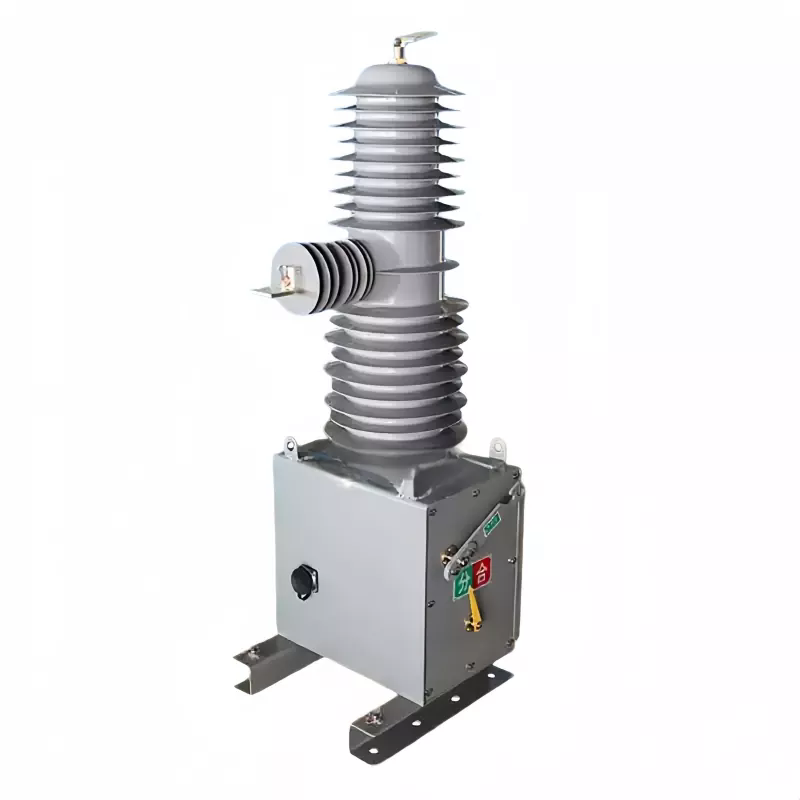
1. Overview of 33kV Single Pole Outdoor Circuit Breaker
A 33kV single pole outdoor circuit breaker is a high-voltage switching device used primarily in medium-voltage power distribution networks.
It is designed to operate under outdoor environmental conditions such as rain, dust, temperature variations, and humidity.
Unlike multi-pole breakers, a single pole configuration allows independent phase control, improving system flexibility and fault isolation accuracy.
These breakers are widely deployed in substations, industrial plants, renewable energy systems, and utility distribution grids
where reliable interruption of fault currents is essential to prevent equipment damage and system-wide outages.
2. Working Principle and Operational Mechanism
The operating principle of a 33kV outdoor circuit breaker is based on rapid arc extinction and mechanical separation of contacts when abnormal current is detected.
When a fault such as short-circuit or overload occurs, the protection relay sends a trip signal to the breaker mechanism.
The process typically includes:
-
Detection: Sensors or relays identify abnormal current levels.
-
Trip Signal: The control system activates the breaker mechanism.
-
Contact Separation: Moving and fixed contacts separate rapidly.
-
Arc Extinction: Arc is quenched using SF6 gas, vacuum interruption, or oil-based systems depending on design.
-
Isolation: Faulted section is isolated from the grid.
This fast and controlled interruption prevents cascading failures and ensures grid stability even under high fault conditions.
3. Key Structural Components
Understanding the internal structure helps operators evaluate performance and reliability. A typical 33kV single pole outdoor circuit breaker includes:
-
Interrupter Unit: Responsible for arc quenching during switching operations.
-
Insulating Housing: Provides dielectric strength and weather resistance.
-
Operating Mechanism: Spring or hydraulic system for rapid contact movement.
-
Control Cabinet: Houses protection relays and control circuitry.
-
Support Structure: Ensures mechanical stability in outdoor environments.
4. Key Advantages in Outdoor Power Systems
The adoption of 33kV single pole outdoor circuit breakers brings significant operational benefits, especially in harsh environments and complex distribution systems.
-
High Reliability: Designed for long-term stable operation under severe weather conditions.
-
Independent Phase Control: Enables selective fault isolation per phase.
-
Reduced Downtime: Quick fault clearance minimizes system interruption.
-
Enhanced Safety: Protects personnel and equipment from electrical hazards.
-
Low Maintenance Requirement: Modern designs reduce mechanical wear and servicing frequency.
5. Common Application Scenarios
These circuit breakers are widely used across multiple sectors where medium-voltage distribution is critical:
-
Utility substations and transmission nodes
-
Wind and solar power plants
-
Industrial manufacturing facilities
-
Mining and heavy-duty electrical systems
-
Urban and rural distribution grids
Their ability to operate reliably outdoors makes them especially suitable for decentralized and renewable energy infrastructure.
6. How to Select the Right Circuit Breaker
Choosing the correct breaker requires careful evaluation of electrical and environmental parameters. Key factors include:
-
Rated Voltage: Must match system voltage (33kV in this case).
-
Breaking Capacity: Ability to interrupt maximum fault current.
-
Insulation Level: Withstand voltage under switching and lightning conditions.
-
Environmental Conditions: Temperature, humidity, altitude, and pollution level.
-
Operational Frequency: Number of switching operations expected annually.
Incorrect selection may lead to premature failure, safety risks, and costly downtime, making technical evaluation essential before procurement.
7. Maintenance and Operational Best Practices
Even though modern 33kV breakers are designed for durability, regular maintenance ensures long-term performance and safety.
-
Periodic inspection of insulation surfaces for contamination or damage
-
Verification of mechanical operation and spring tension
-
Testing of trip and close coils
-
Monitoring of control circuit integrity
-
Cleaning of external housing to prevent tracking and flashover
Preventive maintenance significantly reduces unexpected failures and extends operational lifespan.
8. Technical Comparison Table
|
Feature
|
Single Pole Outdoor Breaker
|
Multi-Pole Breaker
|
|
Phase Control
|
Independent
|
Linked Operation
|
|
Fault Isolation
|
High Precision
|
Moderate
|
|
Installation Flexibility
|
High
|
Limited
|
|
Maintenance Complexity
|
Lower
|
Higher
|
|
System Suitability
|
Distributed Networks
|
Compact Systems
|
9. Frequently Asked Questions
Q1: What is the main purpose of a 33kV single pole outdoor circuit breaker?
It is used to protect medium-voltage power systems by isolating faults and preventing damage to electrical equipment.
Q2: Can it operate in extreme weather conditions?
Yes, it is specifically designed for outdoor environments including rain, wind, dust, and temperature fluctuations.
Q3: What arc extinguishing technology is commonly used?
Depending on design, vacuum interruption or SF6 gas insulation is commonly used for arc quenching.
Q4: How often should maintenance be performed?
Typically, routine inspections are recommended annually, with detailed servicing depending on operational load.
Q5: Is it suitable for renewable energy systems?
Yes, it is widely used in wind and solar farms due to its reliability and outdoor adaptability.
Conclusion
The 33kV single pole outdoor circuit breaker plays a vital role in ensuring stability, safety, and efficiency in modern power distribution systems.
Its ability to isolate faults quickly, operate under harsh conditions, and provide independent phase control makes it a preferred choice for utilities and industrial operators.
Proper selection, installation, and maintenance further enhance system reliability and operational lifespan.
For high-quality engineered solutions and technical support in medium-voltage switching equipment, Anqiang Power provides advanced products designed for reliability and performance.
For inquiries and technical consultation, contact us today to discuss your project requirements and customized solutions.