

How Does a 36kV Indoor High Voltage Circuit Breaker Improve Power Distribution Safety?
2026-08-26
Article Summary: Reliable medium-voltage protection is essential for substations, industrial plants, power generation facilities, mining operations, and large commercial electrical systems. A properly selected 36kV Indoor High Voltage Circuit Breaker can provide dependable switching, rapid fault interruption, strong dielectric performance, and long-term operational stability. This article explains how this type of vacuum circuit breaker works, what technical characteristics matter most, how it addresses common power-distribution challenges, and how to select a configuration that matches an actual switchgear application. It also examines installation, maintenance, customization, and practical selection considerations for engineers, electrical contractors, equipment integrators, and facility operators.
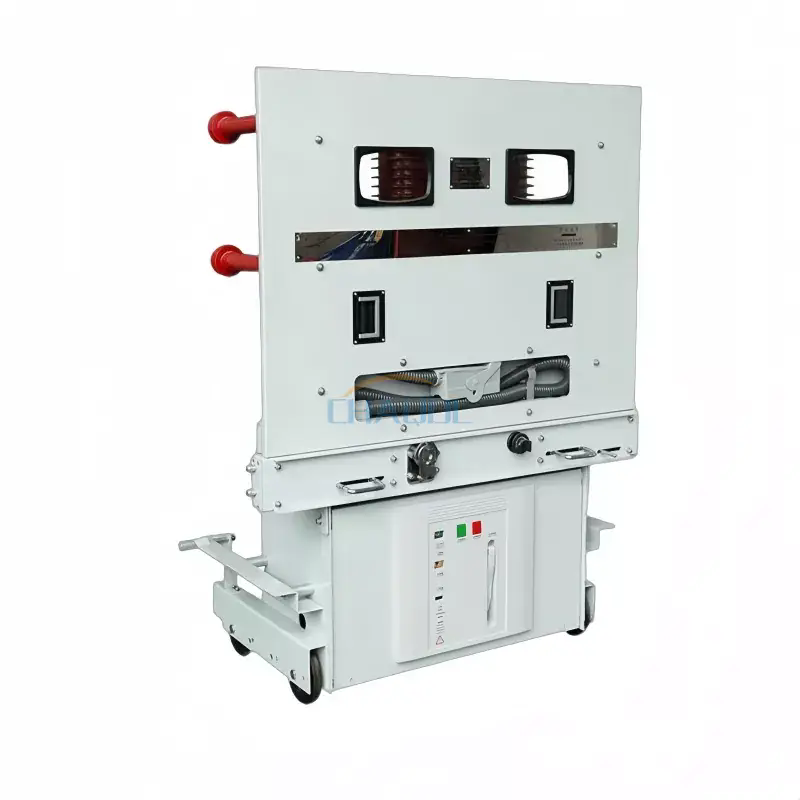
Table of Contents
- 1. What Is a 36kV Indoor High Voltage Circuit Breaker?
- 2. How Does the Circuit Breaker Work?
- 3. How Does It Protect a Medium-Voltage Network?
- 4. What Features Matter Most?
- 5. Which Technical Parameters Should Be Evaluated?
- 6. Where Is It Commonly Used?
- 7. How Can You Select the Right Configuration?
- 8. What Should Be Considered During Installation?
- 9. How Can Maintenance Improve Service Reliability?
- 10. What Are the Main Operational Benefits?
- 11. What Should Buyers Compare Before Purchasing?
- 12. Frequently Asked Questions
- 13. Conclusion
Article Outline
- Product fundamentals: Definition, construction, and operating purpose of a 36kV indoor vacuum circuit breaker.
- Electrical protection: How vacuum interruption and switching mechanisms respond to normal and fault conditions.
- Technical selection: Voltage, current, breaking capacity, withstand voltage, operating sequence, and mechanical life.
- Application planning: Suitability for substations, industrial facilities, power plants, mining, petrochemical sites, and switchgear.
- Lifecycle management: Installation, commissioning, inspection, maintenance, and configuration matching.
- Purchasing guidance: Practical factors that help buyers avoid compatibility, reliability, and maintenance problems.
1. What Is a 36kV Indoor High Voltage Circuit Breaker?
A 36kV Indoor High Voltage Circuit Breaker is a medium-voltage switching and protection device designed to control electrical circuits in indoor power distribution systems. Its primary role is to connect and disconnect circuits under normal operating conditions while also interrupting abnormal currents when an overload or short circuit occurs.
Unlike a simple isolating device, a circuit breaker must be capable of safely interrupting substantial fault current. This makes its interruption technology, operating mechanism, insulation system, contact structure, and mechanical transmission system critical to the overall reliability of a switchgear assembly.
Modern 36kV-class indoor breakers commonly use vacuum interrupters. The interruption chamber operates in a vacuum environment, allowing the electrical arc generated when contacts separate to extinguish rapidly. This design avoids the need for insulating oil or SF6 gas inside the interruption chamber and can provide a compact solution for medium-voltage applications.
Anqiang develops the ZN85-40.5 model for three-phase AC 50Hz systems. The product is designed for integration with fixed or withdrawable switchgear configurations, including KYN61-40.5-type arrangements. Its vertical structure is intended to reduce installation depth while maintaining mechanical stability.
For system designers, the key point is that the breaker should not be evaluated as an isolated component. Its electrical ratings, physical dimensions, control circuit, operating mechanism, auxiliary contacts, and switchgear interface all need to match the complete distribution system.
2. How Does the Circuit Breaker Work?
The operating process of a vacuum circuit breaker can be understood through several coordinated stages. Although the sequence is fast, each stage must function correctly for the equipment to interrupt a fault safely.
- Protection system detects an abnormal condition. A relay or associated protection system identifies an overcurrent, short circuit, or other predefined fault condition.
- The trip command is issued. The control circuit activates the circuit breaker's opening mechanism.
- Contacts separate. The moving contact is rapidly separated from the fixed contact inside the vacuum interrupter.
- The arc is controlled inside the vacuum interrupter. The vacuum environment supports rapid arc extinction as current approaches its natural zero.
- Insulation recovers. After interruption, the gap between the contacts regains dielectric strength so that the fault current cannot re-establish.
- The circuit remains open. The breaker isolates the affected circuit until the fault has been investigated and the system is ready for restoration.
During normal operation, the same mechanism can be used to open and close circuits intentionally. This is particularly important in systems that require regular switching for load management, maintenance, feeder transfer, or operational control.
The spring operating mechanism is another important part of the process. It stores mechanical energy and releases it rapidly when the breaker receives an opening or closing command. A stable transmission system helps ensure that the contacts move with the required speed and consistency.
In the Anqiang design, energy storage can be performed electrically or manually, providing flexibility for different control arrangements and operating environments.
3. How Does It Protect a Medium-Voltage Network?
The main customer concern with medium-voltage equipment is not simply whether the breaker can open. The more important question is whether it can interrupt a dangerous fault quickly and reliably without creating additional damage to the switchgear or surrounding equipment.
A properly specified 36kV breaker contributes to system protection in several ways.
- Short-circuit interruption: It interrupts high fault currents before the fault can continue damaging cables, transformers, busbars, motors, or other equipment.
- Overload protection coordination: When coordinated with the protection relay, the breaker can disconnect an affected circuit according to the designed protection scheme.
- Controlled switching: Operators can disconnect feeders and equipment for planned maintenance or operational changes.
- Equipment isolation: The breaker provides a controllable interruption point within the distribution system.
- System continuity: Selective fault clearing can help keep unaffected sections energized when the protection architecture is correctly engineered.
The breaker's interrupting capability must always be considered together with the prospective short-circuit current at the installation point. Selecting a breaker based only on nominal system voltage is not sufficient.
For example, a 36kV-class system with a high available fault current may require a different breaker configuration from a system with a significantly lower fault level. The rated short-circuit breaking current, making current, short-time withstand current, and peak withstand current therefore deserve careful review before procurement.
4. What Features Matter Most?
When selecting a 36kV Indoor High Voltage Circuit Breaker, buyers often focus on rated voltage and current first. These values are important, but they do not tell the entire story. Mechanical reliability, interruption performance, installation dimensions, operating life, and maintenance requirements can have an equally significant effect on lifecycle performance.
| Feature | Why It Matters | Customer Benefit |
|---|---|---|
| Vacuum interruption | Supports rapid arc extinction and dielectric recovery | Reliable fault interruption with reduced maintenance requirements |
| Compact vertical structure | Reduces the installation depth required by the breaker assembly | More practical switchgear integration |
| Spring operating mechanism | Provides controlled mechanical energy for opening and closing | Consistent operation and flexible control |
| Long mechanical life | Supports repeated switching cycles | Lower replacement frequency |
| Stable transmission system | Maintains coordinated contact movement | Improved operational consistency |
| Multiple current ratings | Allows selection according to system load requirements | Better technical and economic matching |
For installations where space is limited, compact construction can be particularly valuable. Retrofitting an existing switchgear lineup can become difficult if a replacement breaker has significantly different dimensions or connection arrangements. Confirming mechanical compatibility before ordering can prevent costly modification work later.
5. Which Technical Parameters Should Be Evaluated?
Technical specifications should be reviewed as a complete group rather than as isolated numbers. The following parameters are especially important when evaluating a 36kV-class indoor breaker.
| Parameter | Example Rating | Selection Consideration |
|---|---|---|
| Rated voltage | 36 / 40.5 kV | Must correspond to the system and equipment insulation level |
| Rated frequency | 50 Hz | Verify compatibility with the local power system |
| Rated current | 1250 / 1600 / 2000 A | Select according to continuous load and system design |
| Short-circuit breaking current | 25 / 31.5 kA | Must exceed the calculated prospective fault current |
| Peak withstand / making current | 63 / 80 kA | Important for mechanical and thermal stress during faults |
| Short-circuit duration | 4 s | Should align with system protection and withstand requirements |
| Power-frequency withstand voltage | 95 kV for 1 minute | Provides an indication of insulation withstand capability |
| Lightning impulse withstand voltage | 185 kV | Important for insulation coordination |
| Mechanical life | Up to 10,000 operations | Useful for applications requiring frequent switching |
The technical values above represent the published configuration of the Anqiang ZN85-40.5 model. Actual project selection should be based on the complete electrical single-line diagram, fault-level calculation, switchgear arrangement, environmental conditions, and applicable project specifications.
6. Where Is It Commonly Used?
A 36kV Indoor High Voltage Circuit Breaker is suitable for applications where medium-voltage electrical circuits require dependable switching and protection inside an enclosed electrical installation.
- Electrical substations: Used for feeder, transformer, bus-section, and other medium-voltage switching functions.
- Power generation plants: Helps control and protect medium-voltage distribution circuits.
- Industrial manufacturing: Supports reliable distribution for motors, production equipment, transformers, and process systems.
- Mining facilities: Provides switching and fault interruption in demanding distribution networks.
- Petrochemical facilities: Can be integrated into appropriate indoor medium-voltage switchgear systems.
- Commercial infrastructure: Suitable for large facilities with substantial medium-voltage electrical loads.
- Utility distribution: Can serve as part of indoor medium-voltage distribution and control equipment.
The correct application depends on the complete system design. Indoor installation does not eliminate the need to consider ambient temperature, humidity, altitude, pollution level, ventilation, enclosure design, and access requirements.
7. How Can You Select the Right Configuration?
Choosing a breaker by voltage alone is one of the most common purchasing mistakes. A more reliable selection process starts with the electrical system and works toward the equipment configuration.
- Confirm the system voltage. Establish the nominal and maximum operating voltage of the network.
- Determine continuous current. Review the maximum expected load rather than selecting solely from today's operating current.
- Calculate prospective fault current. The breaker must have adequate short-circuit interruption capability for the installation point.
- Check insulation requirements. Review power-frequency and lightning impulse withstand requirements as part of the insulation coordination study.
- Confirm switchgear dimensions. Compare mounting dimensions, primary connections, control wiring, and mechanical interfaces.
- Review operating frequency. If the application involves frequent switching, mechanical and electrical endurance become more important.
- Specify control requirements. Determine whether electrical spring charging, manual operation, auxiliary contacts, trip coils, closing coils, or other accessories are required.
- Consider future requirements. Expansion plans, additional feeders, load growth, and retrofit requirements should be considered before finalizing the configuration.
This approach reduces the risk of purchasing a breaker that has an apparently suitable voltage rating but cannot meet the project's fault level, physical interface, or control requirements.
8. What Should Be Considered During Installation?
Correct installation is essential because even a technically capable circuit breaker can perform poorly if it is improperly aligned, incorrectly wired, or installed in an incompatible switchgear compartment.
Before installation, engineers should verify:
- Switchgear compartment dimensions
- Primary conductor and terminal arrangement
- Breaker insertion and withdrawal clearances
- Grounding and bonding requirements
- Control power voltage
- Trip and closing circuit wiring
- Auxiliary contact configuration
- Mechanical interlock requirements
- Protection relay coordination
- Insulation clearances and creepage requirements
- Environmental conditions within the switchgear room
Commissioning should include visual inspection, mechanical operation checks, electrical control verification, insulation-related tests appropriate to the project, and functional confirmation of the protection and interlocking system.
For retrofit projects, dimensional compatibility deserves particular attention. A breaker that is electrically suitable may still require modifications if its mounting arrangement, primary contact position, secondary plug, or operating interface differs from the original equipment.
9. How Can Maintenance Improve Service Reliability?
Vacuum circuit breakers generally require less routine maintenance than many older interruption technologies, but “low maintenance” should never be interpreted as “no inspection.” Preventive maintenance remains important for equipment that performs critical switching and fault interruption.
A practical maintenance program can include the following:
| Inspection Area | What to Check | Purpose |
|---|---|---|
| Mechanical mechanism | Operating movement, abnormal noise, mechanical condition | Maintain consistent opening and closing performance |
| Electrical connections | Terminal condition, control wiring, connection security | Prevent control failures and overheating |
| Insulation system | Cleanliness, contamination, damage, moisture | Preserve dielectric performance |
| Operating records | Number of operations and fault events | Support lifecycle management |
| Switchgear interface | Interlocks, insertion position, primary contacts | Maintain safe integration |
Maintenance intervals should be established according to manufacturer recommendations, operating environment, switching frequency, fault history, local regulations, and the criticality of the installation.
The published Anqiang configuration is designed for a mechanical life of up to 10,000 operations. Recording actual operating cycles helps maintenance teams determine when inspection or service should be prioritized.
10. What Are the Main Operational Benefits?
The value of a modern 36kV indoor breaker is best measured by how effectively it addresses real operational problems.
Compact Installation
Space inside medium-voltage switchgear rooms can be expensive. A compact vertical structure can reduce installation depth and simplify equipment arrangement, particularly where existing switchgear dimensions place tight limits on available space.
Reduced Maintenance Demand
A sealed vacuum interrupter does not require routine replacement of insulating oil or management of SF6 gas within the interruption chamber. Combined with an optimized spring mechanism, this can reduce routine maintenance requirements.
Reliable Fault Interruption
High short-circuit interruption capability is essential for protecting valuable electrical assets. Rapid interruption helps limit the duration of fault stress on conductors, transformers, busbars, and connected equipment.
Suitable for Frequent Switching
Some industrial and utility applications require more than occasional emergency interruption. A breaker with a suitable mechanical endurance rating can support repeated switching without requiring premature replacement.
Lower Lifecycle Burden
Long service life, compact construction, reduced maintenance requirements, and reliable operation can contribute to lower total ownership costs over the equipment's operating period.
However, these benefits depend on correct specification and system integration. The most advanced breaker cannot compensate for incorrect fault-level calculations, unsuitable switchgear interfaces, poor installation practices, or inadequate protection coordination.
11. What Should Buyers Compare Before Purchasing?
When evaluating several suppliers, procurement teams should look beyond unit price. A technically unsuitable breaker can generate additional engineering, modification, commissioning, downtime, and maintenance costs after delivery.
| Buying Factor | Questions to Ask |
|---|---|
| Electrical rating | Does the voltage, continuous current, and breaking capacity match the system? |
| Mechanical compatibility | Will the breaker fit the existing or planned switchgear? |
| Control compatibility | Are control voltage, auxiliary contacts, trip circuits, and closing circuits compatible? |
| Testing | What factory inspection and testing procedures are available? |
| Customization | Can the manufacturer adapt dimensions, ratings, accessories, or switchgear interfaces? |
| Technical support | Can the supplier provide engineering assistance for installation and integration? |
| After-sales service | Is documentation and technical support available throughout the equipment lifecycle? |
Anqiang provides OEM and customized configuration options for different rated currents, operating requirements, installation dimensions, auxiliary contacts, and switchgear matching requirements. This can be particularly useful for equipment manufacturers, EPC contractors, replacement projects, and customized distribution systems.
12. Frequently Asked Questions
What is a 36kV Indoor High Voltage Circuit Breaker used for?
It is used to control and protect medium-voltage electrical circuits by switching normal load current and interrupting overload or short-circuit current. Typical applications include substations, power plants, industrial facilities, mining operations, petrochemical installations, commercial infrastructure, and indoor medium-voltage switchgear.
Why is a vacuum interrupter used in this type of circuit breaker?
A vacuum interrupter supports rapid arc extinction and fast dielectric recovery when the contacts separate. It also eliminates the need for insulating oil or SF6 gas inside the interruption chamber, which can simplify maintenance and contribute to a compact equipment design.
What rated current options are available?
The referenced Anqiang ZN85-40.5 configuration provides rated current options of 1250A, 1600A, and 2000A. The correct rating should be selected according to the continuous load, system design, thermal requirements, and future operating conditions.
What is the short-circuit breaking capacity?
The published configuration provides short-circuit breaking current options of 25kA and 31.5kA. The required value should be determined from the prospective fault current at the installation point and the protection design.
Can this breaker be used in existing switchgear?
It can be suitable for retrofit or replacement applications when the electrical and mechanical interfaces are compatible. Before ordering, engineers should confirm mounting dimensions, primary connections, secondary control connections, interlocks, and switchgear compartment requirements.
Is the circuit breaker suitable for frequent switching?
Yes. The design is intended to support frequent switching applications, and the published mechanical life is up to 10,000 operating cycles. Actual suitability depends on the switching duty, electrical load, fault history, and application conditions.
What should be checked before installation?
Engineers should verify voltage, current, fault level, insulation requirements, switchgear dimensions, primary connections, control power, auxiliary contacts, interlocks, grounding, environmental conditions, and protection coordination before installation.
Can Anqiang provide customized configurations?
Yes. Anqiang supports OEM and customized configurations according to project requirements. Options may include different current ratings, operating specifications, mounting dimensions, auxiliary contacts, control accessories, and switchgear integration requirements.
Does a vacuum circuit breaker require no maintenance?
No. Vacuum circuit breakers generally require less routine maintenance than many traditional interruption technologies, but inspection and functional testing remain important. Mechanical mechanisms, control circuits, electrical connections, insulation surfaces, interlocks, and operating records should be managed according to the application and manufacturer's recommendations.
What standards should be considered?
The breaker should be selected and tested according to the applicable medium-voltage circuit-breaker standards, project specifications, local electrical regulations, and required certification framework. The exact requirements should be confirmed before procurement because standards and project specifications can vary by market and application.
13. Conclusion
A 36kV Indoor High Voltage Circuit Breaker is a critical component of a medium-voltage protection and distribution system. Its value is not limited to opening a circuit during a fault. A well-engineered breaker must provide dependable interruption, stable mechanical operation, adequate insulation performance, suitable current and short-circuit ratings, and reliable integration with the surrounding switchgear.
For customers, the most important selection principle is to evaluate the breaker against the complete electrical application rather than choosing according to voltage rating or purchase price alone. System fault level, continuous load, switching duty, insulation coordination, installation dimensions, control requirements, maintenance expectations, and future expansion should all be considered.
The Anqiang ZN85-40.5 solution combines vacuum interruption technology, a compact vertical structure, a spring operating mechanism, multiple current ratings, and a mechanical life of up to 10,000 operations. Its configuration options also make it suitable for different medium-voltage switchgear and project requirements.
Whether you are planning a new substation, upgrading industrial distribution equipment, replacing an existing breaker, or developing customized medium-voltage switchgear, selecting the right technical configuration at the beginning can reduce installation difficulties and long-term operating risks.
Looking for a reliable 36kV Indoor High Voltage Circuit Breaker for your next power distribution project?
Anqiang can provide technical consultation, OEM configurations, customized switchgear matching, and project-oriented solutions. Share your voltage, current, short-circuit level, switchgear model, installation dimensions, and control requirements with our team to determine a suitable configuration.
Contact Anqiang today to discuss your requirements and contact us for a customized 36kV Indoor High Voltage Circuit Breaker solution.
