

How Does a Fiber Optic Gyroscope Improve High-Precision Navigation Performance?
2025-12-10
A Fiber Optic Gyroscope (FOG) is a high-precision angular velocity sensor that utilizes the Sagnac effect to measure rotation. Unlike mechanical gyroscopes, it contains no moving parts, ensuring exceptional stability, long-term reliability, and resistance to environmental disturbances. Because of its high accuracy, low noise, and outstanding durability, a FOG has become indispensable in aerospace navigation, autonomous vehicles, robotics, defense stabilization platforms, marine systems, and surveying instruments where dependable rotational sensing is mission-critical.
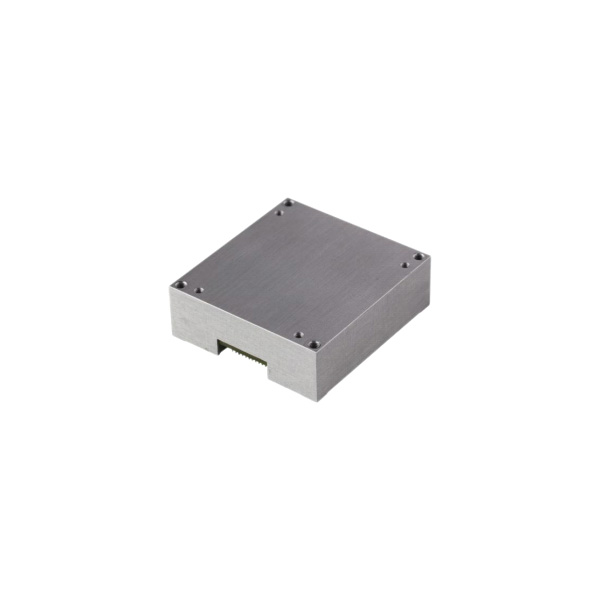
Below is a representative specification table showcasing typical Fiber Optic Gyroscope parameters offered by advanced manufacturers:
Representative Fiber Optic Gyroscope Technical Parameters
| Parameter Category | Technical Specification |
|---|---|
| Bias Stability | 0.001 – 0.1 °/h (depending on model grade) |
| Scale Factor Repeatability | ≤ 10 ppm |
| Random Walk (ARW) | 0.001–0.01 °/√h |
| Input Range | ±300 °/s typical |
| Bandwidth | 100–500 Hz optional |
| Startup Time | < 1 second |
| Operating Temperature | –40°C to +70°C |
| Vibration Resistance | Up to 10 g RMS |
| Dimensions | 20–50 mm customized |
| Weight | 20–150 grams |
| Power Consumption | 0.5–2 W |
These specifications illustrate the performance consistency, environmental adaptability, and integration flexibility that define modern fiber optic gyroscope solutions.
How Does a Fiber Optic Gyroscope Work and Why Does It Deliver Exceptional Accuracy?
The Fiber Optic Gyroscope relies on the interference of light traveling in opposite directions within a long, coiled fiber. When rotation occurs, the two beams experience a phase shift due to the Sagnac effect, and this shift is translated into angular velocity. This approach eliminates friction, mechanical drift, and structural fatigue commonly found in traditional gyroscopes.
Key Advantages of Fiber Optic Gyroscopes
1. No Moving Parts – Eliminates Mechanical Wear
The optical path ensures longevity, stable output, and minimal drift over time.
2. High Bias Stability – Ideal for Precision Navigation
The absence of mechanical components allows FOGs to maintain high accuracy, even in long-duration missions.
3. Strong Environmental Adaptability
FOGs function reliably in:
-
High vibration environments
-
Extreme temperatures
-
High-shock military conditions
-
Magnetic interference zones
This ensures reliable performance in aerospace, missiles, drones, robotics, and marine vessels.
4. Fast Start-Up and High Sampling Rate
The response time is nearly instantaneous, enabling high-speed platforms—such as unmanned aerial vehicles and guided systems—to achieve real-time orientation sensing.
5. Long Service Life and Low Maintenance
Because light is the sensing medium, maintenance demands remain extremely low, keeping the total cost of ownership advantageous.
How Do Fiber Optic Gyroscopes Compare to Other Navigation Gyroscope Technologies?
To understand the role of FOGs in modern navigation, it is essential to evaluate their performance relative to competing gyroscope technologies, such as MEMS gyroscopes and mechanical gyroscopes.
Fiber Optic Gyroscope vs MEMS Gyroscope
| Feature | Fiber Optic Gyroscope | MEMS Gyroscope |
|---|---|---|
| Accuracy | Very high (tactical, navigation, strategic grades) | Low to medium |
| Bias Stability | Excellent | Moderate |
| Sensitivity | Extremely strong | Lower |
| Cost | Higher | Low |
| Durability | Very high | High but less stable under drift |
| Applications | Aerospace, defense, surveying, high-end robotics | Consumer devices, automotive sensors |
Fiber Optic Gyroscope vs Mechanical Gyroscope
| Feature | Fiber Optic Gyroscope | Mechanical Gyroscope |
|---|---|---|
| Moving Parts | None | Yes |
| Maintenance | Very low | High |
| Start-Up Time | Instant | Longer |
| Long-Term Stability | Excellent | Moderate |
| Environmental Resistance | Strong | Vulnerable to shocks and vibrations |
These comparisons explain why FOGs are increasingly chosen for applications requiring long-term accuracy and operational resilience.
How Will Fiber Optic Gyroscopes Shape the Future of Navigation and Intelligent Systems?
Next-generation navigation technologies continue to demand higher accuracy, faster computational capability, and increased environmental robustness. Fiber Optic Gyroscopes are evolving to meet these expanding requirements.
Future Trends in Fiber Optic Gyroscope Technology
1. Miniaturization Without Performance Compromise
Advancements in fiber winding technology and integrated optical circuits are leading to compact FOGs suitable for micro-robotics, portable mapping systems, and compact UAVs.
2. Improved Temperature Compensation
Enhanced digital signal processing and materials engineering are enabling better stability at extreme temperatures for aerospace and Arctic/Antarctic exploration.
3. Ultra-Low Noise Fiber and Servo Technology
Higher-grade erbium-doped fiber and closed-loop designs are reducing angle random walk to unprecedented levels.
4. AI-Assisted Navigation Fusion
While FOGs provide raw rotational data, the future combines FOG sensors with:
-
Visual SLAM
-
LiDAR IMU fusion
-
GNSS-denied navigation systems
Together, these systems create more reliable autonomy frameworks for defense, transportation, and space exploration.
5. Lower Power Consumption and Higher Integration
Emerging chip-scale interferometric designs reduce power requirements, enabling longer missions for battery-powered platforms.
Frequently Asked Questions
Q1: How accurate is a Fiber Optic Gyroscope compared to MEMS sensors?
A Fiber Optic Gyroscope is significantly more accurate, offering bias stability up to 0.001 °/h in strategic-grade models, while MEMS gyroscopes typically provide bias stability ranging from 1 to 100 °/h. This makes FOGs far more suitable for high-end navigation, aerospace, and precision measurement applications.
Q2: What factors influence FOG performance in real-world applications?
Several factors affect FOG performance, including fiber coil quality, thermal compensation algorithms, optical source stability, mechanical isolation, and the quality of the signal processing electronics. Systems with optimized servo control and low-noise photodetectors typically achieve superior accuracy.
Conclusion: How Can Jioptik’s Fiber Optic Gyroscopes Support Advanced Navigation Needs?
Fiber Optic Gyroscopes continue to redefine navigation reliability and measurement precision across global industries. Their combination of long-term stability, environmental resilience, high sensitivity, and maintenance-free design makes them essential components in aerospace systems, unmanned platforms, marine navigation, and high-end industrial automation.
Jioptik provides advanced Fiber Optic Gyroscopes with professional-grade performance, robust engineering, and tailored integration support for demanding applications. With strong technical capabilities and dependable manufacturing processes, Jioptik ensures exceptional product longevity and operational accuracy suited for tactical, navigation, and strategic-grade requirements.
For specification inquiries, system integration support, or custom model development, contact us to discuss solutions that best match your navigation and sensing projects.