

Reliable switching is essential in medium-voltage power distribution. Industrial facilities, commercial buildings, utility networks, renewable energy installations, and distribution systems all need equipment that can isolate circuits, control loads, and support maintenance without creating unnecessary operational risk. A Gas Load Break Switch is designed to perform load switching and circuit isolation within an appropriately engineered medium-voltage system.
For electrical engineers, system integrators, contractors, and equipment purchasers, selecting a suitable load break switch involves much more than checking the rated voltage. Interrupting capability, insulation level, operating mechanism, enclosure configuration, installation environment, safety requirements, and system architecture all need to be considered. This guide explains the working principle, major benefits, applications, selection criteria, installation considerations, and common questions surrounding gas load break switches.
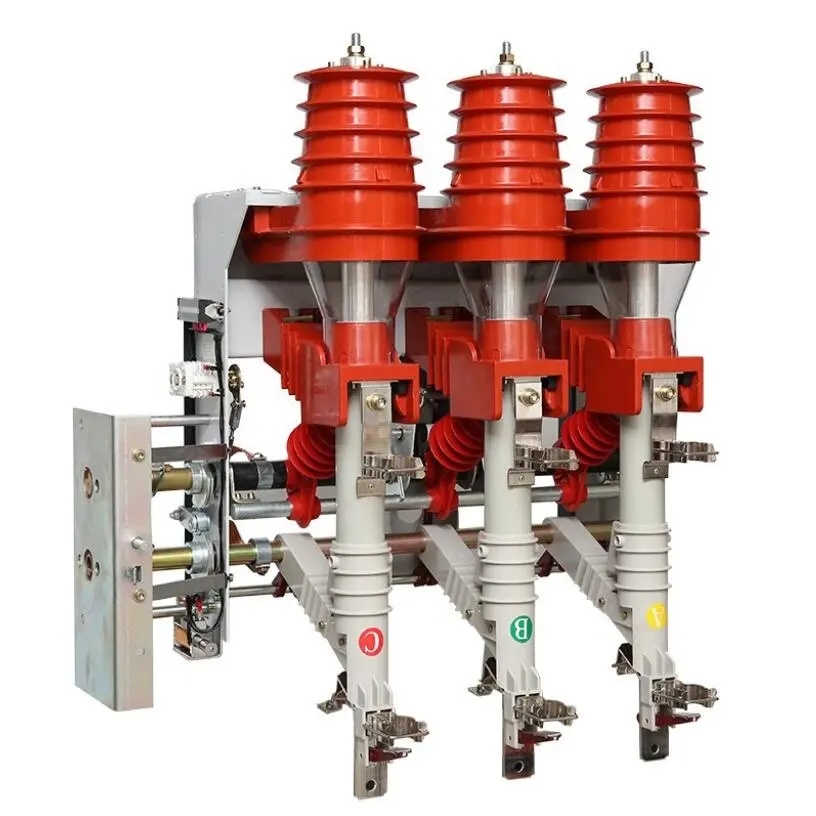
1. Understanding a Gas Load Break Switch
A gas load break switch is a medium-voltage switching device designed to open, close, and isolate electrical circuits under specified load conditions. Depending on its design, the switching chamber may use an insulating gas medium to provide electrical insulation and assist with arc control during switching.
The device is commonly integrated into medium-voltage switchgear, ring main units, distribution equipment, transformer protection systems, and other electrical assemblies. Its exact capabilities depend on the manufacturer's design and the applicable product standard.
Gas insulation can allow compact equipment construction because the dielectric medium occupies a controlled enclosed space. This can be particularly useful where electrical equipment must fit into substations, compact distribution rooms, prefabricated switchgear, or other locations with limited installation space.
2. How a Gas Load Break Switch Works
The operating principle combines mechanical switching action with controlled electrical insulation and arc management. When the switch receives an operating command, its contacts move between the closed and open positions according to the mechanism and switching sequence defined by the product design.
Closed Position
In the closed state, the switch provides a conductive path for the connected circuit. The contact system is designed to carry the specified continuous current while maintaining electrical and mechanical stability.
Opening Under Load
When the switch opens under an allowable load condition, an electrical arc can form as the contacts separate. The switching chamber and its gas insulation system are designed to control the electrical field and assist in managing the arc according to the equipment's rated operating conditions.
Open and Isolated Position
After the switching operation is completed, the open position creates the required electrical separation between circuit sections. Visible isolation is not necessarily provided by every enclosed switch design, so users must follow the manufacturer's indication system and applicable safety procedures.
Operating Mechanism
The mechanism may be manually operated, motor operated, or integrated with remote-control equipment depending on the system configuration. Spring mechanisms and interlocking arrangements may be used to provide controlled switching sequences.
For automated distribution networks, remote operation can reduce the need for personnel to approach electrical equipment during routine switching. However, remote control does not eliminate the need for appropriate protection, interlocking, isolation, grounding, and site safety procedures.
3. Key Benefits in Medium-Voltage Systems
Reliable Load Switching
A properly rated load break switch allows operators to connect or disconnect sections of a medium-voltage system under its specified load conditions. This can simplify routine network operation and maintenance planning.
Compact Equipment Design
Gas-insulated switching equipment can offer a compact alternative to some conventional air-insulated arrangements. Reduced equipment footprint can be valuable in urban substations, indoor electrical rooms, industrial plants, and packaged distribution systems.
Improved Environmental Protection
An enclosed switching chamber can protect internal components from external contamination, dust, humidity, and other environmental influences. The actual protection level depends on the enclosure and system design, so the equipment's specified environmental rating should always be checked.
Operational Flexibility
Gas load break switches can be incorporated into various distribution configurations. They may support sectionalizing, transformer feeder switching, ring network arrangements, and other medium-voltage applications when correctly engineered.
Support for Remote Operation
When equipped with a suitable motorized mechanism and control interface, the switch can become part of an automated distribution system. This can improve operational flexibility and help utilities or industrial users respond more efficiently to switching requirements.
| Benefit | Practical Value | Key Requirement |
|---|---|---|
| Load switching | Supports routine connection and disconnection | Stay within rated switching capability |
| Compact construction | Helps optimize installation space | Verify enclosure and installation requirements |
| Enclosed insulation system | Helps protect internal switching components | Maintain specified gas and enclosure conditions |
| Remote operation | Supports automated distribution management | Compatible motor and control system required |
| Network sectionalizing | Allows portions of a system to be isolated | Correct system protection and interlocking |
4. Typical Industrial Applications
Gas load break switches can serve many medium-voltage applications. The appropriate configuration depends on voltage level, current, network topology, load type, fault protection arrangement, and environmental conditions.
Distribution Networks
Distribution networks frequently require sectionalizing equipment to isolate specific portions of the network. A suitable load break switch can help operators manage normal switching operations while maintaining the required network configuration.
Ring Main Units
Ring main units use switching devices to connect and isolate feeders within medium-voltage distribution systems. Gas-insulated designs are particularly useful where compact equipment is required.
Transformer Feeders
Load break switches can be used in transformer distribution arrangements to provide switching and isolation on the medium-voltage side. The complete installation may also include fuses, circuit breakers, protection relays, or other equipment depending on transformer capacity and system design.
Industrial Plants
Manufacturing facilities often contain multiple medium-voltage loads and distribution sections. Switching equipment can help operators isolate individual sections for maintenance or operational changes.
Renewable Energy Systems
Solar farms, wind power installations, and other renewable energy projects may require medium-voltage collection and distribution equipment. Gas load break switches can be considered for appropriate switching and sectionalizing applications within these systems.
| Application | Main Requirement | Design Focus |
|---|---|---|
| Utility distribution | Reliable network switching | Rated current, voltage, insulation and coordination |
| Ring main unit | Feeder sectionalizing | Compact design and interlocking |
| Transformer feeder | Switching and isolation | Transformer rating and protection arrangement |
| Industrial plant | Maintenance isolation | Operational flexibility and safety |
| Renewable energy | Medium-voltage collection switching | Network topology and environmental conditions |
5. Important Technical Specifications
The most common purchasing mistake is selecting a gas load break switch based only on nominal voltage. Several additional specifications determine whether the equipment is appropriate for a particular installation.
Rated Voltage
The switch must be suitable for the system's nominal and highest operating voltage according to the applicable equipment specification. Insulation levels must also be compatible with the network.
Rated Normal Current
Rated current indicates the continuous current the equipment is designed to carry under specified conditions. The expected operating load and temperature conditions should be considered when determining suitability.
Load-Breaking Capability
A load break switch has a defined switching capability. Buyers should verify the permissible load current, operating conditions, and switching category rather than assuming that every switch can interrupt every type of load.
Short-Time Withstand Current
Short-time withstand capability indicates the current the equipment can withstand for a specified duration under defined test conditions. This characteristic must be coordinated with the system's short-circuit level and protection scheme.
Insulation Level
Power-frequency withstand voltage and lightning impulse withstand levels are important when evaluating medium-voltage switching equipment. The required insulation level depends on the system voltage and applicable standards.
Mechanical Endurance
Mechanical endurance indicates the expected number of operating cycles under defined test conditions. Applications involving frequent switching should pay particular attention to this specification.
| Specification | Why It Matters |
|---|---|
| Rated voltage | Ensures compatibility with the medium-voltage system |
| Rated normal current | Determines continuous load-carrying capability |
| Load-breaking capacity | Defines permissible switching duty |
| Short-time withstand current | Supports coordination with system fault levels |
| Insulation level | Supports dielectric performance under specified conditions |
| Mechanical endurance | Indicates suitability for repeated operation |
6. How to Select the Right Gas Load Break Switch
A reliable selection process begins with the electrical system rather than the product catalog. Engineers should define the operating conditions first and then match the switch to those requirements.
Step 1: Identify the System Voltage
Confirm the nominal voltage, highest system voltage, frequency, and required insulation level. These parameters establish the basic electrical category of the switch.
Step 2: Calculate the Expected Load
Determine the normal operating current and consider future expansion where appropriate. The switch should not be selected so close to its rating that normal changes in system loading create unnecessary thermal or operational concerns.
Step 3: Understand the Switching Duty
Determine whether the switch will primarily be used for transformer feeders, distribution sectionalizing, motor-related circuits, capacitive loads, or another application. Different load types can impose different switching requirements.
Step 4: Check the System Fault Level
The system short-circuit level must be assessed when selecting switching equipment. A load break switch should be used within its specified withstand and switching capabilities and within a protection system designed to manage faults.
Step 5: Evaluate the Installation Environment
Consider indoor or outdoor installation, altitude, ambient temperature, humidity, pollution, enclosure requirements, and available installation space. These factors can influence equipment selection and derating.
Step 6: Determine Operating Method
Decide whether manual operation is sufficient or whether remote operation is required. Motorized mechanisms can support automation but introduce additional control and auxiliary power requirements.
7. Safety and Protection Considerations
Medium-voltage switching equipment must be treated as safety-critical electrical apparatus. Product selection should always be accompanied by a complete review of system protection, isolation, grounding, interlocking, and operating procedures.
- Use equipment within its rated voltage and current limits.
- Verify short-circuit withstand capability against the system fault level.
- Use suitable upstream and downstream protection devices.
- Provide appropriate electrical and mechanical interlocking where required.
- Confirm the isolation indication method before maintenance.
- Follow site-specific lockout and isolation procedures.
- Ensure only qualified personnel operate or service medium-voltage equipment.
- Follow the manufacturer's maintenance and safety instructions.
Gas-insulated equipment also requires attention to the condition and management of the insulating medium. Depending on the gas type and equipment design, handling, inspection, recovery, and disposal may be subject to specific environmental and safety requirements.
The exact gas specification should therefore be confirmed from the product documentation rather than assumed from the general term "gas insulated."
8. Installation and Commissioning
Correct installation is essential for maintaining the designed electrical and mechanical performance of a gas load break switch. Installation should be performed by qualified personnel according to the manufacturer's drawings, applicable standards, and site procedures.
Before Installation
- Verify the equipment nameplate against the approved electrical design.
- Check rated voltage, current, frequency, and insulation specifications.
- Inspect the enclosure and switching mechanism for transportation damage.
- Confirm mounting dimensions and cable connection arrangements.
- Check grounding requirements.
- Verify control and auxiliary circuits before energization.
During Commissioning
- Inspect all mechanical connections and operating mechanisms.
- Verify correct operation of mechanical and electrical interlocks.
- Check local and remote control functions where applicable.
- Confirm position indication matches the actual switch state.
- Perform the required electrical tests according to the applicable procedures.
- Record commissioning results and equipment identification information.
Do not energize equipment merely because the mechanical operation appears normal. Medium-voltage equipment requires appropriate electrical verification and system-level commissioning before being placed into service.
9. Maintenance and Reliability Practices
Preventive maintenance helps identify mechanical wear, insulation concerns, control faults, and environmental problems before they affect system availability.
Inspect the Operating Mechanism
Check the mechanism for abnormal resistance, unusual sounds, loose components, or signs of wear. Lubrication and service procedures should follow the manufacturer's recommendations.
Monitor the Insulation System
Where applicable, inspect gas pressure, density, alarms, and other indicators specified by the manufacturer. Any abnormal gas condition should be investigated according to the equipment service procedure.
Check Connections and Grounding
Electrical connections and grounding points should be inspected according to the maintenance schedule. Signs of overheating, corrosion, mechanical damage, or loose connections should be addressed by qualified personnel.
Maintain Accurate Records
Keep records of switching operations, inspections, fault events, maintenance work, and test results. Historical information can help identify gradual changes in equipment condition and simplify future troubleshooting.
10. Common Problems and Troubleshooting
When a gas load break switch does not operate as expected, troubleshooting should begin with the operating state, control circuit, mechanical mechanism, and equipment indications. Protection devices should never be bypassed simply to restore operation.
| Observed Problem | Possible Cause | Recommended Investigation |
|---|---|---|
| Switch does not close | Interlock active, control fault, mechanism issue | Check interlocks, control supply, and operating mechanism. |
| Switch does not open | Mechanical obstruction or control circuit problem | Follow safe isolation procedures and inspect according to the manual. |
| Position indication is abnormal | Auxiliary switch or indication mechanism fault | Compare indication with the actual mechanism state using approved procedures. |
| Gas alarm occurs | Low pressure/density or monitoring-system issue | Remove from service if required and investigate according to manufacturer instructions. |
| Remote operation fails | Control wiring, motor supply, PLC or communication problem | Check auxiliary power, control signals, interlocks, and communication circuits. |
If a fault involves insulation, gas leakage, abnormal switching behavior, or suspected internal damage, the equipment should be handled according to the manufacturer's service instructions and applicable electrical safety procedures.
11. Frequently Asked Questions
What is a Gas Load Break Switch?
It is a medium-voltage switching device designed to open and close electrical circuits under specified load conditions and provide circuit isolation according to its rated characteristics. Its switching chamber uses a gas insulation medium in designs where gas insulation is specified.
Can a Gas Load Break Switch interrupt a short circuit?
A load break switch should not be assumed to have the fault-interrupting capability of a circuit breaker. The complete system must include appropriate short-circuit protection and coordination based on the system fault level.
Where are Gas Load Break Switches commonly used?
They are commonly considered for medium-voltage distribution networks, ring main units, transformer feeders, industrial plants, substations, and suitable renewable energy distribution systems.
What specifications should be checked before purchasing?
Important specifications include rated voltage, rated current, frequency, load-breaking capability, short-time withstand current, insulation level, mechanical endurance, operating mechanism, environmental conditions, and applicable standards.
Can a Gas Load Break Switch be remotely controlled?
Some models can be equipped with motorized operating mechanisms and control interfaces for remote operation. The required auxiliary power, control wiring, interlocking, and communication arrangements must be confirmed for the specific model.
Why is gas insulation used in medium-voltage switchgear?
Gas insulation can provide controlled dielectric performance within an enclosed switching chamber and can support compact equipment construction. The specific benefits depend on the gas, pressure or density system, equipment design, and applicable operating conditions.
How often should a Gas Load Break Switch be maintained?
The maintenance interval depends on the manufacturer's instructions, operating frequency, environmental conditions, switching duty, and site requirements. Maintenance schedules should follow the specific equipment documentation.
What should be done if the gas pressure or density alarm appears?
Follow the manufacturer's operating and safety procedure immediately. Do not simply reset or ignore the alarm. Depending on the equipment design and severity, the switch may need to be removed from service and inspected by qualified personnel.
How can I select the correct switch for my project?
Start with system voltage, normal load current, fault level, switching duty, installation environment, operating method, space constraints, and required standards. Providing complete project information to the manufacturer helps determine the appropriate configuration.
Why should technical specifications be confirmed before ordering?
Medium-voltage equipment must match the electrical and mechanical characteristics of the complete distribution system. Confirming specifications in advance helps prevent incompatibility, commissioning delays, unnecessary modifications, and safety risks.
12. Final Considerations for Gas Load Break Switch Selection
A Gas Load Break Switch can provide reliable load switching and isolation within appropriately designed medium-voltage distribution systems. Its compact construction, enclosed insulation system, and potential for remote operation make it suitable for a broad range of industrial and utility applications.
The most important factor is not simply choosing a switch with a matching voltage rating. Engineers and purchasing teams should evaluate the complete application, including continuous current, switching duty, fault level, insulation requirements, operating mechanism, environmental conditions, interlocking, maintenance strategy, and system protection.
Working with an experienced manufacturer can make this process more efficient. Clear technical information allows the supplier to evaluate the application and provide equipment that is better aligned with the electrical system rather than relying on generic specifications.
SYHF provides medium-voltage electrical switching solutions for customers seeking dependable equipment for distribution and industrial applications. By discussing project voltage, current, switching requirements, installation conditions, and control needs in advance, customers can work toward a more suitable and reliable configuration.
Looking for a Reliable Gas Load Break Switch?
Selecting medium-voltage switching equipment requires careful attention to electrical ratings, operating conditions, safety requirements, and system compatibility. SYHF can support customers who need professional information about Gas Load Break Switch products and medium-voltage switching applications.
Whether your project involves a distribution network, ring main unit, transformer feeder, industrial facility, or another medium-voltage application, providing detailed technical requirements can help identify a suitable solution.
Visit the SYHF official website to learn more about the company's electrical product solutions and capabilities.
Have a specific voltage, current, switching, or installation requirement? Contact us today to discuss your project and find a Gas Load Break Switch solution suited to your medium-voltage distribution system.
Explore SYHF SolutionsTechnical note: Rated voltage, current, load-breaking capability, short-time withstand current, insulation level, operating mechanism, gas specifications, environmental limits, and applicable standards vary by product. Always consult the manufacturer's technical documentation and have medium-voltage installation, testing, commissioning, and maintenance performed by appropriately qualified personnel.
