

How Does a Hydrogen Thyratron Optimize High-Power Pulsed Systems?
2025-12-10
A Hydrogen Thyratron is a high-power gas-filled tube designed to switch extremely high voltages and currents within microseconds. It operates by using ionized hydrogen as the conducting medium, enabling rapid rise times, high repetition frequencies, and stable long-term switching performance. In modern pulsed-energy systems—such as radar transmitters, medical accelerators, industrial lasers, and scientific research equipment—the Hydrogen Thyratron remains a critical component where reliability, pulse accuracy, and durability determine overall system efficiency.
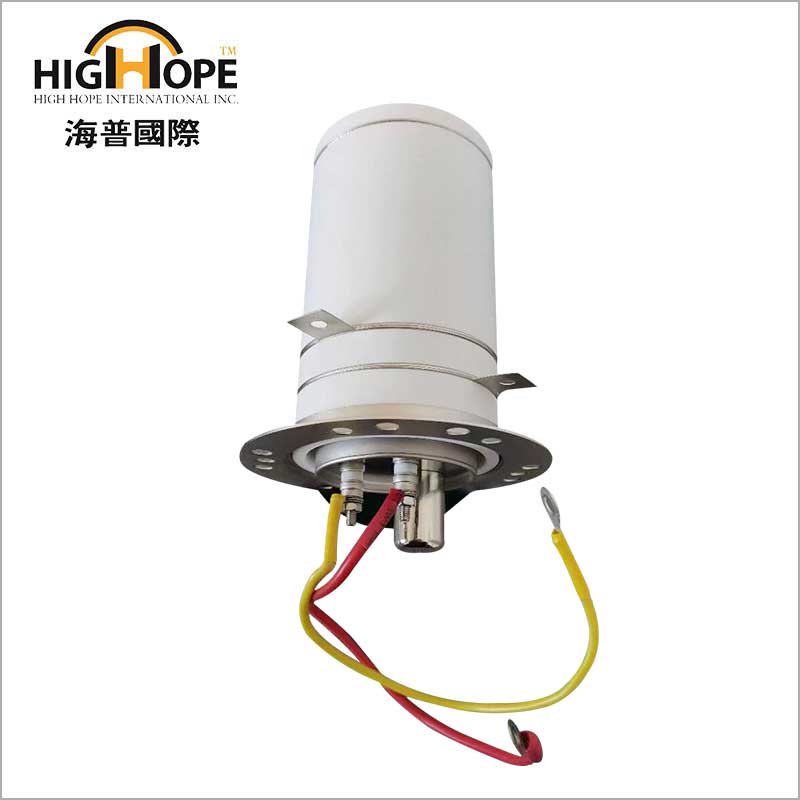
How Does a Hydrogen Thyratron Work and What Makes It Superior for High-Power Pulsed Applications?
A Hydrogen Thyratron functions as an extremely fast, high-power electrical switch. Before conduction begins, the tube remains in a non-ionized, non-conducting state. Once a triggering voltage is applied to the control grid, hydrogen gas inside the tube ionizes instantly, enabling a rapid shift from insulating to fully conductive mode. This transition—often within tens of nanoseconds—allows the device to handle megawatt-level pulses safely and consistently.
Key Functional Advantages
-
Ultra-Fast Switching:
Hydrogen ionization creates extremely fast conduction paths, maintaining consistent pulse shapes for precision applications. -
High Peak Current Capability:
The robust tube structure and dense hydrogen plasma support exceptionally high current loads without degradation. -
Stable Operation Under Repetitive Stress:
Unlike solid-state switches that may suffer from thermal stresses, the hydrogen medium naturally cools and re-stabilizes between pulses. -
Low Jitter and High Repeatability:
Critical for radar systems where pulse timing accuracy directly impacts detection range and clarity. -
Resistance to Voltage Spikes:
Gas-filled tubes inherently absorb transient surges, maintaining device protection and longevity.
Representative Technical Specifications
Below is an example of typical performance parameters for a professional-grade Hydrogen Thyratron engineered for industrial and scientific systems:
| Parameter | Typical Value |
|---|---|
| Peak Anode Voltage | 25–40 kV |
| Peak Anode Current | 10–40 kA |
| Average Anode Current | 2–5 A |
| Rise Time (10–90%) | < 40 ns |
| Pulse Repetition Frequency | 100–2000 pps |
| Gas Filling | Pure Hydrogen |
| Operating Temperature Range | −10°C to 50°C |
| Trigger Sensitivity | Low-energy grid trigger |
| Maximum Pulse Width | 2–10 μs |
| Cooling Method | Air or Forced Air |
These specifications demonstrate why Hydrogen Thyratrons remain the preferred choice for extremely demanding switching environments.
How Does a Hydrogen Thyratron Compare With Alternative High-Voltage Switches?
High-voltage pulsed systems may use various switching technologies, including solid-state switches like IGBTs, MOSFET arrays, and emerging wide-bandgap semiconductors (SiC, GaN). While these alternatives excel in compactness and efficiency, they cannot always match the unique performance attributes of Hydrogen Thyratrons in ultra-high-power environments.
Key Comparisons
Response Time
-
Hydrogen Thyratron:
Extremely short rise times (<40 ns), ideal for precision pulsed systems. -
Solid-State Switches:
Typically slower, often in the hundreds of nanoseconds to microseconds range.
Peak Current Capacity
-
Hydrogen Thyratron:
Easily handles tens of kiloamps. -
IGBT/MOSFET Arrays:
Require complex parallel configurations to reach comparable current levels, increasing design complexity.
Voltage Withstand Capability
-
Hydrogen Thyratron:
Supports 25–40 kV peak voltage with minimal risk of avalanche breakdown. -
Semiconductor Devices:
Most high-power devices remain below 10 kV, requiring voltage stacking.
Reliability Under Pulsed Stress
-
Hydrogen Thyratron:
Gas medium absorbs thermal spikes effectively. -
Semiconductors:
Highly sensitive to transient overvoltage and overcurrent events.
Maintenance
-
Hydrogen Thyratron:
Longer lifetime but eventually requires tube replacement. -
Semiconductors:
Low maintenance but potentially vulnerable to catastrophic failure during pulse overload.
How Will Hydrogen Thyratron Technology Evolve in Future High-Power Applications?
Although semiconductor devices continue advancing rapidly, Hydrogen Thyratrons remain irreplaceable in many high-power, high-precision applications. The future of Thyratrons includes significant enhancements.
Emerging Trends and Developments
1. Extended Tube Lifetime
Manufacturing advances such as improved cathode coatings and enhanced gas-purity control reduce erosion and extend operational cycles.
2. Higher Repetition Rates
Next-generation pulse-forming networks and improved grid design support repetition frequencies exceeding 3000 pulses per second.
3. More Efficient Cooling Systems
Innovations in forced-air and liquid-assisted cooling reduce thermal stress and help maintain pulse consistency.
4. Integration With Modern Control Electronics
Digital trigger controllers improve pulse synchronization and allow dynamic adjustment of switching parameters.
5. Hybrid Thyratron-Semiconductor Systems
Combining a Hydrogen Thyratron for primary switching with semiconductor stages for fine control offers a promising direction for next-generation pulsed power systems.
6. Growing Demand in Scientific & Medical Industries
Applications include:
-
Particle accelerators
-
Pulsed X-ray generators
-
Radiofrequency transmitters
-
Lithography systems
-
Plasma research
As long as extremely high peak power and ultra-fast switching are required, Hydrogen Thyratrons will remain a core technology.
How to Select the Right Hydrogen Thyratron for Industrial and Research Applications?
Choosing the correct Thyratron depends on matching system requirements with device capabilities. Several key points should guide selection.
Critical Selection Factors
1. Peak and Average Current Requirements
Systems with high peak demands—such as pulsed lasers and radar modulators—require high-current Thyratrons capable of handling repeated stress.
2. Voltage Handling
Ensure the device supports peak operating voltage plus safety margins to prevent unwanted ionization or breakdown.
3. Rise Time Requirements
Applications like medical imaging rely on sharp, clean pulses. A rise time below 40 ns is typically ideal.
4. Pulse Repetition Frequency
Systems requiring thousands of pulses per second need Thyratrons engineered for excellent heat dissipation and gas stability.
5. Trigger Sensitivity
Lower trigger thresholds improve synchronization and reduce power requirements for control circuits.
6. Cooling and Ambient Conditions
Consider airflow design, ambient temperatures, and cooling requirements to ensure stable operation.
Common Questions About Hydrogen Thyratrons
Q1: Why does a Hydrogen Thyratron require a warm-up period before operation?
A1: The warm-up period allows the internal cathode to reach optimal emission temperature. Proper warm-up ensures the hydrogen gas pressure stabilizes and the cathode surface becomes fully active, resulting in consistent triggering, minimal jitter, and reliable conduction during high-power pulses.
Q2: What causes premature failure in a Hydrogen Thyratron?
A2: Premature failure may result from excessive peak current, inadequate cooling, improper triggering, or contamination of internal hydrogen gas. Environmental factors such as vibration, insufficient warm-up, or overvoltage spikes can also accelerate wear. Selecting an appropriate Thyratron and maintaining stable operating conditions significantly extends service life.
Hydrogen Thyratrons remain indispensable in high-power, high-precision pulsed-energy systems thanks to their unmatched switching speed, high voltage and current capabilities, durable construction, and ability to maintain consistent performance across demanding applications. From radar modulators to particle accelerators and advanced medical devices, the characteristics of the Hydrogen Thyratron continue to make it the preferred solution for engineers seeking stable, fast, and reliable pulse switching.
With ongoing improvements in gas purity control, cooling efficiency, digital triggering, and hybrid system integration, the Hydrogen Thyratron is positioned for continued relevance in future high-energy technologies worldwide.
HIGHHOPE® provides advanced Hydrogen Thyratrons engineered for long life, high stability, and exceptional performance across industrial, medical, and scientific applications. For detailed specifications, system integration support, or procurement assistance, contact us to explore solutions tailored for demanding high-power pulsed systems.