Abstract
Pneumatic actuators are fundamental components in modern industrial automation systems, converting compressed air into controlled mechanical motion.
They are widely used in manufacturing, chemical processing, energy systems, and fluid control industries due to their reliability, cost efficiency, and fast response time.
This article provides a comprehensive explanation of how pneumatic actuators work, their internal structure, key types, benefits, common challenges, and selection considerations.
It also addresses practical concerns such as maintenance, performance optimization, and application suitability, helping engineers and procurement professionals make informed decisions.
1. Overview of Pneumatic Actuators
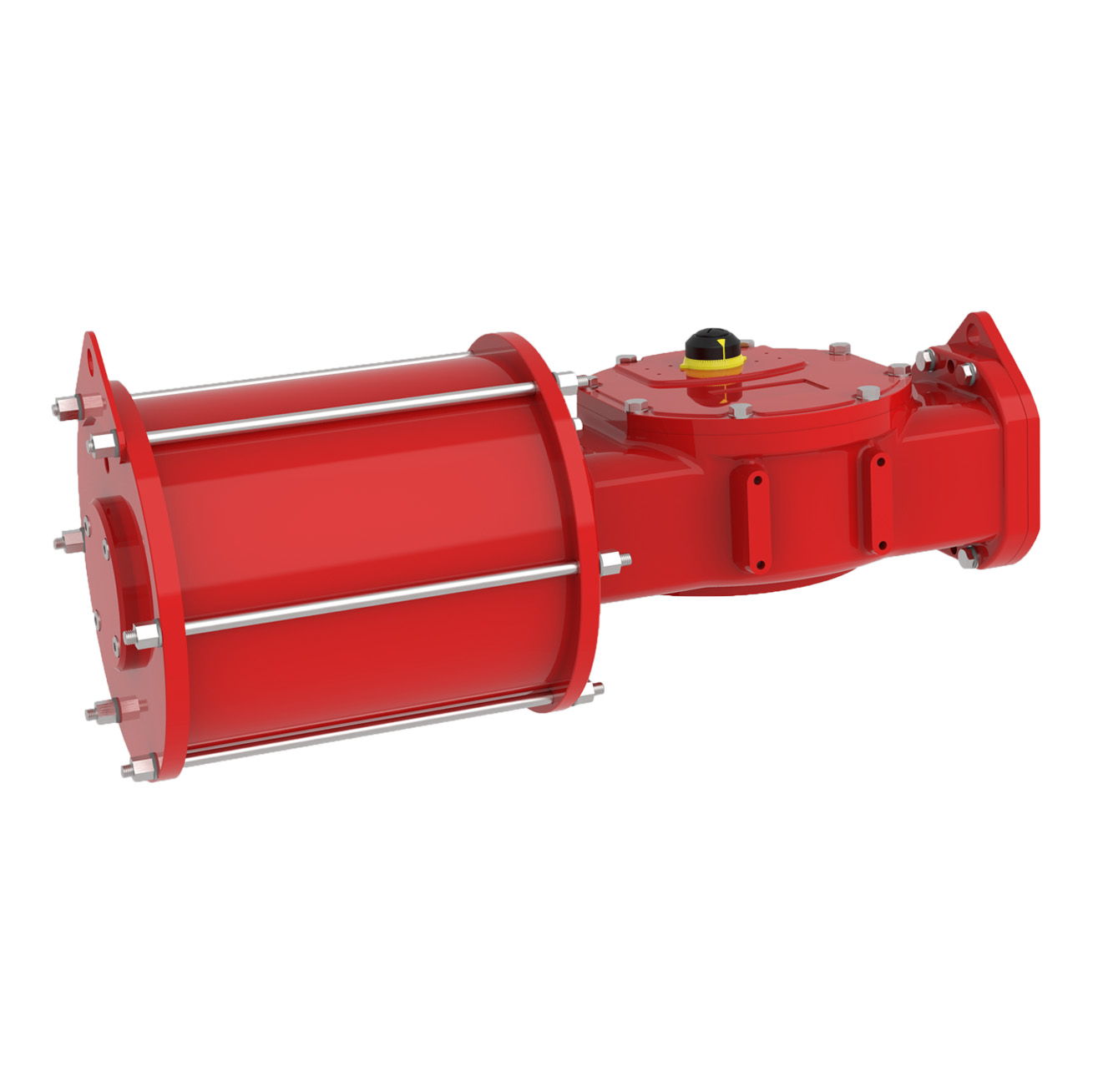
A pneumatic actuator is a mechanical device that uses compressed air to generate motion. The motion can be linear or rotational depending on the actuator design.
These devices are essential in automation systems where precise and repeatable movement is required. Compared to hydraulic or electric alternatives, pneumatic systems offer a unique balance of speed, simplicity, and safety.
In industrial environments, pneumatic actuators are often used to operate valves, control dampers, move mechanical arms, and regulate production line processes.
Their ability to operate in hazardous environments without electrical sparks makes them especially valuable in oil, gas, and chemical industries.
2. Working Principle Explained
The working principle of a pneumatic actuator is based on the conversion of compressed air energy into mechanical force. When air is supplied into a chamber, it pushes against a piston or diaphragm, creating motion.
This motion is then transferred to a valve stem, lever, or mechanical linkage depending on the application. The control of airflow direction and pressure determines the actuator’s speed, force, and direction.
Basic operation steps:
-
Compressed air enters the actuator chamber.
-
Air pressure pushes the piston or diaphragm.
-
Mechanical force is generated and transmitted.
-
Return spring or reverse air pressure resets the system.
3. Main Types of Pneumatic Actuators
Pneumatic actuators come in several configurations designed for specific motion requirements and load conditions.
-
Linear Pneumatic Actuators: Provide straight-line motion, commonly used in pressing, lifting, and clamping applications.
-
Rotary Pneumatic Actuators: Deliver rotational movement, ideal for valve control systems.
-
Single-Acting Actuators: Use air pressure in one direction and a spring return mechanism for reset.
-
Double-Acting Actuators: Use air pressure for both forward and reverse motion, offering higher control.
4. Key Components and Structure
Understanding the internal structure of pneumatic actuators is critical for troubleshooting and optimization.
|
Component
|
Function
|
|
Cylinder Body
|
Houses internal moving parts and contains compressed air
|
|
Piston
|
Converts air pressure into mechanical motion
|
|
Seals
|
Prevent air leakage and maintain pressure efficiency
|
|
Spring Mechanism
|
Returns actuator to default position in single-acting systems
|
|
Valve Port
|
Controls air intake and exhaust flow
|
5. Advantages in Industrial Applications
Pneumatic actuators offer several advantages that make them a preferred choice in many industries.
-
Fast response time and high operational speed
-
Simple structure with fewer moving parts
-
Safe operation in explosive or hazardous environments
-
Cost-effective installation and maintenance
-
High durability under repetitive cycling conditions
These advantages make pneumatic systems particularly suitable for high-cycle industrial automation environments where reliability is essential.
6. Limitations and Common Challenges
Despite their benefits, pneumatic actuators also present certain limitations that must be considered during system design.
-
Limited precision compared to electric actuators
-
Dependence on compressed air infrastructure
-
Potential energy loss due to air leakage
-
Noise generation during exhaust cycles
Proper system design and regular maintenance can significantly reduce these challenges and improve efficiency.
7. How to Select the Right Pneumatic Actuator
Choosing the correct pneumatic actuator is essential for ensuring performance stability and system efficiency. Several factors should be evaluated before selection.
-
Load Requirements: Determine force or torque needed for operation.
-
Stroke Length: Define required movement distance for linear systems.
-
Operating Pressure: Ensure compatibility with available air supply.
-
Environmental Conditions: Consider temperature, humidity, and corrosion risks.
-
Cycle Frequency: High-frequency operations require durable designs.
8. Maintenance and Operational Best Practices
Proper maintenance ensures long-term reliability and reduces unexpected downtime in industrial systems.
-
Regularly inspect air supply lines for leaks.
-
Clean filters and remove moisture from compressed air systems.
-
Check seals and replace worn components promptly.
-
Lubricate moving parts where required by manufacturer specifications.
-
Monitor system pressure consistency during operation.
9. Industry Applications
Pneumatic actuators are used across a wide range of industries due to their adaptability and efficiency.
-
Oil and gas pipeline valve control systems
-
Chemical processing plants
-
Food and beverage production lines
-
Packaging and labeling automation
-
Water treatment and distribution systems
-
Metal fabrication and assembly systems
10. Reliable Manufacturing Partner
In the field of industrial automation components, selecting a reliable manufacturer is critical for ensuring product consistency and long-term operational stability. Taizhou Juhang Automation Equipement Technology Co.,Ltd. is a professional supplier specializing in pneumatic actuator solutions designed for diverse industrial applications.
The company focuses on engineering high-performance actuator systems that emphasize durability, precision, and adaptability.
With continuous improvements in manufacturing processes and quality control, their pneumatic actuator products are widely applied in automation control systems worldwide.
11. Frequently Asked Questions
Q1: What is the main function of a pneumatic actuator?
It converts compressed air energy into mechanical motion for controlling equipment such as valves and mechanical systems.
Q2: Are pneumatic actuators better than electric actuators?
It depends on the application. Pneumatic actuators are faster and safer in hazardous environments, while electric actuators offer higher precision.
Q3: How long does a pneumatic actuator last?
With proper maintenance, they can last several years even under high-cycle industrial conditions.
Q4: What industries commonly use pneumatic actuators?
They are widely used in oil & gas, chemical processing, manufacturing, food production, and water treatment industries.
Q5: What causes pneumatic actuator failure?
Common causes include air leakage, seal wear, contamination in compressed air, and improper installation.
Contact Us
If you are looking for high-quality pneumatic actuator solutions tailored to your industrial requirements, Taizhou Juhang Automation Equipement Technology Co.,Ltd. is ready to support your project with reliable engineering expertise and stable product supply.
Whether you need standard models or customized actuator systems, our technical team can provide professional consultation and competitive solutions.
Contact us today to discuss your application needs, request technical specifications, or get a quotation for your next automation project.