
How Does a PV Communication Unit Improve Solar Tracker Control and Monitoring?
2026-09-22
As photovoltaic power plants become larger and more intelligent, reliable communication between solar trackers, control devices, monitoring platforms, and field equipment has become increasingly important. A PV Communication Unit serves as a critical communication link that helps collect operating data, transmit commands, coordinate multiple tracker units, and connect field-level equipment with SCADA or cloud-based monitoring platforms. Modern PV communication architectures commonly use interfaces such as RS485, Ethernet, fiber optics, and wireless communication, depending on system scale and project requirements.
For solar tracking systems, communication is more than simply transferring data. It directly influences how quickly operators can identify abnormal conditions, coordinate tracker movements, monitor equipment status, and respond to changing environmental conditions. With its expertise in photovoltaic automation solutions, Suzhou Ruitai Automation Technology Co., Ltd. provides PV communication solutions designed to support efficient, coordinated, and intelligent solar tracker operation.
What Is a PV Communication Unit?
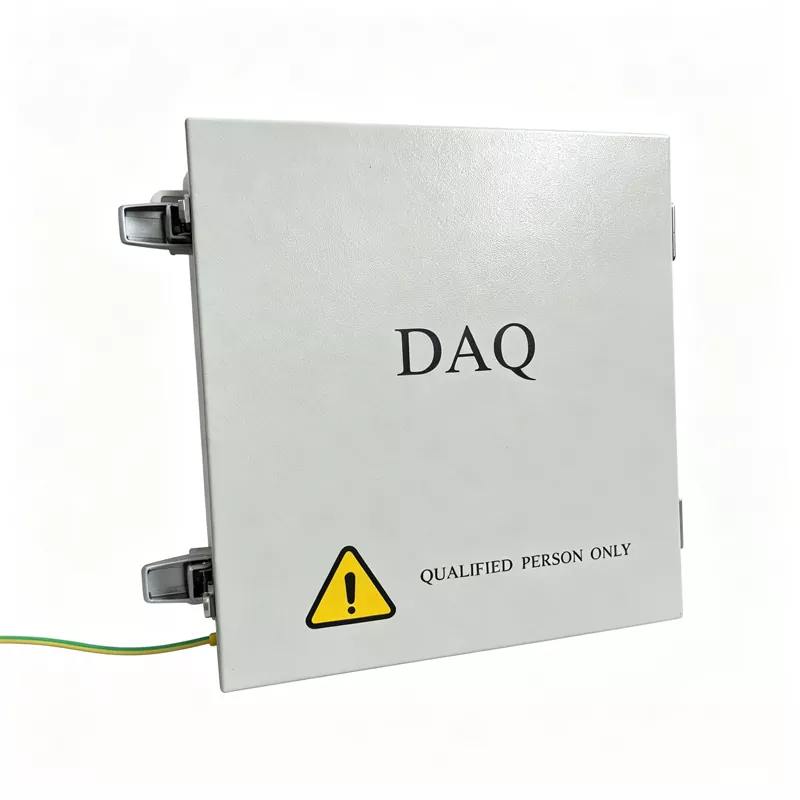
A PV Communication Unit is an important communication and control device used within photovoltaic power plants. It can connect tracker control units, sensors, inverters, monitoring systems, and higher-level control platforms, creating an organized communication network across the solar field.
In practical applications, the unit can collect information from multiple devices and forward it to a centralized monitoring platform. It can also transmit control instructions from the upper-level system to field devices, allowing different parts of the photovoltaic plant to work together.
Typical communication tasks include:
-
Collecting tracker operating information
-
Transmitting tracker angle and status data
-
Receiving control commands from upper-level systems
-
Connecting field controllers with SCADA platforms
-
Managing communication between multiple tracker groups
-
Supporting remote monitoring and troubleshooting
-
Organizing alarm and equipment-status information
For large-scale PV projects, centralized communication can make system management more structured and reduce the difficulty of monitoring numerous distributed devices. Similar solar communication systems use data loggers, gateways, controllers, and monitoring platforms as interconnected layers between field devices and SCADA systems.
Why Is a PV Communication Unit Important?
A photovoltaic power plant may contain hundreds or thousands of trackers and other electrical devices. Without an effective communication structure, operators may have difficulty obtaining real-time information from distributed equipment.
A PV Communication Unit helps create a communication bridge between individual tracker units and the central control system. This makes it easier to collect operating information and coordinate commands across the plant.
Its importance can be summarized in four areas:
| Function | Practical Benefit |
|---|---|
| Data Collection | Centralizes operating information from field equipment |
| Communication | Connects trackers with upper-level monitoring systems |
| Control | Helps distribute commands to multiple tracker units |
| Monitoring | Makes equipment status and alarms easier to observe |
PV monitoring systems are particularly important because operating data can help identify abnormal conditions earlier and support maintenance decisions. The IEA PVPS has also identified status and performance monitoring as important communication purposes in grid-connected PV applications.
How Does It Improve Solar Tracker Operation?
Solar trackers need coordinated communication to adjust their position according to the control strategy of the photovoltaic plant. A communication unit can serve as an intermediate layer between tracker control units and the plant-level control system.
For example, a communication architecture may work through the following process:
Tracker Units → PV Communication Unit → Network → SCADA / Monitoring Platform
The PV Communication Unit receives information from field devices, organizes the data, and transmits it to the upper-level system. When a control command is generated, the communication path can also work in the opposite direction.
This two-way communication structure can support functions such as tracker movement coordination, operating-mode switching, and centralized control. Ruitai's PV communication control solution is designed to collect information from multiple tracker control units and communicate with SCADA or cloud-based monitoring platforms.
What Communication Technologies Can Be Integrated?
Different photovoltaic projects have different requirements for communication distance, network structure, equipment quantity, and environmental conditions.
Common technologies include:
-
RS485: Suitable for serial communication between field devices.
-
Modbus RTU: Frequently used for inverter and industrial device communication.
-
Ethernet: Suitable for higher-speed network communication.
-
Fiber Optic Communication: Useful for long-distance and large-scale PV plant networks.
-
4G / Wireless Communication: Can provide flexible remote communication where wired infrastructure is inconvenient.
Modbus RTU over RS485 is widely used for communication between inverters and data loggers, while Modbus TCP can transmit similar information through Ethernet-based networks.
The appropriate communication architecture should be selected according to the project size, equipment compatibility, transmission distance, environmental conditions, and monitoring requirements.
What Performance Benefits Can Users Expect?
A properly designed PV Communication Unit can improve the overall organization and efficiency of photovoltaic plant communication.
Centralized Data Management
Instead of checking individual tracker units separately, operators can obtain structured information through a centralized monitoring platform. This can simplify plant management and make abnormal conditions easier to identify.
Coordinated Tracker Control
Multiple tracker groups can receive coordinated commands through the communication network. This is particularly useful for large solar farms where independent manual management of individual trackers would be inefficient.
Faster Fault Identification
When tracker status, alarms, and operating information are transmitted to a monitoring system, maintenance personnel can identify potential problems more quickly.
Remote Operation
Communication through Ethernet, fiber optic networks, or wireless technologies can support remote access to PV plant information and control functions. Ruitai's solution, for example, supports long-distance communication through fiber optic or 4G connections and can connect multiple communication units through a fiber-optic ring network.
How Does Customization Make a Difference?
Not every photovoltaic project has the same equipment layout, communication requirements, installation environment, or mechanical structure. Standard communication equipment may therefore not always provide the most suitable solution.
This is where customization becomes valuable.
Suzhou Ruitai Automation Technology Co., Ltd. focuses on photovoltaic automation and tracker communication solutions, offering project-oriented configurations based on different system requirements. More importantly, the solution supports shape customization, including boat-shaped customization, providing greater flexibility for projects with special structural or installation requirements.
Boat-shaped customization can be particularly valuable when a project requires a distinctive enclosure or structural appearance rather than a conventional rectangular configuration. This capability allows customers to discuss the required dimensions, installation method, enclosure structure, communication interfaces, and application environment before finalizing the solution.
Key customization possibilities can include:
-
Shape customization – Supports conventional and special shapes, including boat-shaped designs.
-
Interface customization – Communication interfaces can be configured according to system requirements.
-
Communication configuration – Different networking methods can be considered for project-specific conditions.
-
Installation customization – The physical structure can be adapted to different installation environments.
-
System integration – The communication unit can be designed to work with tracker control and monitoring architectures.
This combination of communication functionality and physical customization can help project developers achieve a better match between equipment and actual site requirements.
PV Communication Unit vs. Independent Device Monitoring
A centralized communication architecture and independent device monitoring approach have different characteristics.
| Aspect | PV Communication Unit | Independent Monitoring |
|---|---|---|
| Data Management | Centralized | Distributed |
| Tracker Coordination | Easier to coordinate | More limited |
| Large PV Plants | Suitable for centralized management | More difficult to manage |
| Remote Monitoring | Supported through network architecture | Depends on each device |
| Custom Integration | Can be configured for system requirements | Often device-dependent |
| Maintenance | Centralized information helps troubleshooting | Operators may need to check multiple devices |
For larger solar projects, a structured communication architecture can help reduce communication complexity and improve visibility across the plant.
Why Choose Suzhou Ruitai Automation Technology Co., Ltd.?
For photovoltaic tracker projects, choosing a communication supplier is not only about selecting a hardware device. Compatibility, communication architecture, customization capability, and long-term system integration all need to be considered.
Suzhou Ruitai Automation Technology Co., Ltd. provides PV communication and automation solutions with a focus on solar tracking applications. Its PV communication control solution is designed for centralized data acquisition, unified control, long-distance communication, and structured data management.
The company can also provide customized solutions for projects requiring special equipment structures. The ability to support boat-shaped customization adds another dimension of flexibility for customers with unique installation or product-design requirements.
Conclusion
A reliable PV Communication Unit can become an essential communication bridge within a modern photovoltaic power plant. By connecting tracker control units, field devices, networks, and monitoring platforms, it helps improve data visibility, centralized management, coordinated control, and remote operation.
As solar projects continue to expand in scale and complexity, communication equipment needs to become more adaptable to real-world project requirements. With centralized communication capabilities, flexible networking options, and support for customized structures—including boat-shaped customization—Suzhou Ruitai Automation Technology Co., Ltd. provides a practical solution for customers seeking more flexible photovoltaic tracker communication systems.
If you are planning a solar tracking project and need a customized PV Communication Unit designed around your communication architecture, installation environment, or special structural requirements, contact us to discuss your project and develop a suitable communication solution.