How Does a PV Tracker Sub-Control Unit Improve Solar Tracking Performance?
2026-09-07
As photovoltaic power plants continue to pursue higher energy yields, smarter and more reliable tracking control has become increasingly important. A PV Tracker Sub-Control Unit serves as a key field-level device in a multi-row or multi-drive solar tracking system, coordinating motor operation, position feedback, communication, and safety protection. Unlike a simple motor controller, a sub-control unit works as part of an integrated control architecture, helping each tracker respond accurately to changing operating conditions. Modern tracker control systems commonly combine local controllers with centralized network control and monitoring, creating a more efficient and scalable solution for utility-scale PV projects.
For EPC contractors, solar developers, and system integrators, selecting a suitable PV Tracker Sub-Control Unit can directly influence tracking accuracy, equipment reliability, maintenance efficiency, and long-term project returns. Suzhou Ruitai Automation Technology Co., Ltd. focuses on intelligent PV tracking technologies and provides sub-control solutions designed for different tracker configurations and project requirements.
What Is a PV Tracker Sub-Control Unit?
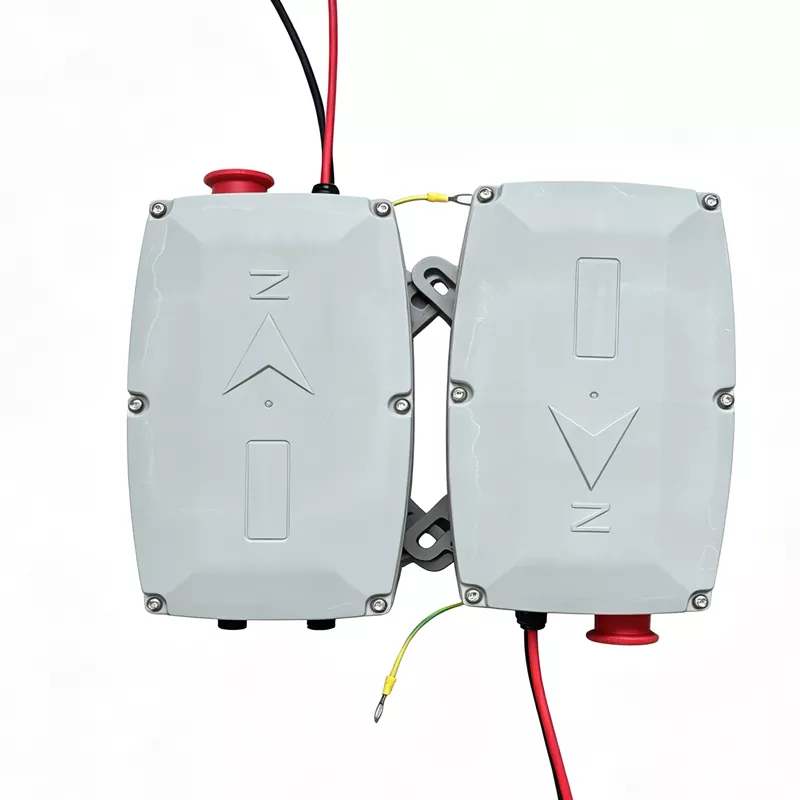
A PV Tracker Sub-Control Unit is a field-level controller responsible for executing tracking commands within a distributed solar tracking system. In a typical architecture, a main controller or Network Control Unit sends instructions to multiple sub-controllers, while each sub-controller manages the corresponding motor or tracker mechanism.
This distributed structure is especially useful for large PV plants containing multiple rows and drive points. Instead of relying on one controller to directly manage every motor, the system distributes control tasks across multiple sub-control units. This can simplify system expansion, improve local responsiveness, and make maintenance more convenient.
Suzhou Ruitai's intelligent main-controller and sub-controller architecture is designed for multi-row, multi-drive solar trackers. Its solution can support slewing gearboxes or electric actuators and can be configured for different motor and power-supply requirements.
Key Functions
A high-quality PV Tracker Sub-Control Unit can perform several important tasks:
-
Motor control: Executes movement commands and adjusts tracker angles.
-
Position management: Uses angle feedback to help maintain the required tracking position.
-
Communication: Exchanges commands and operating information with the main controller.
-
Safety protection: Supports protective actions during abnormal operating conditions.
-
Local monitoring: Helps identify motor, power, communication, or position-related faults.
-
System coordination: Allows multiple tracker rows to operate according to a unified tracking strategy.
These functions make the sub-control unit an essential link between the central intelligence of the PV plant and the physical tracker structure.
Why Is the Sub-Control Unit Important?
Solar trackers must continuously adjust PV modules to maintain a favorable orientation toward the sun. The control unit therefore has a direct influence on how accurately the mechanical structure follows the tracking strategy.
A properly designed PV Tracker Sub-Control Unit can help transform tracking algorithms into precise mechanical actions. It can also provide feedback to the higher-level controller, allowing the system to determine whether the intended movement has been successfully completed.
For large solar farms, this distributed approach offers several practical benefits:
| Function | Practical Benefit |
|---|---|
| Distributed motor control | Reduces the control burden of the main controller |
| Position feedback | Improves tracking accuracy |
| Local protection | Enables faster response to abnormal conditions |
| Communication | Supports coordinated tracker operation |
| Modular architecture | Makes system expansion easier |
| Remote monitoring | Helps reduce unnecessary field inspections |
The importance of reliable control becomes even more apparent in large PV plants, where numerous tracker rows may operate simultaneously. A small control error repeated across hundreds or thousands of rows can affect overall plant performance.
How Does a PV Tracker Sub-Control Unit Work?
The working process can be understood as a continuous control loop.
First, the main control system determines the target tracking position according to the project's tracking strategy. The command is then transmitted to the relevant sub-control unit.
Next, the sub-control unit evaluates the command and drives the connected motor or actuator. The tracker structure moves toward the required angle.
After movement, position feedback is collected and compared with the target position. If necessary, the controller makes additional adjustments to minimize positioning deviation.
At the same time, the controller can monitor operating conditions such as motor status, voltage, current, communication status, and protective limits.
This combination of command → movement → feedback → correction creates a closed-loop operating process that is more reliable than simply sending a fixed motor command without position verification. Closed-loop control is widely recognized as an important approach for correcting tracking errors in solar tracking applications.
What Performance Improvements Can It Deliver?
A well-configured PV Tracker Sub-Control Unit can deliver benefits at several levels.
1. More Accurate Solar Tracking
Accurate angle control helps PV modules maintain a suitable orientation as the sun moves across the sky. Intelligent tracking can therefore improve the utilization of available solar irradiance.
Ruitai's PV tracker control solution combines astronomical algorithms with angle feedback, while its intelligent control platform can also incorporate advanced optimization strategies.
2. Better Protection in Extreme Weather
PV trackers operate outdoors and may face strong wind, snow, hail, heavy rain, and other challenging conditions. A reliable control system should therefore do more than follow the sun.
Ruitai's PV Tracker Sub-Control Unit incorporates protection strategies for conditions including strong wind, snow, flooding, and hail. The tracker can be moved toward a safer position according to configured protection strategies, helping reduce the risk of structural or equipment damage.
3. Lower Operation and Maintenance Pressure
Distributed control allows operating information to be collected closer to the equipment. When abnormal conditions occur, the system can help maintenance personnel identify the affected tracker or control section more efficiently.
This is particularly valuable for large-scale projects where manually checking every tracker row would require considerable time and labor.
4. Improved Adaptability to Complex Terrain
Not every solar farm is constructed on perfectly flat land. Mountainous, irregular, or uneven terrain can create shading and tracking challenges.
Ruitai's intelligent tracking approach considers solar irradiance and terrain-related shading factors to optimize tracker operation. This makes the control solution suitable for projects where environmental and geographical conditions require more flexible tracking strategies.
PV Tracker Sub-Control Unit: Why Customization Matters
One of the strongest advantages of a professional sub-control solution is configuration flexibility.
Different PV projects may use different tracker structures, motor types, drive systems, power supplies, communication methods, and installation environments. A standardized controller may not always provide the best match.
Suzhou Ruitai Automation Technology Co., Ltd. emphasizes project-oriented configuration, allowing the PV Tracker Sub-Control Unit to be adapted to different system requirements. Its published specifications include compatibility with brushed and brushless motors, slewing gearboxes and electric actuators, as well as customizable motor power configurations.
Ship-Type Customization: A Distinctive Advantage
More importantly, Ruitai can provide ship-type customization according to customer requirements.
This advantage is particularly valuable for projects that require non-standard structural arrangements, specialized mounting concepts, or tracker configurations designed around particular installation conditions. Instead of forcing the project to adapt to a fixed controller structure, the control solution can be developed around the customer's actual tracker architecture.
For project owners and engineering companies, ship-type customization can provide:
-
Customized controller structure and configuration
-
Adaptation to different tracker layouts
-
Flexible motor and drive-system matching
-
Project-specific communication requirements
-
Customized power-supply configurations
-
Integration with customer-defined control architectures
-
More efficient deployment for special application scenarios
This type of customization can help bridge the gap between a standard PV tracking product and a project-specific engineering solution.
Which Features Should Buyers Evaluate?
When selecting a PV Tracker Sub-Control Unit, buyers should look beyond basic motor power ratings.
The following checklist can help EPCs and system integrators evaluate suppliers:
-
Tracker compatibility – Confirm compatibility with the selected tracker structure.
-
Motor compatibility – Check brushed/brushless motor support and required power.
-
Drive compatibility – Verify whether the unit supports the project's gearbox or actuator.
-
Communication – Evaluate available wired or wireless communication interfaces.
-
Protection functions – Check wind, overcurrent, undervoltage, rotation-limit, and other safety functions.
-
Environmental resistance – Consider temperature, humidity, dust, rain, and UV exposure.
-
Customization capability – Determine whether hardware and software can be adjusted for project requirements.
-
System integration – Confirm compatibility with the main controller, SCADA, and remote monitoring platform.
-
After-sales support – Evaluate technical assistance, commissioning, troubleshooting, and replacement services.
Standard Unit vs. Customized Sub-Control Solution
| Consideration | Standard Solution | Customized Solution |
|---|---|---|
| Installation | Suitable for common configurations | Adapted to project-specific structures |
| Motor matching | Fixed or limited options | Flexible configuration |
| Communication | Standard interfaces | Project-specific integration possible |
| Tracker structure | Conventional applications | Specialized and non-standard applications |
| Expansion | Depends on architecture | Designed around project requirements |
| Engineering support | General guidance | More targeted technical support |
| Ship-type customization | Usually limited | Supported according to requirements |
For conventional projects, a standard controller may be sufficient. However, for large-scale, multi-row, multi-drive, or specialized projects, customization can provide greater flexibility and reduce integration difficulties.
Why Choose Suzhou Ruitai Automation Technology Co., Ltd.?
Suzhou Ruitai Automation Technology Co., Ltd. combines intelligent control technology with solar tracker engineering to provide solutions for modern PV power plants.
Its product portfolio includes intelligent TCU systems, main-controller and sub-controller architectures, NCU communication equipment, and SCADA-based monitoring solutions. The company focuses on integrating tracking control, intelligent optimization, communication, and safety protection into practical PV applications.
For multi-row and multi-drive applications, Ruitai's main-controller plus sub-controller architecture provides a scalable approach to distributed tracker control. Its published product information also highlights customizable motor power and compatibility with different drive systems, helping customers select configurations based on actual project conditions.
Most importantly, its ship-type customization capability provides an additional advantage for customers requiring specialized tracker solutions. This project-oriented approach allows the control unit to be considered as part of the overall tracker system rather than as an isolated electronic component.
Conclusion
A PV Tracker Sub-Control Unit is more than a device for starting and stopping a motor. It is an important field-level control element that connects intelligent tracking strategies with the mechanical movement of PV modules.
From precise angle adjustment and position feedback to communication, safety protection, and remote operation, the sub-control unit contributes to the reliability and efficiency of a modern solar tracking system. For complex projects, customization becomes equally important because different tracker structures and operating environments require different control configurations.
With intelligent control technology, distributed tracker architecture, flexible system integration, and ship-type customization, Suzhou Ruitai Automation Technology Co., Ltd. provides a practical choice for customers seeking dependable and project-specific PV tracking solutions.
If you are planning a utility-scale PV project and need a PV Tracker Sub-Control Unit matched to your tracker structure, motor, communication system, or special project requirements, contact us today. Suzhou Ruitai Automation Technology Co., Ltd. can provide professional technical consultation and customized solutions to help you build a smarter, safer, and more efficient solar tracking system.