How Does a Solar Controller TCU Improve Solar Tracking Performance?
2026-09-14
As photovoltaic projects become increasingly focused on higher energy yield, intelligent tracking technology is becoming an important part of modern solar power systems. A Solar Controller TCU acts as the control and execution unit of a solar tracking system, coordinating tracking algorithms, sensors, motors, communication devices, and safety functions. By continuously calculating the appropriate tracking position and adjusting the PV modules accordingly, it can help improve sunlight utilization and maintain stable system operation. For project developers seeking flexible equipment integration, Suzhou Ruitai Automation Technology Co., Ltd. also emphasizes customized solutions, including support for boat-type customization, making the controller adaptable to specialized application requirements.
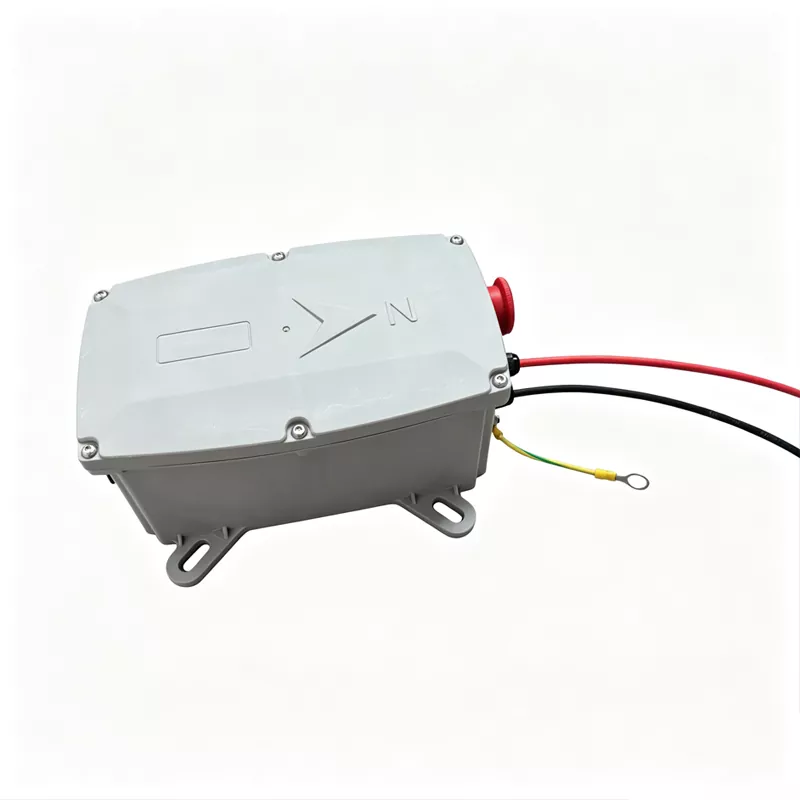
What Is a Solar Controller TCU?
A Solar Controller TCU, or Tracker Control Unit, is a core electronic component used in intelligent photovoltaic tracking systems. Instead of allowing solar panels to remain at a fixed angle, the TCU calculates the sun's position and sends commands to the drive system so that PV modules can follow the changing solar position.
A typical TCU can integrate:
- Solar position calculation
- Angle feedback
- Motor control
- Communication functions
- Wind and environmental protection
- Anti-shading tracking
- Remote monitoring
- Fault and overcurrent protection
Suzhou Ruitai's solution, for example, combines astronomical algorithms with angle feedback and can support different drive systems and communication methods.
How Does the Solar Controller TCU Work?
The operating process can be understood as a continuous control loop:
Sun Position Calculation → Target Angle → Motor Command → Position Feedback → Automatic Correction
The TCU first calculates the expected solar position based on parameters such as location and time. It then determines the required tracker angle and sends a control signal to the motor or actuator.
Sensors can provide actual position information. The controller compares the target position with the actual position and makes corrections when necessary. This closed-loop approach helps maintain accurate tracking rather than relying only on preset movement.
Modern TCU solutions may also integrate communication systems such as RS485, LoRa or Zigbee, allowing operational data to be transferred to higher-level monitoring platforms.
Why Is a Solar Controller TCU Important?
The main value of a TCU is not simply moving a solar tracker. It helps coordinate the entire tracking process so that mechanical movement, electrical control and intelligent monitoring work together.
| Function | Practical Effect |
|---|---|
| Solar position tracking | Helps maintain an appropriate PV orientation |
| Angle feedback | Improves tracking accuracy |
| Motor control | Enables automatic tracker movement |
| Wind protection | Moves the tracker toward a safer position under strong winds |
| Anti-shading control | Helps reduce energy losses caused by row-to-row shading |
| Remote communication | Simplifies monitoring and maintenance |
| Fault protection | Helps reduce equipment damage and downtime |
For large photovoltaic installations, these functions can reduce manual intervention while supporting more consistent system performance. Ruitai's TCU is designed for challenging environments including mountainous, desert and high-temperature areas.
What Results Can a Solar Controller TCU Deliver?
A well-designed Solar Controller TCU can create several practical benefits.
Improved Solar Energy Utilization
By dynamically adjusting the PV module angle, the tracking system can follow changing sunlight conditions more effectively than a conventional fixed-angle installation.
More Intelligent Operation
Automatic tracking reduces the need for frequent manual adjustment. Operators can monitor system conditions through communication and control platforms.
Better Environmental Adaptability
Solar trackers can face strong wind, temperature fluctuations, dust, snow and other environmental challenges. Intelligent protection functions can help the system enter an appropriate safety position when abnormal conditions occur.
Easier Project Integration
A TCU designed with multiple communication and drive options can be integrated into different tracker architectures, helping engineers develop solutions according to project requirements.
Which Customization Options Matter for Different Projects?
Not every solar project has the same mechanical structure, operating environment or installation requirements. Therefore, customization can be more valuable than simply selecting a standard controller.
Suzhou Ruitai Automation Technology Co., Ltd. provides customized TCU solutions according to tracker structure, motor configuration, communication requirements and project conditions. This flexibility is particularly valuable for specialized projects that require boat-type customization.
Boat-type customization can be considered when the mechanical layout, mounting structure or application environment requires a special form factor or customized control configuration. Instead of forcing a standard controller into an unsuitable system, the TCU can be developed around the project's actual requirements.
Key customization areas may include:
- Mechanical configuration – adapting the controller to specific equipment structures.
- Motor compatibility – supporting different drive technologies and power requirements.
- Communication interfaces – configuring communication according to the monitoring architecture.
- Protection settings – adjusting operational parameters for different environments.
- Control logic – optimizing tracking strategies for project-specific conditions.
- Boat-type customization – supporting specialized structural and application requirements.
This approach can help customers achieve better compatibility between the controller and the complete solar tracking system.
Solar Controller TCU vs. Conventional Fixed-Angle Control
The difference becomes clearer when comparing tracking and fixed-angle approaches:
| Aspect | Solar Controller TCU System | Fixed-Angle System |
|---|---|---|
| Panel movement | Automatic | No movement |
| Solar position response | Dynamic | Limited |
| Tracking control | Intelligent | Simple |
| Environmental protection | Can be integrated | More limited |
| Remote monitoring | Available with communication integration | Depends on system |
| Customization | High | Usually simpler |
The TCU therefore plays an important role when project owners prioritize intelligent control, automated operation and flexible system integration.
Why Choose Suzhou Ruitai Automation Technology Co., Ltd.?
Suzhou Ruitai Automation Technology Co., Ltd. focuses on intelligent photovoltaic tracking products and related automation technologies. Its product range includes intelligent Solar Tracker TCU solutions, communication units, SCADA platforms and photovoltaic cleaning equipment.
For customers evaluating a Solar Controller TCU, the key advantages include:
- Intelligent tracking control
- Multiple communication options
- Environmental protection functions
- Compatibility with different drive systems
- Project-oriented customization
- Support for specialized boat-type customization
- Integration with intelligent monitoring platforms
Its published TCU specifications include IP65 protection, adjustable tracking angles, high-wind protection and operating-temperature adaptability, demonstrating an emphasis on reliable outdoor operation.
FAQ About Solar Controller TCU
What does TCU mean in a solar tracking system?
TCU generally refers to Tracker Control Unit. It is responsible for controlling the movement and operation of a photovoltaic tracking system.
Can a Solar Controller TCU be customized?
Yes. TCU solutions can be customized according to motor power, communication requirements, tracker structure, environmental conditions and control logic. Specialized boat-type customization can also be supported for suitable project requirements.
Can a TCU communicate with an SCADA system?
Yes. A suitably configured TCU can communicate with higher-level monitoring and management platforms, enabling remote monitoring and operational management.
Is a TCU suitable for harsh outdoor environments?
With appropriate enclosure protection and environmental design, a TCU can be used in demanding outdoor applications. Ruitai's published product specifications include IP65 protection and an operating temperature range of -40°C to 65°C.
What should buyers consider before selecting a TCU?
Buyers should evaluate tracker type, motor compatibility, power supply, communication protocol, tracking range, environmental conditions, protection requirements and customization needs.
Conclusion
A Solar Controller TCU is much more than a simple motor controller. It serves as the intelligent control center connecting solar-position calculations, sensors, drive mechanisms, communication networks and protection functions. For modern photovoltaic projects, the right TCU can contribute to more accurate tracking, smarter operation and better adaptability.
For projects requiring non-standard structures or specialized applications, Suzhou Ruitai Automation Technology Co., Ltd. offers customized development capabilities, including boat-type customization, helping customers build a Solar Controller TCU solution around their actual project rather than adapting the project to a standard product.
Looking for a reliable and customized Solar Controller TCU for your next photovoltaic tracking project? Contact us to discuss your technical requirements, tracker configuration and customized solution.