

How Does a Thermal Relay Protect Electrical Systems?
2026-04-16
Article Abstract: A thermal relay is a critical protective device widely used in electrical systems to prevent overload and overheating in motors and industrial equipment. This article explains its working principle, key applications, selection criteria, installation practices, and troubleshooting methods. It is designed to help engineers, technicians, and equipment buyers make informed decisions when selecting protection components for safe and reliable operation.
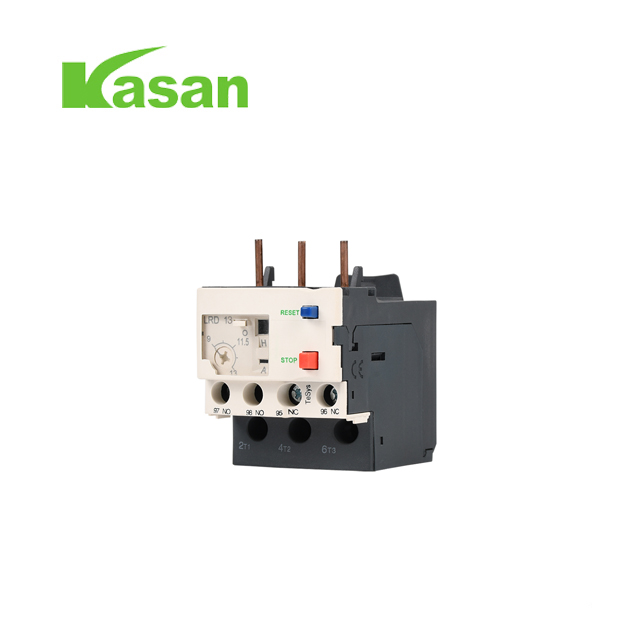
Table of Contents
- 1. Introduction to Thermal Relay Protection
- 2. What Is a Thermal Relay?
- 3. Working Principle of Thermal Relay
- 4. Types of Thermal Relays
- 5. Key Industrial Applications
- 6. How to Select the Right Thermal Relay
- 7. Common Problems and Troubleshooting
- 8. Installation Best Practices
- 9. Maintenance Guidelines
- 10. Frequently Asked Questions
- 11. Conclusion & Industry Insight
1. Introduction to Thermal Relay Protection
In modern electrical systems, overload protection is not optional—it is essential. Motors, transformers, and industrial machinery often operate under variable loads. Without proper protection, excessive current can lead to overheating, insulation failure, and even catastrophic equipment damage. A thermal relay serves as a frontline safeguard by detecting abnormal current conditions and disconnecting the circuit before damage occurs.
Industries such as manufacturing, HVAC, water treatment, and automation rely heavily on thermal relays to ensure continuous and safe operation of their systems. Among reliable manufacturers, Wenzhou Kasan provides thermal relay solutions designed for stability, precision, and long service life.
2. What Is a Thermal Relay?
A thermal relay is an electrical protection device that operates based on heat generated by current flow. It primarily protects electric motors from overload conditions. When current exceeds a predefined threshold, the relay triggers a mechanical response that interrupts the circuit.
Unlike electronic protection devices that rely on digital sensing, thermal relays use a physical mechanism—typically a bimetallic strip—that reacts to heat expansion. This simple yet effective design makes them highly reliable in harsh industrial environments.
3. Working Principle of Thermal Relay
The operation of a thermal relay is based on the thermal expansion properties of metals. A typical thermal relay includes a bimetal strip composed of two different metals with distinct expansion coefficients.
- When normal current flows, the strip remains stable.
- When overload occurs, increased current generates heat.
- The bimetal strip bends due to uneven expansion.
- This mechanical movement triggers a contact mechanism.
- The circuit is opened, stopping current flow to the motor.
This delay-based response is particularly important because it allows short-term current surges (like motor startup currents) while still protecting against sustained overload conditions.
4. Types of Thermal Relays
Thermal relays come in different configurations depending on application requirements:
- Single-phase thermal relay: Used for small motor protection in residential or light industrial systems.
- Three-phase thermal relay: Designed for industrial motors and heavy-duty applications.
- Adjustable thermal relay: Allows customization of current settings for flexible usage.
- Magnetic thermal relay: Combines magnetic and thermal protection for enhanced reliability.
5. Key Industrial Applications
Thermal relays are widely used across multiple sectors due to their simplicity and effectiveness:
- Electric motor overload protection
- HVAC compressor safety systems
- Pumps and conveyor systems
- Industrial automation equipment
- Manufacturing production lines
In each of these systems, thermal relays act as a cost-effective protection layer that minimizes downtime and prevents costly equipment failures.
6. How to Select the Right Thermal Relay
Choosing the correct thermal relay is critical for system reliability. The selection process should consider load characteristics, rated current, and environmental conditions.
| Selection Factor | Description | Recommendation |
|---|---|---|
| Rated Motor Current | Current drawn under normal operation | Select relay range slightly above rated current |
| Startup Current | Temporary surge during motor start | Ensure relay delay tolerance |
| Environment | Temperature and humidity conditions | Use industrial-grade protective housing |
| Load Type | Continuous or intermittent operation | Adjust sensitivity accordingly |
Manufacturers like Wenzhou Kasan provide adjustable thermal relay models that help engineers fine-tune protection levels based on real operational conditions.
7. Common Problems and Troubleshooting
Despite their reliability, thermal relays may encounter operational issues:
- Frequent tripping: Often caused by undersized relay selection or motor overload.
- No tripping under overload: May indicate mechanical failure or calibration drift.
- Contact wear: Occurs after long-term usage in high-load systems.
- Ambient temperature influence: High surrounding temperatures may affect sensitivity.
Regular inspection and correct sizing are essential to avoid these issues and maintain stable system performance.
8. Installation Best Practices
Proper installation ensures optimal performance of a thermal relay. Key guidelines include:
- Install close to the motor starter for accurate sensing.
- Avoid placing in high-heat or poorly ventilated areas.
- Ensure correct wiring according to manufacturer diagrams.
- Set current adjustment dial based on motor nameplate rating.
- Perform a test run after installation.
9. Maintenance Guidelines
Routine maintenance improves durability and reliability of thermal relays:
- Inspect contacts for oxidation or wear.
- Check calibration settings periodically.
- Clean dust accumulation in relay housing.
- Test trip functionality under controlled conditions.
Preventive maintenance reduces unexpected downtime and extends equipment lifespan significantly.
10. Frequently Asked Questions
Q1: What is the main function of a thermal relay?
It protects electrical motors from overheating caused by overload current.
Q2: Can thermal relays be reset after tripping?
Yes, most thermal relays include a manual or automatic reset function.
Q3: Are thermal relays suitable for all motor types?
They are widely compatible but must be selected according to motor specifications.
Q4: What is the lifespan of a thermal relay?
Depending on usage conditions, they can last several years with proper maintenance.
11. Conclusion & Industry Insight
Thermal relays remain one of the most dependable and cost-effective protection devices in industrial electrical systems. Their simplicity, durability, and proven mechanical operation make them indispensable in motor protection strategies.
With continuous innovation in industrial control technology, companies like Wenzhou Kasan continue to refine thermal relay designs to meet evolving demands for safety, efficiency, and precision in modern electrical systems.
For businesses seeking reliable protection solutions and professional-grade components, choosing a trusted manufacturer is critical to ensuring long-term operational stability.
If you are looking for high-quality thermal relay solutions or need technical support for your electrical system design, Wenzhou Kasan is ready to support your project needs. contact us today to get professional assistance and tailored product solutions.