

How Does a Two Stage Air Compressor Improve Industrial Air Efficiency?
2026-09-01
Article Summary:
A reliable compressed air system is essential for many industrial operations, but traditional single-stage compressors may struggle when applications require higher pressure, better energy utilization, and continuous performance. A Two Stage Air Compressor provides an advanced compression method by compressing air in two separate stages, allowing industries to achieve higher pressure output, improved efficiency, and longer equipment life. This article explains how two-stage air compressors work, why they are valuable for industrial users, how they solve common compressed air challenges, and what factors should be considered when selecting the right solution. With professional manufacturing experience, Elily provides practical air compressor solutions designed to meet different industrial requirements.
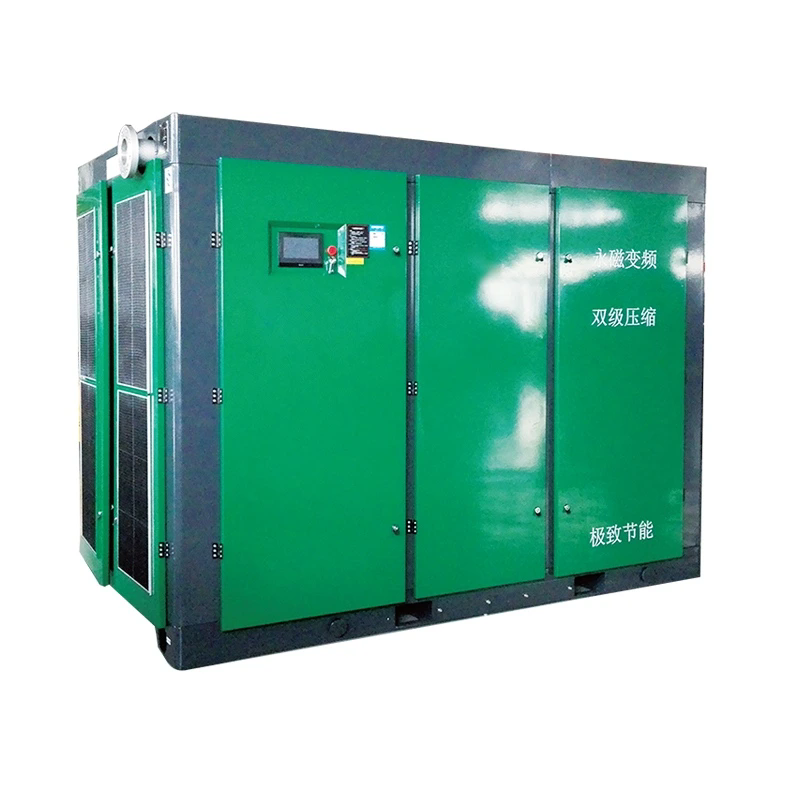
Table of Contents
- 1. What Is a Two Stage Air Compressor?
- 2. How Does a Two Stage Air Compressor Work?
- 3. What Benefits Can a Two Stage Air Compressor Bring?
- 4. Two Stage Air Compressor vs Single Stage Air Compressor
- 5. Where Are Two Stage Air Compressors Used?
- 6. How to Choose the Right Two Stage Air Compressor?
- 7. Maintenance Tips for Better Compressor Performance
- 8. Frequently Asked Questions
1. What Is a Two Stage Air Compressor?
A Two Stage Air Compressor is an industrial compressed air machine that completes the compression process in two steps instead of one. Unlike a single-stage compressor that compresses air directly from atmospheric pressure to the final pressure level, a two-stage design divides the workload between two compression chambers.
During the first stage, air is compressed to an intermediate pressure level. The partially compressed air then passes through an intercooler, where heat generated during compression is reduced. After cooling, the air enters the second stage for additional compression until it reaches the required final pressure.
This two-step process reduces the pressure load on each compression stage, creating a more balanced operation. For industries requiring stable high-pressure air supply, this design offers significant advantages in efficiency, reliability, and operational cost control.
Modern factories often face challenges such as increasing energy costs, demanding production schedules, and the need for consistent air quality. A properly designed two-stage compressor can help businesses overcome these problems by providing dependable compressed air performance.
2. How Does a Two Stage Air Compressor Work?
Understanding the working principle of a Two Stage Air Compressor helps users recognize why this technology performs better in demanding industrial environments.
| Compression Process | Main Function | Industrial Benefit |
|---|---|---|
| First Compression Stage | Compresses incoming air to medium pressure | Reduces pressure load on the system |
| Intercooling Process | Lowers air temperature before second compression | Improves compression efficiency |
| Second Compression Stage | Raises air pressure to the required level | Provides stable high-pressure output |
| Air Storage and Distribution | Delivers compressed air to equipment | Supports continuous industrial operation |
The key difference between a two-stage compressor and a conventional compressor is the separation of compression work. By dividing the compression ratio into smaller steps, the machine experiences less thermal stress and mechanical pressure.
The intercooler plays an important role in this process. Cooling the air between stages improves air density, meaning the second stage can compress the air more effectively. This results in reduced energy consumption compared with systems that force a single piston or compression element to handle the entire pressure increase.
Elily develops compressor solutions that focus on practical industrial needs, helping users achieve reliable compressed air performance while improving equipment efficiency.
3. What Benefits Can a Two Stage Air Compressor Bring?
Many industries choose two-stage compression technology because it provides advantages beyond basic air generation. The following benefits explain why this type of compressor has become an important choice for professional applications.
| Advantage | Description | User Value |
|---|---|---|
| Higher Pressure Capability | Designed for applications requiring greater pressure output | Meets demanding production requirements |
| Improved Energy Efficiency | Reduces compression losses through staged operation | Lowers long-term operating expenses |
| Lower Operating Temperature | Uses cooling between compression stages | Improves component durability |
| Stable Performance | Provides consistent compressed air supply | Reduces production interruptions |
| Extended Service Life | Reduces stress on internal components | Decreases maintenance frequency |
One major customer concern is energy consumption. Compressed air systems can represent a significant portion of industrial electricity usage. A two-stage design helps optimize energy usage by improving compression efficiency and reducing unnecessary heat generation.
Another common problem is equipment downtime. When compressors operate under excessive pressure and temperature conditions, internal components may wear faster. The staged compression structure distributes mechanical stress more evenly, helping maintain stable operation over longer periods.
4. Two Stage Air Compressor vs Single Stage Air Compressor
Choosing between different compressor technologies requires understanding their performance differences. The following comparison highlights the main characteristics of each type.
| Feature | Two Stage Air Compressor | Single Stage Air Compressor |
|---|---|---|
| Compression Method | Two-step compression process | One-step compression process |
| Pressure Range | Suitable for higher pressure applications | Better for lower pressure requirements |
| Cooling Efficiency | Higher due to intercooling | Lower compared with two-stage design |
| Energy Performance | More efficient for continuous heavy-duty use | Suitable for lighter applications |
| Initial Investment | Usually higher | Usually lower |
For small workshops or applications with limited air demand, a single-stage compressor may be sufficient. However, factories, manufacturing plants, and facilities requiring continuous high-pressure operation often benefit more from a two-stage solution.
5. Where Are Two Stage Air Compressors Used?
A Two Stage Air Compressor is widely used in industries where stable, powerful, and efficient compressed air is required. Because of its ability to generate higher pressure with better thermal control, it has become an important solution for many professional applications.
| Industry | Application | Why Two Stage Compression Is Suitable |
|---|---|---|
| Manufacturing | Pneumatic tools, automated production lines, assembly equipment | Provides continuous and stable air pressure for production processes |
| Automotive Industry | Vehicle maintenance, painting systems, tire equipment | Supports high-pressure requirements and long working cycles |
| Metal Processing | CNC equipment, cutting machines, air-powered systems | Ensures reliable operation under demanding conditions |
| Construction | Heavy-duty pneumatic tools and machinery | Delivers powerful compressed air in challenging environments |
| Food and Beverage | Processing equipment and packaging systems | Provides consistent air supply for production efficiency |
| Mining and Energy | Industrial machinery and control systems | Handles intensive operation requirements |
In manufacturing facilities, unstable air pressure can directly affect product quality and production efficiency. Equipment such as pneumatic actuators, air valves, and automated machinery requires a consistent air source to maintain accurate performance.
For automotive repair centers and industrial workshops, a two-stage compressor provides the pressure capacity needed for demanding tools. Applications such as spray painting, impact tools, and air-operated lifting systems require reliable airflow that cannot be interrupted frequently.
Large-scale industrial users often consider not only initial equipment cost but also long-term operating efficiency. The energy savings, reduced wear, and improved stability offered by two-stage compression make it a practical investment for many businesses.
6. How to Choose the Right Two Stage Air Compressor?
Selecting the correct Two Stage Air Compressor requires careful evaluation of operating conditions, production requirements, and future expansion plans. Choosing an unsuitable compressor may lead to unnecessary energy consumption, insufficient air supply, or frequent maintenance problems.
The following factors should be considered before purchasing:
- Required Pressure Level: Determine the working pressure needed by connected equipment. Different industrial processes require different pressure ranges.
- Air Flow Demand: Calculate the required CFM or air volume based on all connected pneumatic devices operating at the same time.
- Operating Frequency: Continuous production environments usually require stronger compressor systems designed for long working hours.
- Installation Environment: Consider available space, ventilation conditions, temperature, and humidity levels.
- Maintenance Requirements: Select equipment with accessible components and reliable structural design.
- Energy Efficiency: Evaluate long-term electricity costs rather than only the initial purchase price.
| Selection Factor | Important Question | Recommended Consideration |
|---|---|---|
| Production Demand | How much compressed air is required? | Select capacity according to actual consumption |
| Pressure Requirement | What pressure does the equipment need? | Choose a suitable pressure rating |
| Working Schedule | Is operation continuous or occasional? | Match compressor durability with usage intensity |
| Energy Cost | How can operating expenses be reduced? | Choose efficient compression technology |
Working with an experienced manufacturer is also important. Professional suppliers can provide technical recommendations based on application conditions instead of offering a standard product without considering actual needs.
Elily focuses on developing practical compressed air equipment solutions and helps customers select suitable compressor configurations according to their industrial applications.
7. Maintenance Tips for Better Compressor Performance
Regular maintenance is essential for keeping a Two Stage Air Compressor operating efficiently. Even high-quality equipment requires proper care to maintain performance and extend service life.
| Maintenance Item | Recommended Action | Purpose |
|---|---|---|
| Air Filter Inspection | Clean or replace filters regularly | Prevents dust contamination and improves airflow |
| Lubrication Check | Monitor oil level and quality | Reduces friction and component wear |
| Cooling System Maintenance | Keep intercoolers and cooling parts clean | Maintains proper operating temperature |
| Leak Detection | Check pipes and connections | Reduces energy waste caused by air loss |
| Pressure Monitoring | Inspect pressure settings regularly | Ensures safe and stable operation |
One of the most common problems in compressed air systems is air leakage. Even small leaks can increase compressor workload and raise electricity costs over time. Regular inspection of pipelines, connectors, and valves helps prevent unnecessary energy consumption.
Temperature management is another important factor. Since excessive heat can accelerate component aging, keeping cooling systems clean allows the compressor to operate more efficiently.
Operators should also follow the manufacturer's maintenance schedule. Proper servicing not only protects equipment performance but also reduces unexpected downtime and repair expenses.
8. Frequently Asked Questions
Q1: What is the main advantage of a Two Stage Air Compressor?
The main advantage is improved compression efficiency through a two-step process. By dividing compression into two stages and using cooling between them, the compressor can achieve higher pressure with reduced heat generation and improved stability.
Q2: Is a Two Stage Air Compressor better than a single-stage model?
A two-stage compressor is generally better for high-pressure, continuous-duty, and industrial applications. However, the best choice depends on air demand, pressure requirements, and operating conditions.
Q3: How does an intercooler improve compressor performance?
An intercooler reduces the temperature of compressed air between the first and second stages. Cooler air is easier to compress, which improves efficiency and reduces thermal stress on internal components.
Q4: What industries need two-stage compressors?
Industries including manufacturing, automotive repair, metal processing, construction, and energy production commonly use two-stage compressors because these fields require stable and powerful compressed air supply.
Q5: How can I extend the service life of my compressor?
Regular maintenance, proper lubrication, timely filter replacement, leak inspection, and correct operating procedures can significantly improve compressor reliability and service life.
Q6: Does Elily provide customized Two Stage Air Compressor solutions?
Yes. Elily provides professional compressed air solutions according to different industrial requirements, helping customers select suitable equipment based on pressure needs, operating conditions, and production goals.
Conclusion: Why Choose a Two Stage Air Compressor for Industrial Applications?
A Two Stage Air Compressor is an effective solution for businesses that need reliable, efficient, and high-performance compressed air systems. Through a two-step compression structure, it improves pressure capability, reduces thermal stress, enhances energy utilization, and supports long-term industrial operation.
Compared with traditional compression methods, two-stage technology provides better performance for demanding environments where air stability and efficiency directly influence productivity. Choosing the right compressor model requires consideration of pressure requirements, airflow demand, operating conditions, and maintenance expectations.
With professional experience and customer-focused solutions, Elily continues to provide dependable compressor equipment designed for various industrial applications. Whether you need a standard configuration or a customized compressed air solution, Elily can help you achieve more efficient and stable operations. For more information about Two Stage Air Compressor solutions and professional support, please contact us today.