
How Does a Vacuum High Voltage Circuit Breaker Compare to an SF6 Circuit Breaker
2026-09-23
Selecting the right High Voltage Circuit Breaker is one of the most consequential decisions in substation design, and the choice between vacuum and SF6 technologies directly affects reliability, maintenance costs, and environmental compliance. At Huixing, we have manufactured and deployed both types across countless projects, and the question we hear most often is refreshingly simple: which one actually performs better? The answer depends on voltage class, interruption duty, ambient conditions, and long-term service strategy. This comparison breaks down the engineering realities behind each design so you can specify with confidence.
How Each Interruption Technology Works
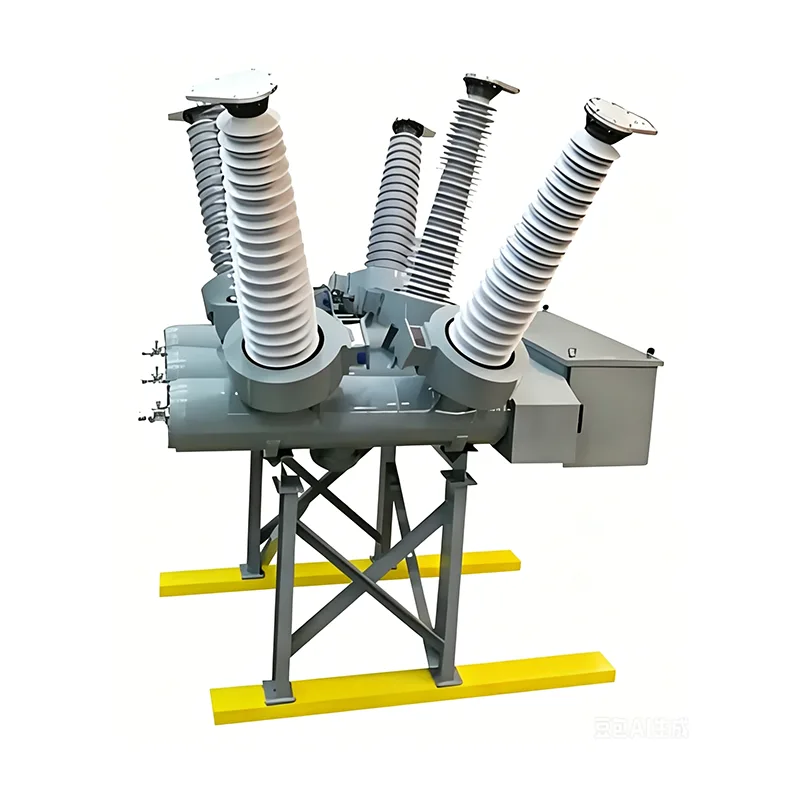
A Vacuum High Voltage Circuit Breaker extinguishes the arc inside a sealed vacuum interrupter, where the dielectric strength recovers extremely fast after current zero. Because there is no ionized gas to manage, the arc remains compact and the contact gap stays short.
An SF6 Circuit Breaker relies on sulfur hexafluoride gas, whose electronegativity captures free electrons and rapidly restores dielectric strength. SF6 excels at high-energy interruption, but the gas is a potent greenhouse gas and requires careful handling and recycling.
Head-to-Head Comparison
| Parameter | Vacuum High Voltage Circuit Breaker | SF6 Circuit Breaker |
|---|---|---|
| Typical voltage range | Up to 145 kV (expanding higher) | 72.5 kV to 800 kV+ |
| Interruption medium | Vacuum | SF6 gas |
| Environmental impact | Zero greenhouse gas | GWP ~23,500 |
| Maintenance frequency | Low | Moderate to high |
| Sealed-for-life option | Yes | Limited |
| Cost at medium voltage | Lower | Higher |
| Cost at EHV | Less competitive | More economical |
| Arc quenching | Fast dielectric recovery | Superior energy absorption |
| Cold climate performance | Excellent | Requires heating/pressure monitoring |
Key Engineering Differences
-
Dielectric recovery: Vacuum interrupts current extremely quickly at medium voltage; SF6 retains an advantage in very high energy faults.
-
Maintenance: A High Voltage Circuit Breaker using vacuum interrupters is often sealed for life, eliminating gas monitoring and refilling.
-
Environmental compliance: SF6 regulations continue to tighten globally, pushing utilities toward vacuum and hybrid designs.
-
Switching life: Vacuum units routinely exceed 10,000 mechanical operations with minimal degradation.
-
Footprint: SF6 equipment is typically more compact at EHV levels, which matters in space-constrained substations.
Huixing engineers both platforms and frequently recommends vacuum for distribution and sub-transmission, while specifying SF6 where extreme voltage and interrupting duty demand it.
Frequently Asked Questions
Which is more reliable, a vacuum or an SF6 High Voltage Circuit Breaker?
Both are highly reliable when properly applied; vacuum offers fewer external dependencies because it needs no gas pressure monitoring, while SF6 reliability depends on gas density and purity being maintained, so vacuum generally requires less condition-based attention at medium voltage.
Is a Vacuum High Voltage Circuit Breaker suitable for transmission-level voltages?
Yes, vacuum technology has advanced steadily and now serves transmission applications up to and beyond 145 kV, though SF6 or hybrid designs still dominate the highest voltage classes where interrupting energy is extreme.
How do maintenance costs compare between the two technologies?
Vacuum breakers typically incur lower lifetime maintenance costs because interrupters are sealed and contact wear is minimal, whereas SF6 breakers require periodic gas analysis, leak repair, and eventual gas recycling, all of which add labor and compliance expenses.
Can Huixing supply both vacuum and SF6 High Voltage Circuit Breakers?
Yes, Huixing manufactures a complete portfolio covering both technologies, allowing customers to match the right High Voltage Circuit Breaker to each voltage class, duty cycle, and environmental requirement.
Choosing the Right Solution
There is no universal winner. Vacuum wins on environmental profile, maintenance simplicity, and medium-voltage economics. SF6 wins on ultra-high-voltage interrupting capability and compactness. The correct decision comes from a careful review of your fault levels, voltage class, climate, and regulatory environment.
Contact us at Huixing today to discuss your project requirements, request a technical consultation, or obtain a tailored quotation for the High Voltage Circuit Breaker that best fits your substation.